Is parliament really powerful?
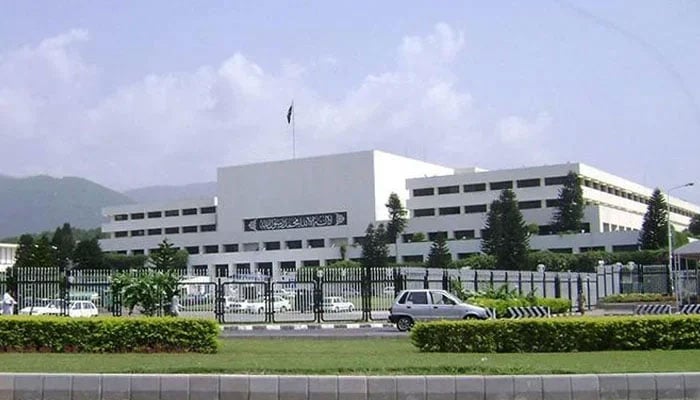
Democratic governments, by definition, are answerable and accountable to Parliament, which in turn is elected by the people.
How can a government that is accountable or answerable to any other unelected organ – a judiciary or an establishment (both via an entrenched and unelected bureaucracy) – be deemed responsible to the electorate?
Collectively, our four provincial plus one federal parliament are jointly the fountainhead of all powers mandated by our constitution. However, throughout our history, all our people’s assemblies have remained fettered or dissolved under Martial law reigns facilitated by a bureaucracy and judiciary as their loyal and reliable surrogates.
Members of parliament (Senate, national and provincial assemblies) are bound to monitor federal and provincial governments and ensure their compliance with the constitution. This important task has not been effectively addressed or performed by our elected representatives. As a result, the bureaucracy runs government whilst the judiciary relentlessly tries to make government responsible to itself.
Article 91(6) of the constitution declares unambiguously that the federal cabinet, together with its state ministers, shall be collectively responsible to the Senate and the National Assembly. Similar provisions have been provided for provincial governments under Article 130(6) of the constitution.
Article 248 unequivocally states that no minister, in the exercise of his or her official functions, is responsible to any judicial court in Pakistan. This means ministers are only responsible to parliament and to no other entity.
Political parties elected by the people through free and fair polls appoint their cabinets, both at the federal and provincial levels. Electoral fairness and transparency ensure stronger and better governance.
A weak and manipulated electoral system cannot deliver democratic governance. Generals Zia and Musharraf ruthlessly manipulated the electoral system, thereby fettering parliament and violating or sabotaging the constitution in the process.
It was Benazir Bhutto’s visionary leadership and her sagacious capacity to forgive that allowed bitter political opponents to come together and sign the historic Charter of Democracy in May 2006.
The CoD was designed to thwart the challenge of electoral rigging and fraud. It was such a serious threat to those opposed to democracy that BB’s life had to be sacrificed. Subsequently, the 18th Amendment was like a breath of fresh air. However, even 14 years later, aspects of it remain pending – in particular, those relating to the judiciary (including the establishment of a Federal Constitutional Court) based on equal representation from the provinces.
The PCO judges, appointed on an ethnic basis (rather than on the federal principles enshrined in the 18th Amendment), have always ambushed the executive. They collectively managed to remove not one but two elected prime ministers without having any such power or jurisdiction under the constitution.
A democratically elected prime minister can only be removed through a no-confidence motion. Also, the disqualification of a member of parliament or of a provincial assembly can only take place on the reference of the speaker or the chairman of Senate addressed to the Election Commission of Pakistan. No appeal is provided in the constitution, as parliamentarians can only be removed by parliament – the supreme body that exercises the will of the people.
The 18th Amendment serves the interests of the people, not the interests of the judiciary nor the interests of the bureaucracy (civil and military). The J+B nexus jeopardises governance as it ensures that ministers continue to dance to their (J+B) tunes instead of being accountable to parliament.
In Islamabad and all provincial capitals, the bureaucracy as a general practice bypasses the federal and provincial cabinets, regarding them as redundant to the business of government.
The judiciary, too, undermines government by forcing it to be accountable to itself, brazenly usurping a constitutional mandate reserved for parliament. Perhaps detractors of the 26th Amendment can become more empathetic to the need to introduce this amendment when they understand why it is needed.
The words used in the document of the constitution are of huge import and cannot be more explicit: “The federal government is collectively responsible to parliament.” This means that all ministries and their subordinate bureaucratic machineries are responsible, in their actions, policies, decisions, and undertakings, to parliament – and parliament alone.
However, as soon as a new cabinet is formed, there develops a very strong nexus between the cabinet and the bureaucracy so as to avoid reporting or being responsible to parliament. Bureaucrats facilitate and even encourage ministers to carry on in this fashion.
Under Parliamentary Rules of Business, there is a Standing Committee on each federal or provincial ministry that must examine budget allocations, their utilisation, as well as all administrative decisions and actions of that particular ministry.
Each SC is headed by a member of the Senate or of the National Assembly. No member of the SC can be a member of the cabinet. The concerned minister is deemed subordinate to and responsible to the SC.
Ordinary citizens are allowed to make petitions to these committees against corruption or misuse of authority. But due to the nexus that develops between the concerned minister and the bureaucracy assigned to him or her, these committees generally end up simply rubber-stamping the proposals put up by the bureaucracies.
Ministers seldom attend meetings. Committees which should act as people’s platforms against bad governance do not fulfil this essential task assigned to them by the constitution. Further hurdles thrown their way include a lack of resources and expertise and a mostly uncooperative – sometimes downright hostile – attitude from the concerned ministerial bureaucracy.
Less than 11 per cent of parliament forms the cabinet. The rest of the 90 per cent have neither the resources, expertise, nor even the power, perhaps, to downsize and tame the bloated ministries. A lean and efficient squad of competent officers and administrative staff would be easier for ministers to deal with. Instead, they inherit a fawning, useless, oversized bureaucratic pyramid.
Over the decades, the federal bureaucracy has even extended its octopus-like tentacles into the provinces, exercising executive authority there in violation of the constitution.
The Supreme Court, too, has overreached itself. Under the constitution, it has no administrative control or nexus with provincial high courts. However, through various instruments and tools, it has made all the provincial high courts almost subordinate to itself.
It must be reiterated as often as possible that the Supreme Court is a court of original jurisdiction only for adjudicating disputes between two or more federal and provincial governments. For any other matter, it is a court of appeal.
In the past 52 years, no federal or provincial government has brought a single dispute to the Supreme Court for adjudication. This clearly means that the SC has lost credibility in the eyes of the smaller provinces and its litigants.
The non-existence of any other empowered forum for the expression of provincial grievances has given rise to insurgency in Balochistan, resentment in Sindh and disaffection in Khyber Pakhtunkhwa.
It is important for the reader to understand that the responsibilities and domains of parliament and the judiciary are totally exclusive. Parliament must make the federal government responsible to itself. The judiciary, on the other hand, has to adjudicate disputes between provincial and federal governments (Supreme Court), enforce fundamental rights (high courts) and ensure that the federal government is responsible to parliament and no ‘other’ power, including itself.
By overstepping its authority, the judiciary has summoned prime ministers and other ministers to their courtrooms in violation of the constitution (Article 248). The judiciary has gone so far as to even initiate suo-motu contempt proceedings against elected ministers and prime ministers. Instead of dispensing speedy justice to litigants, the judiciary wants to meddle in governance, whilst a backlog of unheard appeals continues to stack up.
The Standing Committees of parliament need to become functional, and officers of the bureaucracies that create hurdles need to be made an example of and punished.
The writer has served as advocate general of Sindh.
He tweets/posts @zamirghumro.