Requiem for a dream deferred
We gather today in memory of a once-vibrant force that lifted thousands from mediocrity into the light of scholarship, and which believed in merit and in the transformative power of knowledge. It was born out of ambition, nurtured with hope and, for a time, it soared. It gave young minds the courage to think and innovate. Its legacy touched every province, every classroom, every lab.
But over the years, it grew weary. Betrayed by those sworn to protect it, it was slowly drained of purpose, dignity and strength. Today, we mourn not just its passing, but the silence that followed, the absence of outrage, the quiet burial of a national promise.
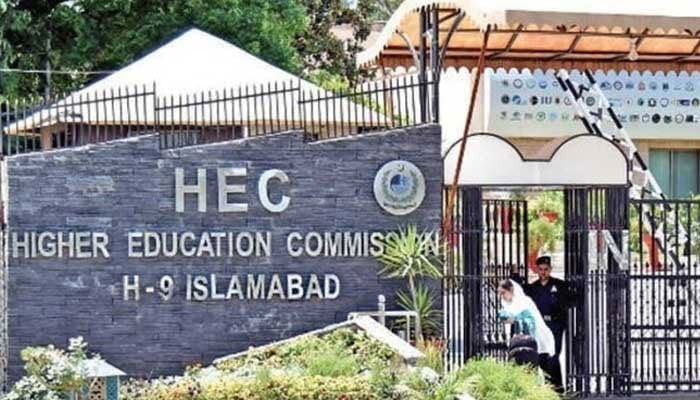
This is not the obituary of a person but the requiem of the Higher Education Commission (HEC), an institution that once stood as a beacon of reform and ambition and was gradually reduced to a shell of its former self.
While media coverage occasionally paints a rosy picture (often authored by insiders or aspirants to its top office) a deeper, more critical analysis reveals a pattern of systemic decay, mission drift and bureaucratic entanglement. Once hailed as a transformative force in the country’s academic landscape, the HEC has seen a troubling decline. If I had to pinpoint when the HEC and the higher education sector began coasting, I would put my finger on 15 years ago.
In 2002, General Pervez Musharraf introduced a law that required parliamentarians to hold at least a university degree. By August 2008, Musharraf stepped down from power. While the law was later struck down, in 2010, the Supreme Court of Pakistan required lawmakers to verify the authenticity of their university degree(s). The argument was that they needed to prove they were in compliance with laws, including repealed ones, while they were in effect. Therefore, anyone whose degree could not be authenticated had a history of breaking the law, which could be fashioned into a convenient tool to disqualify parliamentarians from re-election in the upcoming 2013 general elections.
The responsibility of verifying the university degrees of 1100 parliamentarians was assigned to the HEC, which immediately came under intense pressure from those with fake degrees. The process revealed widespread irregularities, including fake degrees, unrecognised institutions and forged documents, leading to disqualifications, resignations and legal battles. This became the most politically charged episode in the HEC’s history up to that point, highlighting the vulnerability of regulatory bodies to political pressure.
Arguably, this was the impetus for successive governments and parliaments to cut the HEC down to size by deprioritising higher education and freezing its allocation in annual budgets. Despite rising student numbers, from 2014 to 2018, the HEC’s budget hovered between Rs47 billion and Rs65 billion. Thereafter, it has remained almost unchanged – even in the face of multiple bouts of inflation. Since political parties were back in the driving seat, appointments began to reflect political allegiances rather than academic merit, setting the tone for future dysfunction, shifting the focus to administrative survival.
During the same period, the HEC began to experience increasing mission drift away from its core functions of regulation, quality assurance and the award of competitive, merit-based scholarships, as it began dabbling in non-core activities such as laptop schemes, internship programmes and career workshops.
The HEC had been envisioned to operate autonomously, which it largely did up to that point. The 2013-18 period saw the beginning of initial efforts by the government to bring it to heel at the feet of the federal bureaucracy – the Ministry of Education, later the Ministry of Federal Education and Professional Training (MoFEPT).
In 2010, parliament also passed the 18th Amendment to the constitution, which included the devolution of the subject of education to provinces. Initially, provinces were slow, even reluctant, to develop the capacity to oversee higher education in their own provinces. However, over a number of years, as the federal government began tugging at the HEC to bring it under the control of MoFEPT, provincial higher education departments and education departments slowly began to nibble off pieces and start provincial tug-of-wars.
Between 2018 and 2022, we saw this play out as fragmentation between federal and provincial regulators and bureaucracies, leaving universities lost in a maze of authorities. This time also saw a dramatic clash between a former and sitting HEC chair with lawfare involving multiple ham-handed amendments to the HEC Ordinance to engineer, among other things, the removal of the sitting chair by ex post facto reduction of his tenure from four to two years, institutional paralysis, legal challenges going all the way to the Supreme Court, culminating in reinstatement.
The past few years have also seen a number of instances of bureaucratic infighting within the HEC. Some that made occasional media headlines were between chairs and executive directors at odds with each other.
Meanwhile, many deep-pocketed people in parliament have come to realise the opportunities, business and otherwise, that flow from owning a piece of the higher education economy. In the waning days of the last parliament, when everyone’s attention was captured by the upcoming election, just before the gap between governments, parliament passed dozens of bills awarding charters to private institutes and universities.
Many media reports cited the price for which parliamentarians went to bat on behalf of their owners. Such endeavours are not helped when the people in the regulator’s office are not responsive to the needs and interests of the people who own a slice of the private higher education sector.
Once, sufficient funding masked governance problems in the sector and within universities, but after years of a frozen higher education budget in absolute terms, coupled with multiple currency devaluations from 2017 to date, cracks began forming sector-wide. Meanwhile, on the ground in universities, faculty hiring stalled. While influential public sector employees continued to enjoy salaries that kept pace with the rate of inflation, the salaries of faculty members stalled for years at a time.
Economic conditions have been tough for everybody the last few years and have kindled in many the wish to emigrate, irrespective of their chances to follow through. That includes university faculty, a largely foreign educated (many at significant expense to the public exchequer) and globally mobile segment of the working population. They are part of the gradual exodus since before Covid. Those who have chosen to remain find themselves at a growing number of public universities in financial dire straits, unable to meet payroll and pension obligations.
Today, the sector is suffering from a lack of strategic vision, fewer resources for a growing number of students and (public) institutions, regulatory confusion, interference in the appointment of key positions and political infighting between regulators, bureaucracies and universities. This will not be fixed by appointing the ‘right man’ at the top of the HEC for a two-year tenure (a blink of an eye), too short to encourage long-term thinking.
The silence that followed its passing, the quiet burial of a national promise, echoes still. For in the decline of the HEC, we mourn not just an institution, but a diminishing beacon of knowledge and the potential of a nation.
The writer (she/her) has a PhD in Education.