On Thursday morning, President Donald Trump announced that the United States, working with Egypt, Turkiye and Qatar, had finally reached a ceasefire deal for Gaza. For a moment, it seemed as if Gaza’s long nightmare was coming to an end.
But the ceasefire didn’t bring peace; it only shifted the suffering into a quieter, more insidious form, where the real damage from the rubble began to settle into Gaza’s weary soul. Years of relentless shelling had built up fear and heartbreak that no outsider could erase.
During those two brutal years of bombing and near-total destruction, everyone in Gaza was focused on one thing: Staying alive. We were fighting for every minute, trying not to break down, starve, or get killed. Life became an endless loop of terror and waiting for the next strike. No one had the luxury to dream about tomorrow or even to mourn the people we’d lost. If there was any kind of shelter, and that was a big if, the goal was simply to move from one shattered refuge to another, holding on by a thread. That constant awareness that death could come at any moment turned every day into an act of survival.
Then, when the explosions finally eased, a quieter kind of pain crept in: All the grief we had buried to get through the chaos. Almost everyone had someone torn away, and those pushed-aside memories came rushing back with a force that took the breath out of us. As soon as the rockets fell quiet, another fight began inside people’s chests, one full of mourning, flashbacks and relentless mental anguish. On the surface, it looked like the war was over, but it wasn’t. It was far messier than that. Even when the shelling eased, the emotional wounds kept bleeding.
When the noise finally faded, people began to ask the questions they had forced themselves to ignore. They already knew the answers – who was gone, who would not be coming back – but saying the words out loud made it real. The silence that followed was heavier than any explosion they had survived. That silence made the truth impossible to avoid. It revealed the permanence of loss and the scale of what had vanished. There were holes everywhere, in homes, in streets, in hearts, and there was no way to fill them.
People in Gaza breathed a fragile sigh of relief when the news of a ceasefire arrived, but they knew the days ahead could hurt even more than the fighting itself. After 733 days of feeling erased from the map, the tears locked behind their eyes finally began to fall, carrying with them every ounce of buried pain. Each tear was proof of what they had endured. It was a reminder that a ceasefire does not end suffering; it only opens the door to a different kind of torment.
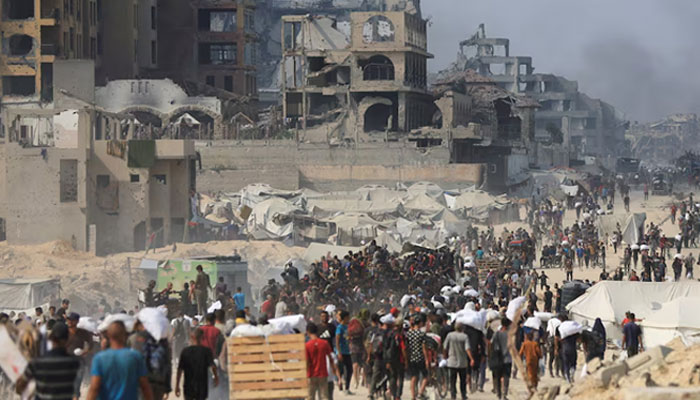
As the guns fell quiet, people in Gaza were left to confront the full scale of the devastation. You could see it in their faces – the shock, the fury, the grief – the weight of years under fire.
Roads that once hummed with life had fallen silent. Homes that had sheltered families were reduced to dust, and children wandered through the ruins, trying to recognise the streets they had grown up on. The whole place felt like a void that seemed to swallow everything, as bottled-up grief burst open and left everyone floundering in powerlessness.
Excerpted: ‘When the bombs in Gaza stop, the true pain starts’. Courtesy: Aljazeera.com