Heroes among us
Pakistan has often been criticised, mostly by Pakistanis themselves, as a land which has produced too few role models and too few heroes of any note. But we need to rethink this hypothesis and look at the heroes who have emerged from within various parts of the country. In some cases, they are only slightly known, or not really known at all, outside their native areas.
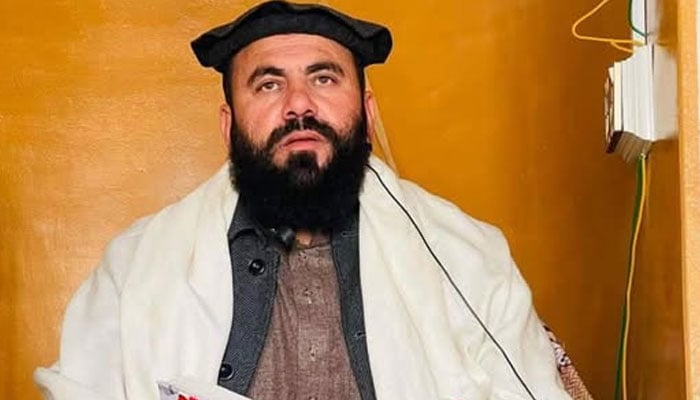
One such person was the late Maulana Khanzeb, assassinated in early July in his native Bajaur. Maulana Khanzeb was an unusual cleric in the sense that he was a leading member of the ANP, or Awami National Party. His death brings another blow to a party already decimated by the assassination of its key leaders, one after the other. In Bajaur, another middle-level leader of the ANP was killed very soon after Khanzeb.
But the story of Maulana Khanzeb is one that is worth talking about and telling. It seems he has already been forgotten in the weeks and few months that have followed the burial and the talk about a man who represented leadership of many kinds. Maulana Khanzeb was a cleric outside the norms associated most often with that word. An excellent orator, he promoted the political philosophy of the late Khan Abdul Ghaffar Khan, or Bacha Khan, suggesting that a secular, non-violent mode of life and politics was best for countries. He spoke openly about his views on this matter and combated the views of others who insisted that secularism could not exist in an Islamic country.
As those who are educated in religion well know this is really not a link to be made at all. A secular state does not mean one where people are not able to practise their religion or promote it in various ways. Khanzeb in fact promoted religion but with it he also promoted non-violence and turning away from extremism and a situation in which no harm was committed to people of other sects or other beliefs.
The Awami National Party has stated that a campaign will be organised to set up a commission to explore the death of Khanzeb and who could be responsible for it. The TTP which is active in Bajaur has denied responsibility, and for now it is unclear who may have committed the crime. It is also unclear if it is linked to other crimes against ANP leaders. But with it Pakistan has lost a man of wisdom who could have taken forward his own backward region and promoted other parts of the country as well.
Apart from his political and religious teachings, Maulana Khanzeb was a determined ecologist who had turned a barren hillside behind his place of residence into a kind of paradise where trees of various kinds grew and thousands of birds flocked to the area bringing back something of nature to a part of the country from which it had begun to vanish.
For this alone, his services need to be lauded. He also spoke openly at ANP forums on the need to separate religion and state, and there is some speculation that this ideology may have resulted in his killing. But we do not know, we cannot tell, and we can only mourn a good man who should have lived much longer rather than dying at a relatively young age essentially at the prime of his life.
Apart from Maulana Khanzeb there are also other people in the country doing good work and pushing forward the voice of the people. We need many more like them. We have Maulana Hidayat-ur-Rehman in Gwadar who has spoken out for the fisherfolk and others in Gwadar, demanding for them basic rights such as the right to a livelihood and to clean drinking water. We also have men such as Arafat Mazhar who, from his base in Lahore, advocates for a more open society as a man of religion. His work, some of it through animation, has spread in specific circles and is becoming morewidely known.
There are also other persons who we know better such as Shehzad Roy working for education and a better quality of learning as well as combating an anti-vaccine campaign. We have seen most lately the objections to the HPV vaccine being offered free of charge by the government of Pakistan to girls aged between 9 and 15. Roy is among those who have urged people to have their daughters vaccinated to protect them against cancer. In this he has been joined by Karachi-based politician Mustafa Kamal who had his daughter injected with the vaccine in public followed by Murtaza Wahab who did precisely the same thing. We need other people who can step forward in this fashion.
There are other hidden heroes all across the country. Some work for the environment, some for education, some for land rights and some for other causes. Only a few have gained the kind of following available to men such as the late Maulana Edhi and subsequently to his son Faisal Edhi. Others continue similar work on a smaller scale in spots across the country. Their positive attitude to the future of Pakistan and devotion to its people needs to be lauded. Some have given their lives for the causes they believe in and follow in every way they can.
We need many more such people. We need to inculcate in our young people the need to also think of others around them. And among the privileged youth the need to think of those less empowered than themselves. This is possible only if we begin work towards building a better country and a country where there aremore heroes.
The stories of men such as Mulana Khanzeb, who belonged to a privileged family and was chosen by his father to also learn at a seminary, need to be told much more frequently. So does that of the philosophy put in place by Bacha Khan. These are the heroes of our country and we need to know them better no matter where we live and no matter what we do. Their stories need to be told more widely and recognition given to their services.
The writer is a freelance columnist and former newspaper editor. She can be reached at: kamilahyat@hotmail.com