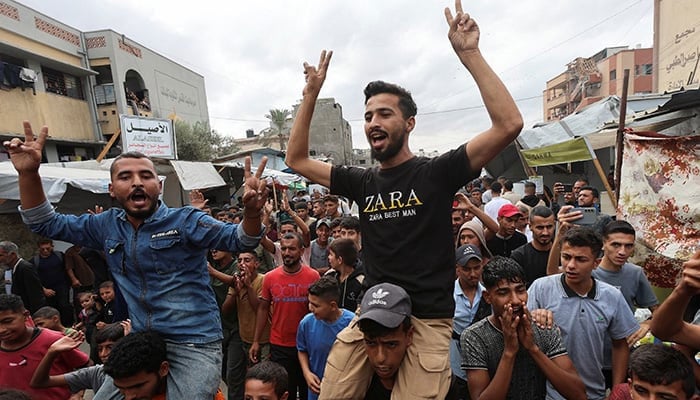
On October 10, a ceasefire in Gaza was officially announced. International news media were quick to focus on what they now call “the peace plan”. United States President Donald Trump, they announced, will go to Cairo to oversee the agreement and then to Israel to speak at the Knesset. The air strikes over Gaza, they reported, have stopped.
The bombs have indeed stopped, but our suffering continues. Our reality has not changed. We are still under siege. Israel still has full control over our air, land and sea; it is still blocking sick and injured Palestinians from leaving and journalists, war crimes investigators and activists from going in. It is still controlling what food, what medicine, and essential supplies enter.
The siege has lasted over 18 years, shaping every moment of our lives. I have lived under this blockade since I was just three years old. What kind of peace is this, if it will continue to deny us the freedoms that everyone else has?
The news of the ceasefire deal and “the peace plan” overshadowed another, much more important development. Israel raided another flotilla in international waters loaded with humanitarian aid for Gaza, kidnapping 145 people on board – a crime under international law. This came just days after Israel attacked the Global Sumud Flotilla, detaining more than 450 people who were trying to reach Gaza.
These flotillas carried more than just humanitarian aid. They carried the hope of freedom for the Palestinian people. They carried a vision of true peace – one where Palestinians are no longer besieged, occupied and dispossessed.
Many have criticised the freedom flotillas, arguing that they cannot make a difference since they are doomed to be intercepted. I myself did not pay much attention to the movement. I was deeply disappointed, having lost hope in seeing an end to this war.
But that changed when Brazilian journalist Giovanna Vial interviewed me. Giovanna wrote an article about my story before setting sail with the Sumud Flotilla. She then made a post on social media saying: “for Sara, we sail”. Her words and her courage stirred something in me.
Afterwards, I kept my eyes on the flotilla news, following every update with hope. I told my relatives about it, shared it with my friends, and reminded anyone who would listen how extraordinary this movement was. I kept wondering — how is it possible that, in a world so heavy with injustice, there are still people willing to abandon everything and put their lives in danger for people they had never met, for a place, most of them had never visited.
I stayed in touch with Giovanna. “Until my last breath, I will never leave you alone,” she wrote to me while sailing towards Gaza. In the midst of so much darkness, she became the light. This was the first time in two years I felt like we were heard. We were seen.
The Sumud Flotilla was by far the biggest in the movement’s history, but it was not about how many boats there were or how many people were on board or how much humanitarian aid they carried. It was about putting a spotlight on Gaza — about making sure the world could no longer look away. “All Eyes on Gaza,” read one post on the official Instagram account of the flotilla. It stayed with me, I read it on a very heavy night when the deafening sound of bombs in Gaza City was relentless. It was just before I had to flee my home due to the brutal Israeli onslaught.
Excerpted: ‘Why Gaza still looks to the sea for true peace’. Courtesy: Aljazeera.com