
Pakistan’s diplomatic victory and real stakes behind India’s rhetoric
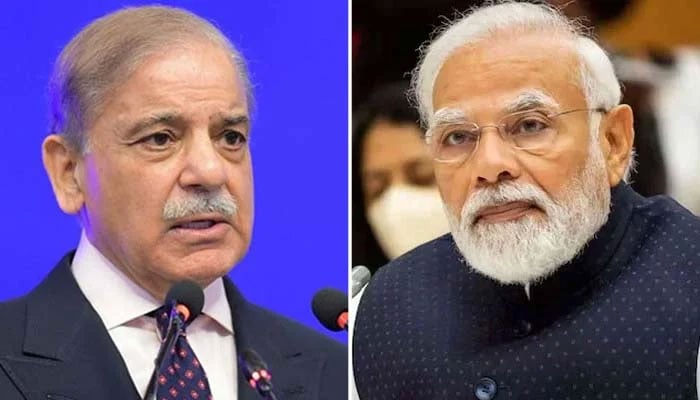
In the theatre of South Asian politics, India and Pakistan have long stood as rivals shaped by history and geography. Yet today, as India once again threatens a new “exercise of war,” it is Pakistan that stands taller - diplomatically, morally, and strategically.
The truth is undeniable: Pakistan’s steady diplomacy, measured tone, and strengthening alliances have not only countered Indian aggression but impressed the global community with their maturity and effectiveness.
Pakistan’s success is not born merely of arms or defense; it is a triumph of wisdom over arrogance, and diplomacy over noise. The world is witnessing that while India speaks the language of war, Pakistan speaks the language of peace - and that difference is winning hearts and minds across continents.
India’s unending hostility over the issue of Kashmir continues to blind its leadership to the realities of the 21st century. The unresolved dispute has trapped India in its own aggression, keeping the region hostage to tension. Claiming to be the “largest democracy,” India has failed to live up to the true spirit of democracy. Under Prime Minister Narendra Modi, prejudice and political opportunism have replaced fairness and dialogue. The alliance of right-wing elements and media-driven nationalism has hollowed out democratic principles. What should have been a moral democracy has turned into a populist machine driven by hate, suppressing dissent and minorities for electoral gain.
In contrast, Pakistan has demonstrated resilience, balance, and strategic foresight. The confrontation of May 2025 proved that Pakistan’s defence capabilities are not only credible but also disciplined. On the diplomatic front, Prime Minister Shehbaz Sharif’s performance at the United Nations General Assembly astonished many observers. His speech radiated confidence and sincerity, while his meetings with world leaders - particularly US President Donald Trump - reshaped global perceptions of Pakistan. When President Trump praised Shehbaz Sharif and described Field Marshal Asim Munir as “a great guy,” it sent a clear message across Washington: Pakistan was back at the center of American strategic attention.
What makes Pakistan’s diplomatic success even more remarkable is that it came despite formidable odds. For years, India has invested millions of dollars through lobbying firms and public relations agencies on Capitol Hill to shape Washington’s narrative against Pakistan. Its outreach extended through think tanks, advocacy groups, and Indian-American donors contributing heavily to both major US parties. By contrast, Pakistan’s diplomacy relied on sincerity, credibility, and smart engagement. Today, the momentum has clearly shifted.
Even more striking has been the transformation of Pakistan’s image within the US political environment. For several years, the Pakistani-American community remained divided, with some groups staging rallies and demonstrations over domestic political issues. That polarisation had cast a cloud of negativity around Pakistan’s name in Washington. But the tide has turned. President Trump’s admiration for Prime Minister Shehbaz Sharif and his warm reference to Field Marshal Asim Munir marked a dramatic reversal of tone. What once seemed like a diplomatic winter for Pakistan has now become a season of renewed friendship.
This change is even more extraordinary given India’s structural influence in the United States. Indian-
American executives occupy top positions in major technology firms such as Microsoft, Google, and OpenAI. Indian-origin professionals are prominent in finance, law, academia, and policymaking. The US Vice President and Second Lady are both of Indian heritage, and many state-level legislators share that background. India is a major US trading partner with a booming market, and its diaspora wields immense financial clout. Yet despite these realities, it is Pakistan that has captured the favorable attention of the Trump Administration.
How did this reversal happen? The reasons lie in a convergence of emerging geopolitical realities that President Trump and his advisors appear to recognize. America today acknowledges Pakistan’s irreplaceable position - its pivotal geography connecting South Asia, Central Asia, and the Gulf; its proven responsibility as a nuclear power; and its growing influence across the Muslim world. The recent strategic accord between Saudi Crown Prince Mohammed bin Salman and Field Marshal Asim Munir represents a milestone that redefines Pakistan’s role in Middle East diplomacy. Supported by other Muslim nations, the accord reflects deep trust in Pakistan’s military professionalism and its capacity to mediate and stabilize.
At the same time, Pakistan’s foreign policy under Prime Minister Shehbaz Sharif has remained balanced and pragmatic. Islamabad has maintained constructive engagement with both the United States and China - a rare feat in today’s polarized world. The China-
Pakistan Economic Corridor (CPEC) continues to expand, providing economic lifelines and regional connectivity. China’s steadfast partnership, combined with America’s renewed interest in Pakistan, now gives Islamabad unprecedented leverage. The recent dialogue between Field Marshal Asim Munir’s advisers and US officials about building a major rail line connecting Pasni and Gwadar underscores Pakistan’s rising economic relevance. The proposed route, linking mineral-rich zones to deep-sea ports, could transform the national economy and reshape regional logistics.
India views these developments with alarm. Its strategic establishment is unsettled that despite its vast investments, lobbying, and high-profile presence in US institutions, the diplomatic narrative is slipping away. The Pakistani mission in Washington and its Permanent Representative at the UN have exceeded expectations through professionalism and outreach. Bilawal Bhutto Zardari’s energetic diplomacy - leading high-level delegations, engaging civil-society leaders, and passionately advocating for Pakistan - has strengthened Islamabad’s image as a confident democracy rather than a divided state.
All these efforts have produced a surprising but undeniable outcome: a favorable environment for Pakistan within U.S. political and diplomatic circles. America now views Pakistan not through the lens of suspicion but as a potential stabilizing partner - a responsible power whose cooperation is vital for global peace and regional prosperity.
In this climate, India’s increasing belligerence is not only reckless but self-defeating. Any military adventure or war exercise against Pakistan will not earn New Delhi international sympathy. Instead, it will isolate India and expose its inability to coexist peacefully with its neighbors. Pakistan today stands better positioned - economically, diplomatically, and morally - to manage any crisis. The CPEC will continue to grow, and the Pasni-Gwadar rail project carries the promise of a new economic dawn.
It is time for India to pause and reflect. A nation of over a billion people cannot afford to be consumed by hostility, poverty, and prejudice. Instead of pouring billions into militarization and propaganda, India must confront its internal inequalities - the poverty of its villages, the rising intolerance in its cities, and the growing despair among its youth. Peace with neighbors, not perpetual conflict, is the only path to dignity.
History will remember that in 2025, when India chose threats, Pakistan chose diplomacy - and diplomacy prevailed. The world is changing, and Pakistan is changing with it. A new chapter of balance, peace, and prosperity has begun. It is time South Asia turns this page together.
(The writer is a Washington-based international affairs expert)



-
 State institutions ‘fail’ to perform constitutional duties: KP CM
 -
 CTD orders psychological testing of police on VVIP security duty
 -
 Navy busts drug consignment valued at $130m
 -
 Three ex-secretaries in race for ETPB chief post
 -
 Punjab govt forms 71 JITs to probe cases against banned TLP
 -
 Some UNSC members ignoring broader reforms, seeking privilege: Pakistan
 -
 PAC body discusses non-recovery of Rs15bn gas cess
 -
 Pakistan received $2.29bn foreign loans in first 4 months of 2025