Space science holds key to humanity’s progress, KU moot told
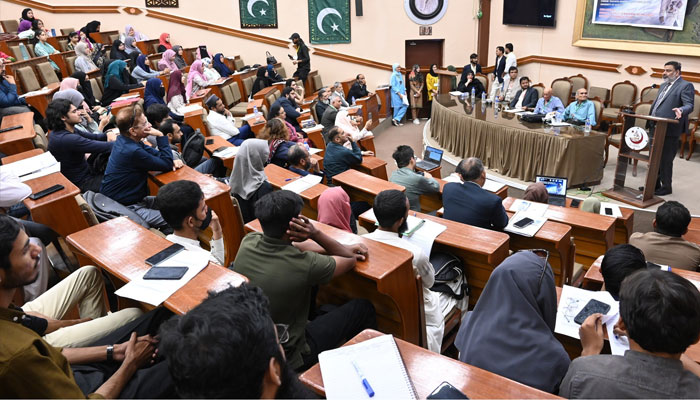
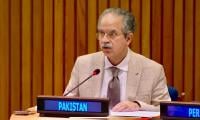
The Institute of Space Science and Technology of the University of Karachi organized ninth International Conference on Space Science and Technology at the KU’s Chinese Teachers Memorial Auditorium.
Officials said that the two-day long hybrid conference was organized to celebrate World Space Week 2025. The event highlighted the critical role that space exploration and technology play in addressing some of the world’s most pressing challenges.
Local and foreign researchers and experts shed light on many topics including astronomy, gravitation physics, aviation technology, space weather, climate variability and geo informatics science, and also discussed the future directions of space exploration and development.
During his presidential address, KU Vice Chancellor Professor Dr Khalid Mahmood Iraqi shared that space science holds the key to humanity’s progress. He emphasized that space science and technology offer immense potential for the welfare of humanity. He noted that through these advancements, we can find solutions to the pressing social challenges we face today.
“Space science has not only become a cornerstone of scientific progress, but it is also deeply influencing various aspects of human life. The time has come for our youth to step forward, harness their talents in this field, and explore new paths of research and innovation.”
He also highlighted the transformative role space technology has played in developed nations. He pointed out that advanced countries have effectively utilized space science and technology for social development, particularly in healthcare and medicine—fields of critical importance.
He added that space technology has made significant contributions in transportation, public safety, consumer needs, energy and environment, information technology, and industrial production. However, in Pakistan, its application remains limited, primarily confined to environmental monitoring, weather forecasting, and natural resource management.
VC Professor Dr Khalid Iraqi stressed the need for Pakistani scientists to move beyond individual efforts and embrace collaborative research and development. “Unfortunately, in Pakistan we observe that while work is being done across various sectors, there is a lack of coordination and cooperation. If we come together on a unified platform and address societal issues collectively—such as rising sea levels, heatwaves, and the recent unexpected rainfall in Islamabad—we can tackle these environmental challenges more effectively.”
A speaker from the Institute of Space Technology Islamabad, Professor Dr Muhammad Amin, shed detailed light on the use and purpose of antennas, explaining that antennas not only prevent energy from dispersing in all directions but also concentrate it in a specific direction.
He further elaborated that this unique property of antennas—known as “directivity” or “gain”—is considered their most vital feature. He noted that it is very characteristic that makes antennas highly effective and valuable across various communication systems.


-
 Aurangzeb confirms Saudi Arabia $10bn interest, says B2B shift ongoing
 -
 Pakistan to build artificial island to boost oil exploration
 -
 Special pink bus service launched for women on Green Line route
 -
 Same number plates from other provinces lead to wrong e-challans for Karachiites
 -
 State institutions ‘fail’ to perform constitutional duties: KP CM
 -
 CTD orders psychological testing of police on VVIP security duty
 -
 Navy busts drug consignment valued at $130m
 -
 Three ex-secretaries in race for ETPB chief post