Mind the gaps
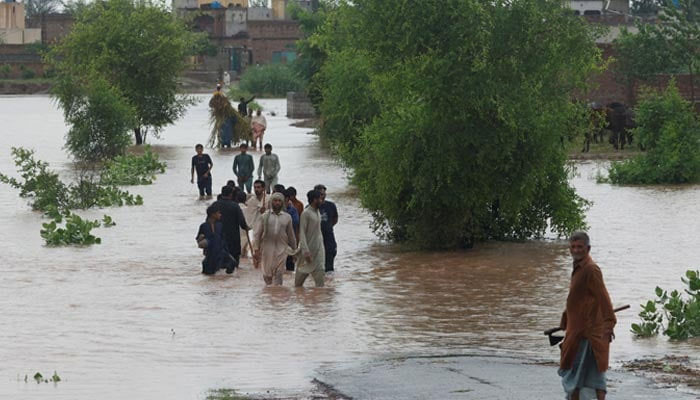
During the 2025 floods, more than 6.3 million people were affected and 2.9 million displaced. Grief has left survivors overwhelmed, struggling with sleepless nights, recurring fears and survivor’s guilt.
This year, the World Health Organisation chose ‘mental health in humanitarian emergencies’ as the theme for World Mental Health Day (which fell yesterday on October 10). This focus could not be more relevant for Pakistan, where flood survivors face these challenges amid fragile and under-resourced mental health services.
In a disaster-prone country like Pakistan, mental health can no longer remain overlooked. For many survivors, the disaster does not end when the waters recede; it lingers in quiet moments of fear and anxiety, with every rainfall reviving the terror of what might return. The WHO reminds us that psychological support is as essential as food, water and shelter. Integrating psychological first aid into emergency response, which ensures safety, reassurance and community connection, can help reduce distress and prevent long-term illness that undermines recovery and resilience.
Simple self-help strategies such as staying connected, maintaining routines, engaging in meaningful activities and seeking comfort from trusted networks can make a real difference in restoring stability after a crisis. Early psychological first aid helps people manage immediate distress, while specialised services remain essential for those with more severe conditions. Protecting the mental health of humanitarian workers through rest, supervision and peer support is equally vital to sustain their effectiveness and prevent burnout.
This challenge extends far beyond disaster zones. Nearly 34 per cent of Pakistan’s population, an estimated 67 million people, live with mental health conditions ranging from anxiety and depression to severe disorders such as schizophrenia — yet only around 500 psychiatrists serve a population of 240 million. The absence of mental healthcare systems and sustained financing becomes most visible in moments of crisis when communities are left to cope on their own.
Depression and anxiety remain consistently higher among women, but their distress is often dismissed as being hormonal. Women and marginalised communities, including transgender persons, people with disabilities and older citizens, bear a disproportionate burden, yet face the greatest barriers to seeking care. Cultural stigma, economic dependence, lack of mobility and limited access deepen their struggles, leaving many untreated and unheard. Families are destabilised, social cohesion weakens and the generational trauma perpetuates.
Pakistan’s mental health framework, though modernised from the colonial Lunacy Act of 1912 to the Mental Health Ordinance of 2001 and later provincial acts, still lacks meaningful implementation. Despite the recent decriminalisation of suicide in 2022, more than 25,000 people die by suicide each year. With less than 0.5 per cent of the national health budget devoted to mental health, care remains inaccessible for most citizens.
The focus must now shift to integrating mental health into primary healthcare, ensuring that every person who seeks medical help can also access psychological support. Evidence-based initiatives such as the WHO Parent Skills Training Programme, delivered by trained family volunteers, show how resilience can be built at the household level. Schools and workplaces, where early signs of distress often appear, must also become spaces of support through awareness sessions, counselling access and referral systems that connect individuals to appropriate care. Training non-specialist providers, including teachers, lady health workers and community volunteers, can expand the mental health workforce.
Encouragingly, there are examples that illustrate the potential for meaningful progress. The Aga Khan Development Network’s tele-mental health and community counselling initiatives demonstrate how technology and trained non-specialist providers can extend care to underserved and remote populations. Scaling such models through coordinated partnerships between the public and private sectors, backed by sustainable financing and accountability mechanisms, can transform small pilot projects into an integrated national system of support.
If Pakistan is to withstand the shocks of a changing world, from climate disasters to economic and public health emergencies, it must treat mental health as a core public good.
The writer is a consultant obstetrician and gynaecologist. She can be reached at: drhadia88@gmail.com