
ISLAMABAD: The International Monetary Fund (IMF) has provided Pakistani authorities with the draft Memorandum of Economic and Financial Policies (MEFP) to finalise a consensus, paving the way for the imminent signing of a Staff Level Agreement (SLA).
Earlier in the day, the IMF review mission concluded discussions under the Extended Fund Facility (EFF) and the Resilience Sustainability Facility (RSF). Agreement on the MEFP will facilitate the SLA, enabling a formal request to the IMF’s Executive Board for approval of $1.4 billion as the third tranche under the EFF and the first instalment of the RSF within six weeks.
Pakistan and the IMF have agreed to reduce the Federal Board of Revenue’s (FBR) tax collection target from Rs14.13 trillion to Rs13.97 trillion, a cut of Rs0.16 trillion, following the FBR’s shortfall in the first quarter of the current fiscal year. The IMF has discussed contingency measures, effective from January 1, 2026, should the tax shortfall persist in the second quarter (October–December). Expenditures will be reduced proportionally to address any shortfall.
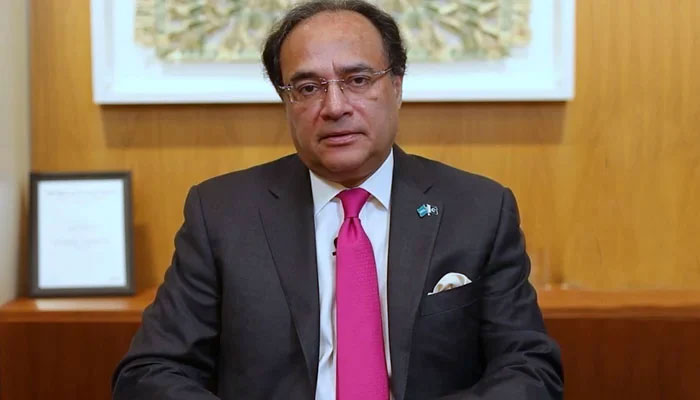
Finance and Revenue Minister Muhammad Aurangzeb, speaking to a select group of reporters outside the Q Block (Ministry of Finance), stated that talks with the IMF were progressing positively. He confirmed that the MEFP draft has been shared, and the SLA is imminent, describing it as “just a matter of time.” Aurangzeb noted that Pakistan has met all agreed IMF targets, with ongoing economic review talks “on track” and negotiations “positive and productive,” with consensus achieved on major targets. However, he refrained from detailing how the government plans to address the FBR’s current revenue shortfall.
A senior official with past IMF experience told The News that, historically, every figure in the MEFP was meticulously reviewed and revised before finalisation. The official cautioned that while sharing the MEFP draft is a step forward, its content is critical. The IMF review mission wrapped up two weeks of talks with Pakistan’s economic team regarding the $1.4 billion disbursement. The mission was scheduled to depart Islamabad in the early hours of October 9, 2025. The IMF had not issued a press statement as of the filing of this report on the night of October 8, 2025.
According to an IMF internal document, Pakistan’s current account deficit for fiscal year 2025-26 is estimated at $1.49 billion, with exports projected at $32.98 billion, imports at $60 billion, and remittances at $36 billion. In contrast, Pakistan’s projections to the IMF estimate a $500 million current account deficit, $34 billion in exports, $65 billion in imports, and $42 billion in remittances.
To resolve a longstanding impasse over the IMF’s Corruption and Governance Diagnostic Assessment Report, Pakistan has agreed to make senior bureaucrats’ assets public. In another significant development, the government has appointed members to the Benami Adjudicating Authority. With the Prime Minister’s approval, a notification dated October 3, 2025, confirms the appointment of Waqar Ahmad (Retd. SG/BS-22) as Chairperson, and Zahoor Ahmad (Retd. SG/BS-22) and Abdul Majid Yousfani (Retd. PCS/BS-21) as Members, for a three-year term or until they reach the age of 62, whichever comes first.
Meanwhile, Pakistan has assured the IMF review mission that the transition to an interest-free financial system, as mandated by the 26th Constitutional Amendment, will not affect its international agreements, outstanding external debt, or obligations.
The IMF asked Pakistan to develop a restructuring plan for the Central Directorate of National Savings (CDNS), which holds a portfolio of Rs 3.4 trillion, to transform it from a state-owned entity into a corporate entity with parliamentary approval.
The Ministry of Law clarified to the IMF that the riba-free financial system pertains to domestic debt and does not affect international agreements or external debt and liabilities. Ministry of Finance officials informed the IMF that Islamic deposits account for approximately 13 percent of total deposits, with Shariah-compliant Sukuk comprising around 13 percent of the securities market. The government aims to increase the share of Shariah-compliant deposits to 30 percent under the Medium Term Debt Strategy (MTDS).
Increasing the share of Shariah-compliant government securities is a key objective to diversify the investor base and advance the agenda for a Shariah-compliant financial system. During fiscal year 2025, this share rose from 11.5 percent to 12.7 percent. New Shariah-compliant instruments, including 10-year tenors with Fixed Rental Rate (FRR) and Variable Rental Rate (VRR), were introduced to attract institutional investors with longer maturity preferences.
The IMF sought clarity on the structure and ground rules of the post-2027 financial system to enable market participants to prepare and ensure financial stability during the transition.
The authorities’ financial sector strategy must address the implications of eliminating riba by January 2028, which will significantly affect the financial sector’s structure, financial stability, banking supervision, and monetary policy implementation. Publishing this plan and necessary guidance will align expectations among market participants, investors, and regulators, allowing preparation time and mitigating risks of a cliff effect under the new Structural Benchmark for June 30, 2026.
The Pakistani authorities are also tasked with developing a strategic action plan to support capital market development, addressing the sovereign-bank nexus and improving private sector financing access. Additionally, anti-money laundering and countering the financing of terrorism (AML/CFT) effectiveness should be enhanced through risk-based supervision, beneficial ownership transparency, and mitigation of trade-based money laundering risks.




-
 State institutions ‘fail’ to perform constitutional duties: KP CM
 -
 CTD orders psychological testing of police on VVIP security duty
 -
 Navy busts drug consignment valued at $130m
 -
 Three ex-secretaries in race for ETPB chief post
 -
 Punjab govt forms 71 JITs to probe cases against banned TLP
 -
 Some UNSC members ignoring broader reforms, seeking privilege: Pakistan
 -
 PAC body discusses non-recovery of Rs15bn gas cess
 -
 Pakistan received $2.29bn foreign loans in first 4 months of 2025