KP colleges’ outsourcing project : Teachers’ service terms to stay intact
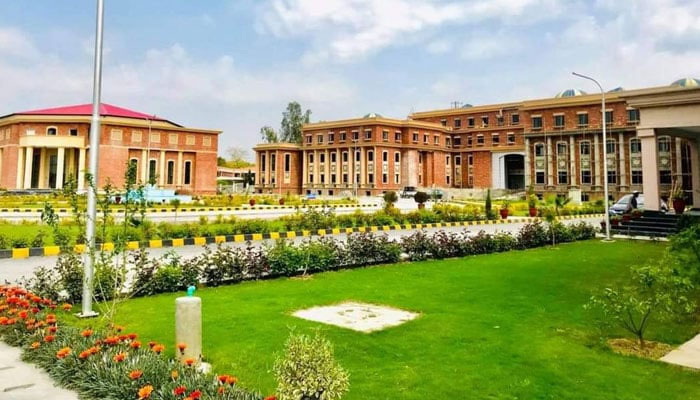
PESHAWAR: The provincial government has emphasized that its latest education reform initiative does not involve privatising or leasing out public colleges. Instead, the plan aims to outsource the operation and maintenance services of selected low-performing colleges to private sector professionals while retaining ownership, monitoring and control under government authority.
The outsourcing will not affect government employees’ service status, sanctioned posts or promotion prospects. Initially, only five colleges will be outsourced as a pilot project.
Officials from the Higher Education Department (HED) told this correspondent that the move targets improvement in colleges identified through performance indicators such as low student enrolment, weak administration, and underutilised infrastructure, particularly in remote or rural areas where education standards have declined. According to the HED officials, outsourcing will be launched as a pilot project in a maximum of five colleges to enhance quality without burdening students or affecting public sector status. “There will be no increase in fees, and these colleges will continue to function as public sector institutions,” the statement said. “Students in remote areas will have access to qualified teachers, laboratory facilities and market-relevant disciplines for the first time.” They stressed that the reform aims to provide quality education at the doorstep of students while ensuring accountability through Key Performance Indicators (KPIs) for service providers. Payments will be linked to measurable performance outcomes.
Addressing teachers’ apprehensions, the HED official clarified that outsourcing will not affect government employees’ service status, sanctioned posts or promotion prospects. Teachers from outsourced colleges will be adjusted to nearby institutions within the same region. Officials stressed that the model is an improved version of earlier government schemes, such as the provision of missing facilities and staff through the Annual Development Programme (ADP). However, the initiative has met with resistance from some faculty members who fear it could pave the way for future privatisation and weaken job security in the long run. Reports suggest that a few principals and teachers have opposed the project and, in some cases, involved students in protests against the government decision. The HED has termed such actions “unethical and against the public interest.” It stated that “instigating students or politicising reform initiatives for personal or political motives sabotages efforts to improve education quality in underdeveloped regions.”
Despite the controversy, the government reiterated its willingness to engage with faculty representatives to address legitimate concerns. “We remain open to dialogue and value constructive input from our teachers. But we will not tolerate illegal pressure tactics or misuse of students for personal agendas,” the statement concluded. The government maintains that the initiative is a public-centric reform designed to revive underperforming colleges and ensure equitable access to quality education across Khyber Pakhtunkhwa.


-
 Aurangzeb confirms Saudi Arabia $10bn interest, says B2B shift ongoing
 -
 Pakistan to build artificial island to boost oil exploration
 -
 Special pink bus service launched for women on Green Line route
 -
 Same number plates from other provinces lead to wrong e-challans for Karachiites
 -
 State institutions ‘fail’ to perform constitutional duties: KP CM
 -
 CTD orders psychological testing of police on VVIP security duty
 -
 Navy busts drug consignment valued at $130m
 -
 Three ex-secretaries in race for ETPB chief post