
IAC okays Rabi plan with 8pc shortage, lowest in a decade
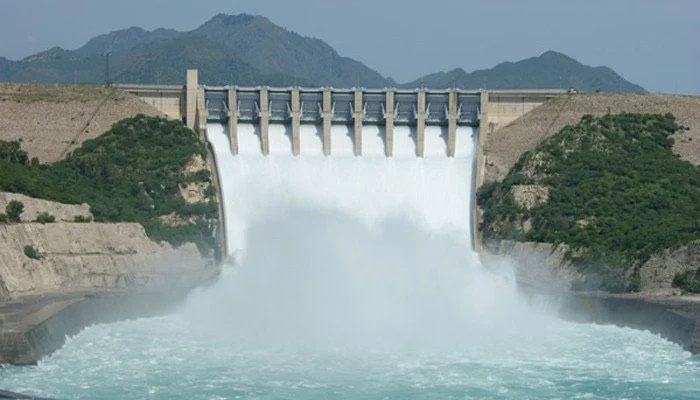
ISLAMABAD: Despite a rare consensus among Pakistan’s federating units on an eight percent water shortage for the upcoming Rabi season (October 2025 to March 2026) — the lowest in a decade — tensions flared during the Irsa Advisory Committee (IAC) meeting as Punjab and Sindh protested persistent delays in completing critical infrastructure at Tarbela Dam.
“Both provinces expressed deep frustration over the prolonged non-operational status of low-level outlets on the T4 and T5 power tunnels. The outlet on Tunnel-4 has been out of service for over three years, while Tunnel-5 has remained inoperative for 33 months. Officials from Punjab and Sindh accused Wapda of institutional negligence, claiming that these delays caused a shortfall of 1.4 million acre-feet (MAF) during the early part of the Kharif season, despite ample water being stored in reservoirs,” sources in the meeting told The News
“The situation escalated when Wapda proposed lowering the Tarbela Dam’s water level from 1,550 feet to 1,495 feet by November 10 to facilitate maintenance works. This would require releasing 2.8 MAF of water—an amount the provinces say would be entirely wasted, as there would be no corresponding demand at that time. Both Punjab and Sindh firmly rejected the proposal, arguing that they should not bear the cost of Wapda’s mismanagement.”
Provincial representatives, the sources said, demanded that Wapda complete construction on T4 and T5 before the next Kharif season, warning that any further delays were unacceptable. However, Wapda did not provide a firm timeline, citing consultant-related issues and financial difficulties. The authority also requested an additional year to complete work on T5, a plea flatly turned down by the provinces.
According to sources familiar with the matter, Tarbela’s storage capacity has been significantly reduced due to silt accumulation, dropping from 9.6 MAF to just 5.8 MAF. This has directly contributed to reduced water availability by 8 to 10 percent, adding another layer of complexity to an already strained water management system. The IAC, chaired by Sahibzada Muhammad Shabir, met here on Tuesday to finalise the anticipated water availability from October 2025 to March 2026. The meeting was attended by IRSA members, representatives from Wapda, the Ministry of Water Resources, and irrigation secretaries from Punjab and Sindh.
The IAC approved water availability for the Rabi season 2025-26 , projecting an overall 8 percent system shortage despite widespread monsoon floods that filled reservoirs to near capacity. The season runs from October 1 to March 31, with the major crops including wheat, tobacco, barley, mustard, gram, lentils, potatoes, onions and tomatoes.
The committee noted that inflows during the Kharif 2025 season reached 122.364 million acre-feet (MAF), exceeding projections by 18 percent, the 10-year average by 19 percent, and last year’s inflows by 14 percent. Effective flood management allowed Irsa to fill almost all reservoirs, reaching 99 percent of their total capacity with 13.214 MAF of storage as of September 30.
After deliberation, IAC approved anticipated rim-station inflows of 22.016 MAF for the Rabi season and set an overall shortage of just 8 percent -- well below last year’s 18 percent. The provinces were allocated total withdrawals of 33.814 MAF, markedly higher than the 10-year average of 28.870 MAF and last year’s 29.427 MAF.
Punjab received the largest share, with an allocation of 18.207 MAF compared to its 10-year average of 15.367 MAF. Sindh was allotted 13.734 MAF, up from its decade-long average of 11.935 MAF. Khyber Pakhtunkhwa (Chashma Right Bank Canal) and Balochistan received 0.701 MAF and 1.171 MAF, respectively, both slightly higher than previous years.
Officials attributed the improved water outlook to an exceptionally wet Kharif season marked by heavy monsoon rains and floods across both western and eastern rivers. The abundance of inflows allowed Irsa to optimise reservoir levels, minimising shortages for the upcoming Rabi cropping season.
The eight percent deficit forecast for Rabi 2025-26 marks the most favorable outlook in ten years, signaling potential relief for farmers and improved water security for the winter cultivation period.





-
 State institutions ‘fail’ to perform constitutional duties: KP CM
 -
 CTD orders psychological testing of police on VVIP security duty
 -
 Navy busts drug consignment valued at $130m
 -
 Three ex-secretaries in race for ETPB chief post
 -
 Punjab govt forms 71 JITs to probe cases against banned TLP
 -
 Some UNSC members ignoring broader reforms, seeking privilege: Pakistan
 -
 PAC body discusses non-recovery of Rs15bn gas cess
 -
 Pakistan received $2.29bn foreign loans in first 4 months of 2025