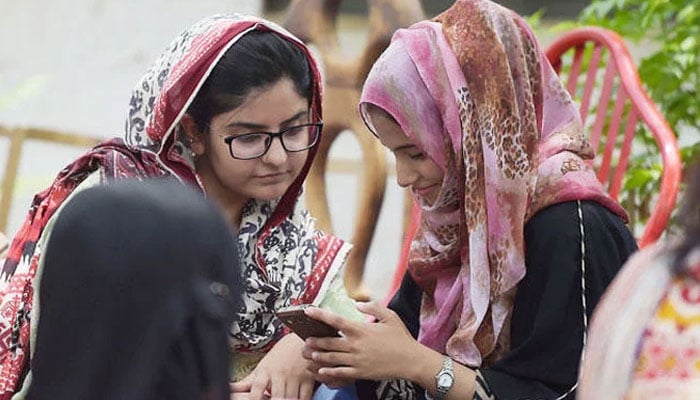
In the newly released Nationally Determined Contribution (NDC) 3.0, Pakistan outlines its climate ambitions and priorities for the coming years. Yet what’s striking is not what’s included, but what’s missing.
In NDC 2.0 (2021), Pakistan explicitly pledged to develop a National Youth Strategy on Climate Action. This was a progressive step, recognising youth as key stakeholders in climate governance, policy implementation and international engagement. It was also consistent with global trends, where countries have increasingly acknowledged the role of young people in shaping climate resilience and holding governments accountable.
Now, in NDC 3.0, that commitment has simply vanished.
This omission raises two urgent questions: why does the government no longer consider the youth a priority? And more importantly, why wasn’t the promise of a youth strategy fulfilled in the four years since it was first made?
The absence of youth engagement represents a policy regression. In a country where more than 60 per cent of the population is under 30, and where climate change poses an existential threat to future generations, such omissions are dangerous. Dropping an earlier pledge also undermines Pakistan’s credibility in international negotiations and weakens trust with partners. Youth inclusion is a stated priority for global climate finance and multilateral institutions such as the Green Climate Fund (GCF) and the UNFCCC’s Action for Climate Empowerment (ACE) agenda. By excluding youth, Pakistan risks losing both financial and technical support that could otherwise help strengthen national climate action.
Without structured participation, climate policy remains top-down and disconnected from the people who will live with its consequences. Our elders, who are shaping the policies, will not be here in 50 years, but today’s youth will. If they are not part of decision-making now, where is the intergenerational equity?
What makes this more frustrating is the contradictory language in NDC 3.0. The document claims: “Pakistan is expanding opportunities for women’s leadership and youth engagement in climate governance, including appointing women and youth representatives on climate committees and fostering inclusive forums to ensure diverse stakeholders’ input”. The question is simple: which climate committees? Are any formally notified? Where is the framework or structure for these forums? Without transparency, these claims read like rhetoric rather than reality.
The NDC 3.0 also references the UNFCCC’s Lima Work Programme on Gender and ACE, stating that Pakistan is enhancing education, awareness, and participation with a focus on youth and vulnerable groups. Yet Pakistan has still not appointed a national ACE focal point, something that nearly 150 countries have already done. This failure means we are not accessing the very resources, capacity-building, and networks that we so desperately need.
Another example is the plan to establish a new green skills university. At first glance, this sounds visionary, because nothing gives you the kick quite like a mega project. However, if genuine stakeholder consultation had taken place, the Ministry of Climate Change would have known that existing universities are struggling to pay the salaries of their faculty and staff, let alone fund cutting-edge research and development for future prospects. Why build a new institution when existing curricula could be updated to integrate green skills?
A civil engineer could be taught new building codes for climate-resilient cities. A computer science student could learn to apply GIS and AI for climate modelling. An economics graduate could study climate finance and carbon markets. These are practical, low-cost solutions.
Climate governance in Pakistan appears to focus on announcing new projects rather than strengthening existing systems. Climate change is not waiting for Pakistan to get its governance right. It is already here, with floods, heatwaves and food insecurity becoming more frequent and more intense.
The youth are not an optional add-on to climate policy. They are the generation that will inherit both the crisis and the responsibility to solve it. Excluding them is both unjust and unwise. Countries that have empowered their young citizens through councils, advisory platforms and education reforms are building long-term resilience. Pakistan, by contrast, seems to be treating youth inclusion as a box to tick, only to erase it when convenient.
The omission of the youth from NDC 3.0 is disappointing, but it is not irreversible. Pakistan can still correct course: by reinstating the National Youth Climate Strategy pledged in NDC 2.0, and by formally appointing an ACE focal point.
The writer is an advocate for youth empowerment, climate action and strengthening local governance.