Eye in the sky
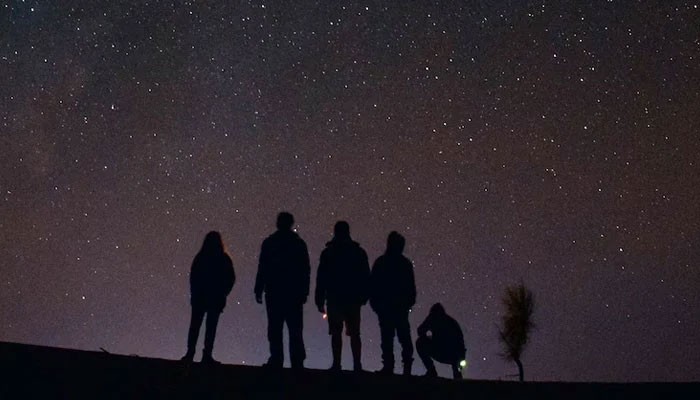
For as long as we have existed, humans have been enamoured with the skies. Whether it was our desire to soar like a bird or a fantasy of snatching a star out of the sky, we have always dreamed about harnessing the seemingly infinite realm that stretches endlessly above us.
We have featured the sky in our folklore and used it for navigation for several millennia and across various civilisations, with varying, often improving, degrees of accuracy. Even though we have outgrown the mythical aspects, leaving them no more than archaic hobbies, and restructured our lives around machinery and technology, our ancestral fascination still serves us. It could be that it helps us conquer the defining challenge of our time – one that has prompted entire shifts in consumption patterns and devastated entire ecosystems – climate change.
To say that ‘climate change’ has become one of the most trending buzzwords among policymakers would not be an exaggeration. Due to excessive industrialisation and energy consumption, the global climate is undergoing constant change, which endangers the entire biological heritage. For context, 2023 broke every single climate indicator and recorded the highest mean global temperature in a 174-year observation period, as well as the highest ocean heat content in 65 years of observation.
As the temperatures of both land and ocean surge, they exacerbate the melting of glaciers and polar ice caps, which in turn raise the water level. This rising water level is a threat to the existence of many coastal regions, while also being the prime candidate for the ongoing unusual and extreme weather patterns. Such catastrophes result in significant socio-economic losses, exacerbate existing economic disparities and compromise water and food security. They also cause substantial damage to natural habitats, resulting in almost irreversible destruction, such as the retreat of melting glaciers.
This is a significant challenge and has become the focal point for all policymakers and planners. As climate change is an ever-present, compounding calamity, developing a pragmatic plan to mitigate it requires numerous data points. Not only have we needed to monitor the Essential Climate Variables (ECVs), but also to analyse them to establish patterns. Space technology is the most reasonable approach we have so far. NASA’s NIMBUS III, launched in 1969, was the first attempt at an observational satellite that could accurately measure the atmospheric temperature. Now, a myriad of advanced meteorological tools are used for complex measurements and data collection. Even the ISS is quite well equipped in this regard.
Many space agencies have launched and planned numerous missions that are expected to revolutionise our current understanding. They include NASA’s Earth System Observatory, ESA’s Copernicus series, and RAL’s SLSTR (Sea and Land Surface Temperature Radiometer) systems. Satellites are preferred for a plethora of reasons in this regard: to provide standardised coverage and monitor all essential parameters, while also offering a more passive and safe data collection approach.
Satellites, for one, provide a constant stream of data without delay, making it easier to establish and analyse meteorological trends and patterns. One might not realise the scale and the sheer magnitude of data needed to understand and predict climate change and its implications. Satellites provide vast amounts of data on ocean heat content, greenhouse gases, permafrost and, in particular, polar ice caps. This allows climate scientists to develop more accurate models and projections, which aid in reducing uncertainty related to climate measurements and predicting climate scenarios. They provide a vital means of bringing observational content, and logging it for research and analysis, as well as assisting in climate change simulations.
Secondly, space monitoring is practical as it allows the whole planet to be observed and modeled passively on a permanent basis. It also collects data from far-off and harsh conditions where a permanent observational camp, or even short-term human presence, may be unfavourable or impossible throughout the year. Instead of only discrete, limited data from manageable patches, satellites allow a bird’s eye view of entire ecosystems. An analysis of such data is optimal for the intended purposes, and space technology is our best shot at it.
All this information helps in predicting future events and enables more informed decision-making regarding disaster management and safety. It also helps identify any miscalculations associated with a safety or management mechanism. The data could expose any undetected vulnerability of a coastal region, or the risks to agriculture and livelihood posed by a predicted extreme weather event.
This data also serves as the primary input for the yearly IPCC and WMO reports, which are the primary literature used by policymakers to make commitments at the international stage and form mitigation policies. For instance, the evidence collected and subsequent reports from satellite imagery over Antarctica strengthened the case for banning hazardous industrial substances like CFCs. It catalysed the passage of the Montreal Protocol. This international treaty strove to protect the ozone layer by banning the substances responsible for its depletion.
This network of satellites comes with its fair share of financial strain and technical limitations. As indicated in a report by the World Economic Forum, Earth’s observational field is expected to contribute over $700 billion to the global economy by 2030. The network also requires an experienced professional and academic community to design, calibrate, and launch these instruments. Since repairing and tweaking are not feasible plans, they also require extensive testing beforehand.
By contrasting the value it brings to climate research with the potential downsides it holds, the application of space technology in this domain is a revolutionary achievement that has the potential to redefine climate change and its optimal mitigation strategies. ESA Director General Josef Aschbacher aptly sums up the potential that space holds in data collection and modeling climate change: “Space offers a vast untapped potential to ramp up the fight for a green future and tackle global climate change”.
The writer is a freelance contributor.