What kind of development?
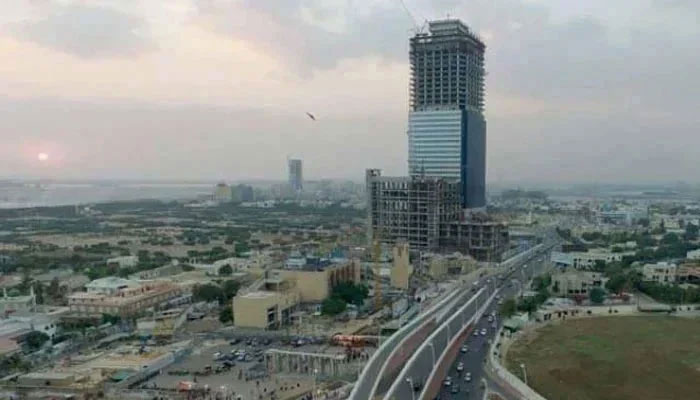
Pakistan’s urban expansion has long been framed as a sign of progress. High-rise apartments rise where farmland once stood, and gated housing schemes stretch across city peripheries. Yet behind the rhetoric of growth lies a sobering reality: much of this development is taking place in areas fundamentally unfit for construction and the consequences are becoming harder to ignore.
The 2025 floods, now counted among the most devastating in recent memory, have exposed the fragility of an urban model that overlooks geography, climate and governance in equal measure.
Since June 2025, floods have killed nearly 1,000 people and displaced almost 2.9 million. Punjab alone has seen over 4.29 million residents affected, with 4,400 villages inundated and 1.3 million acres of farmland lost to floodwaters.
The agricultural sector has suffered damages estimated at Rs302 billion, three-quarters of total flood losses amounting to Rs409 billion nationwide – or roughly 0.33 per cent of GDP. Entire communities have been forced to seek shelter while food prices spike and relief efforts struggle to keep pace. These are not merely the outcomes of an unusually heavy monsoon. They are the product of unchecked construction in floodplains, encroachments on waterways and the prioritisation of real estate expansion over resilience.
The case of high-end housing schemes in Lahore illustrates this crisis vividly. Designed as premium gated communities, they are marketed as symbols of security and modern living. Yet in this year’s floods, phases of many of these schemes were inundated, damaging homes, furniture and household assets. Families that had invested life savings in what was promised as safe, regulated housing were left facing losses without adequate safeguards.
Such episodes may be seen as accidents of nature but they are really predictable outcomes of approving construction on land vulnerable to waterlogging and flood overflow. The cost is borne not only by residents but by the wider economy, as relief and reconstruction divert resources from long-term development.
Government initiatives to encourage apartment living over sprawling single-family housing reflect a recognition of the challenges posed by urban sprawl. Yet these efforts risk repeating the same mistakes if construction governance is not fundamentally reformed. Simply replacing horizontal spread with vertical growth does little if buildings continue to be approved in ecologically fragile zones without proper drainage, zoning enforcement or disaster-resilient design.
The National Housing Policy (2019) emphasised compact cities and vertical expansion, but it offered little in terms of binding regulatory mechanisms for safe siting. The result has been a rapid rise in high-rises without adequate attention to climate adaptation or building resilience.
This disregard is not limited to private housing. Public infrastructure has also been repeatedly compromised by similar oversight. Roads, underpasses and drainage systems in major cities are routinely submerged after heavy rainfall, straining emergency services and disrupting economic activity.
In Karachi, rainfall paralyses mobility almost annually, while in Lahore, the Ravi River floodplain continues to attract development despite well-documented risks. According to the Punjab Disaster Management Authority, nearly 30 per cent of Lahore’s planned urban expansion lies within flood-vulnerable areas. The absence of clear enforcement mechanisms enables these projects to move forward, even when environmental assessments raise concerns.
The broader challenge lies in reconciling Pakistan’s urgent need for urban housing with its equally urgent exposure to climate risk. With an urbanisation rate of nearly 38 per cent and rising, demand for affordable housing is undeniable. But so too is the need for governance frameworks that prioritise resilience. Construction in areas identified as high-risk zones must be restricted, not rationalised. Urban planning must integrate flood mapping, ecological corridors and stormwater management into every approval process.
The Pakistan Environmental Protection Act (1997) already mandates Environmental Impact Assessments for major projects. Yet, compliance remains limited, with many housing societies either bypassing the process or receiving approvals without rigorous scrutiny. Without such measures, the cycle of building, flooding, and rebuilding will only accelerate.
The human costs extend beyond property damage. Families displaced by floods are often forced into temporary camps, with children losing access to schools and breadwinners cut off from livelihoods. Women, in particular, face heightened vulnerabilities in overcrowded shelters, where privacy and safety are difficult to maintain. Public transport systems, already strained, become unreliable as roads are submerged, cutting off access to healthcare and essential services.
The 2025 floods have also displaced nearly 400,000 school-going children, according to Unicef, highlighting the intergenerational costs of unchecked urbanisation. These experiences show how construction decisions taken in boardrooms and planning authorities reverberate directly through the everyday lives of citizens.
What makes the situation especially stark is that solutions are not unknown. Pakistan has existing building codes, environmental laws, and municipal regulations designed to prevent precisely the kinds of excesses now on display. The Building Code of Pakistan (Seismic Provisions, 2007) and the Punjab Local Government Act (2019) both provide frameworks for safer, more accountable development. Yet enforcement remains weak, often undermined by the pressures of housing demand.
This gap between rules on paper and realities on the ground is at the heart of the crisis. Until governance shifts from approving as many projects as possible to ensuring those projects are safe, sustainable and climate-sensitive, each monsoon season will bring fresh reminders of the costs of neglect.
The floods of 2025 are a wake-up call. They show that urban development in Pakistan cannot be measured solely by the number of housing units delivered or roads built. The real measure is whether cities can withstand the pressures of climate change without collapsing into cycles of loss and recovery. Development without resilience is not progress but a liability.
For Pakistan, the question is no longer whether enough development is being pursued but whether it is the right kind. At a time when entire housing schemes can be swept by floodwaters and billions lost in agricultural damage, the imperative is clear: growth must be redefined to account for sustainability. Until that shift occurs, urban expansion will continue to generate headlines of progress in calm seasons, only to collapse into headlines of devastation when the rains arrive.
The writer is a transnational educational consultant, freelance columnist and policy analyst based in Lahore.