IHC judges transfers evince mala fide use of power: SC judge
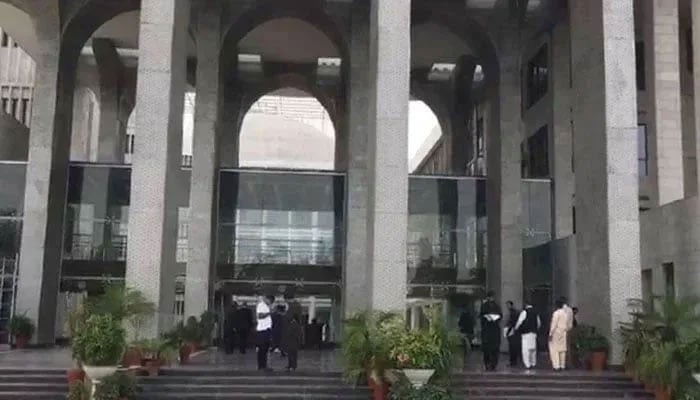
ISLAMABAD: Supreme Court judge Justice Shakeel Ahmed on Monday held that the manner in which the transfer of judges to the Islamabad High Court (IHC) was carried out reflects a mala fide exercise of authority, one seemingly intended to dilute the independence of the IHC and reshape its composition.
Justice Shakeel Ahmed issued an additional note to the short dissenting order dated June 19, 2025, announced by a five-member bench dismissing the pleas of five judges of the Islamabad High Court against the transfer of judges to the said High Court. “I have perused the reasoning authored by my learned brother, Naeem Akhter Afghan, J., for our dissenting short order dated June 19, 2025, and I supplement the same with this additional note,” Justice Shakeel Ahmed stated in his 23-page order.
The judge held that the manner in which the transfers were carried out reflects a mala fide exercise of authority, one seemingly intended to dilute the independence of the IHC and reshape its composition. “Crucial aspects, such as the implications for seniority and the requirement of a fresh oath, were not transparently presented to the CJP and concerned Chief Justices of the High Courts during the consultation process,” Justice Shakeel held. The judge further held that the transfers of judges to the IHC under Article 200(1) of the Constitution have raised serious legal concerns. These actions, carried out in apparent disregard of established judicial norms, undermined the legitimate expectations of senior judges of the IHC, particularly their prospects for appointment as Chief Justice or elevation to the Supreme Court,” the judge noted, adding that this not only posed a threat to judicial independence but also revealed a procedural irregularity.
On June 19, a five-member constitutional bench of the apex court headed by Justice Muhammad Ali Mazhar had dismissed identical petitions challenging the transfer of judges from various high courts to the Islamabad High Court (IHC), holding that the transfer of judges by the president of Pakistan, by means of the impugned notification, is within the framework of the Constitution and cannot be declared ultra vires. Other members of the bench included Justice Naeem Akhter Afghan, Justice Shahid Bilal Hassan, Justice Salahuddin Panhwar and Justice Shakeel Ahmed.
Five sitting judges of the Islamabad High Court (IHC), including Justice Mohsin Akhtar Kiyani, Justice Tariq Mehmood Jahangiri, Justice Babar Sattar, Justice Sardar Ejaz Ishaq Khan and Justice Saman Riffat Imtiaz, had filed identical petitions in the Supreme Court under Article 184(3) of the Constitution.
They had challenged the transfer of Justice Sarfaraz Dogar from the Lahore High Court, Justice Khadim Hussain Soomro from the Sindh High Court and Justice Muhammad Asif from the Balochistan High Court to the IHC.
The court, by a majority of 3 to 2, comprising Justice Muhammad Ali Mazhar, Justice Shahid Bilal Hassan and Justice Salahuddin Panhwar, dismissed the identical petitions after holding that the transfer of judges by the President of Pakistan, by means of the impugned notification, is within the framework of the Constitution and cannot be declared ultra vires. Whereas, Justice Naeem Akhter Afghan and Justice Shakeel Ahmed, vide their own short order, allowed the constitutional petitions and set aside the impugned Notification No. F.10(2)/2024-A.II, dated February 1, 2025.
On Monday, Justice Shakeel Ahmed in his additional dissenting note held that the selection of the judges for the transfer itself raises legitimate concerns. Justice Sardar Muhammad Sarfraz Dogar ranked 15th in the seniority list of the Lahore High Court; Justice Khadim Hussain Soomro stood 20th in the High Court of Sindh; and Justice Muhammad Asif was serving as an additional judge in the High Court of Balochistan.
Yet, there is no material on record to depict whether senior judges of these courts were offered a transfer to the IHC, or whether they declined or withheld consent, and that only after this exercise, the transferee judges were so selected for transfer,” Justice Shakeel Ahmed held. The judge further held that the lack of this exercise clearly suggests that the impugned transfers are selective transfers, made with ulterior motive and mala fide intentions.
Further, it is observed with great pain that vide a letter dated February 1, 2025, the secretary, Ministry of Law and Justice, not only forwarded the completed summary to the prime minister but on his own accord and unilaterally opined on the seniority and oath status of the transferee judges, a matter clearly beyond his remit,” Justice Shakeel noted.
He further noted that when the learned Attorney General was asked to explain whether there was any hindrance to filling permanent vacancy(ies) of judge(s) in the IHC by adopting the procedure incorporated in Article 175-A of the Constitution read with Section 3 of the Act of 2010, he remained answerless.
As for the issues concerning the seniority and administration of oath to the transferee judges, I deem it not necessary to dilate upon the same in view of the fact that the impugned notification has already been declared ultra vires the Constitution by my brother Naeem Akhter Afghan, J., and me,” Justice Shakeel Ahmed held, adding that he considered it appropriate to leave these questions open to be addressed in a more suitable case, should the need arise.


-
 Aurangzeb confirms Saudi Arabia $10bn interest, says B2B shift ongoing
 -
 Pakistan to build artificial island to boost oil exploration
 -
 Special pink bus service launched for women on Green Line route
 -
 Same number plates from other provinces lead to wrong e-challans for Karachiites
 -
 State institutions ‘fail’ to perform constitutional duties: KP CM
 -
 CTD orders psychological testing of police on VVIP security duty
 -
 Navy busts drug consignment valued at $130m
 -
 Three ex-secretaries in race for ETPB chief post