
NICVD launches CPR training to save people suffering cardiac arrests
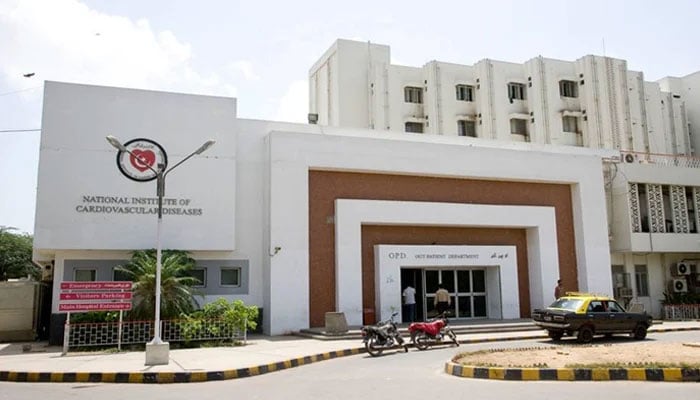
As Pakistan battles hundreds of sudden cardiac arrest cases each day with emergency rooms receiving up to 100 such patients daily, the National Institute of Cardiovascular Diseases (NICVD) has launched a major initiative to train 1,000 citizens as CPR master trainers to save lives in the critical first minutes of collapse.
Speaking at the launch ceremony of the training programme, which was initiated in collaboration with pharmaceutical firm Pharmevo, NICVD officials and cardiologists said the absence of timely resuscitation had been resulting in thousands of preventable deaths, particularly among young people.
NICVD Executive Director Dr Tahir Saghir said cardiac arrest and related fatalities among young men and women had been rising at an alarming pace and stressed that cardiopulmonary resuscitation (CPR), if performed within three to five minutes of collapse, could significantly improve survival chances.
“Our aim is to equip ordinary citizens with life-saving skills so that they can intervene immediately and prevent avoidable deaths,” he said. Dr Saghir linked the surge in heart disease to unhealthy lifestyles. “People ignore heart health, stay glued to mobile phones, neglect sleep, exercise and diet. We need to return to natural foods and healthy routines. In the past, when people ate desi ghee and simple diets, heart attacks were rare. Now junk food, sweets and inactivity are fuelling an epidemic,” he remarked, urging citizens to replace sweets with fruits and add vegetables, pulses and regular walking into their routines.
Head of the NICVD Professional Skills Department Dr Nobia Mehdi said their emergency ward alone saw 70 to 100 cardiac arrest patients daily, with four to five often arriving dead on arrival.
“The first three to five minutes are decisive. If CPR is initiated immediately, survival is possible. But delays result in irreversible brain damage and poor recovery. Traffic jams and poor roads often delay ambulances, which makes public training even more crucial,” she said.
She added that the NICVD’s chest pain units across Karachi had already reduced pre-hospital deaths, but gaps in community response still existed. “Equipping schools, public spaces and institutions with trained responders can transform survival outcomes,” Dr Mehdi stressed.
The campaign coincides with World Heart Day 2025 observed globally under the theme “Make the Right Choice for Your Heart.” Health experts say Pakistan must not only spread awareness about healthy diets, exercise and risk-factor control, but also empower citizens with emergency response tools like CPR, which is proven to double or triple survival chances after cardiac arrest.
Pharmevo Director Commercial Abdul Samad said their aim was to create a cadre of master trainers who would multiply impact by teaching thousands more. “We will especially target public spaces, police departments and educational institutions where large numbers of people gather. Our hope is that no family loses a loved one simply because no one knew how to resuscitate,” he said.
Officials said the programme would begin in Karachi and expand nationwide, creating a community-based network of CPR-trained citizens who could act before ambulances or doctors arrived. With heart disease already the leading cause of death in Pakistan, they called the project an urgent necessity.


-
 State institutions ‘fail’ to perform constitutional duties: KP CM
 -
 CTD orders psychological testing of police on VVIP security duty
 -
 Navy busts drug consignment valued at $130m
 -
 Three ex-secretaries in race for ETPB chief post
 -
 Punjab govt forms 71 JITs to probe cases against banned TLP
 -
 Some UNSC members ignoring broader reforms, seeking privilege: Pakistan
 -
 PAC body discusses non-recovery of Rs15bn gas cess
 -
 Pakistan received $2.29bn foreign loans in first 4 months of 2025