In the noisy, fast-paced world, finding minds and spaces for deep, candid dialogue is rare. I was fortunate to share such exchanges with two remarkable mentors.
One was my father, Lt-Gen Prof M Afzal Najeeb, a cardiologist who healed hearts, an officer whose discipline shaped lives, and a thinker whose quiet philosophy illuminated every conversation. The other was Dr Waqar Masood Khan, a man of faith and resolve, whose work ethic and good grasp of economics turned policy conversations into both lessons and inspirations.
I write this not only in memory of them but also as an invitation: to the young to embrace dialogue as a discipline and for senior policymakers to preserve the space for such engagement.
What set my relationship with these two men apart was not simply the wisdom they carried, but the dialogue itself – rigorous, open-minded, grounded in theory yet tested by evidence and often deeply operational. With Prof Najeeb, conversations transcended the boundaries of medicine, religion, politics and philosophy. His discipline was never taught as rules but revealed through dialogue that turned habits into lessons.
With Dr. Waqar, exchanges stretched across Pakistan’s fiscal landscape into the complexities of global economic policy, sharpening the ability to marry technical mastery with pragmatic judgment. In both, critical back-and-forth was the rule, not the exception.
My understanding of the role of discussants was reinforced during my university years, particularly throughout my PhD journey. Presenting papers, defending arguments and inviting critique – those sessions taught me that ideas sharpen in dialogue. Cognitive science affirms this truth: groups that engage in open dialogue consistently produce better solutions than individuals working alone. Public life is no different. For the young, the lesson is clear: seek out voices that challenge you. For the experienced, protect the space where debate can breathe.
With Prof Najeeb, the dialogue was never abstract theorising; it was lived philosophy backed by science. Conversations often unfolded during our rounds of golf or over shared meals: why purposeful movement mattered, how moderation brought strength, why rest was sacred. These were not lectures but explorations – turning routine acts into ideas on resilience, longevity and balance. For him, wellness was never a fad or a number but an ethic: respect for the body as trust, discipline as gratitude, consistency as strength.
On health, we returned again and again to the same conviction: the true task lay not in hospitals alone but in prevention, primary care and nutrition. Our discussions circled the problem of malnutrition, stunting and untreated illness – how they silently robbed the nation of both dignity and productivity. He believed medicine was never just about curing disease but about strengthening the weakest link in society. Even after leaving formal government, he carried this conviction into every forum he could, insisting that unless prevention and fairness stood at the centre, Pakistan would remain trapped in cycles of avoidable suffering.
Education was always at the heart of our conversations. Surrounded by newspapers and reports, we would often reflect on how universities had drifted into rote-learning factories. “The real poverty of a nation”, he would say, “begins when its youth are denied the tools to think”.
I couldn’t agree more. We discussed how mentorship needs to be revitalised and how the curriculum must evolve to address the country’s genuine challenges. The absence of dialogue in classrooms was as damaging as the absence of dialogue in policy. But we didn’t just dwell on what was broken; we imagined what could be built. Education, he believed, should shape citizens who are curious, disciplined and humane. If we can bring back rigour and openness to our universities, we both felt, Pakistan’s youth could become the driving force behind a more thoughtful, resilient future.
In policy, we returned to essential reform – right-sizing the government so that it was neither bloated into inertia and inefficiency nor hollowed out and incapable of serving citizens. Efficiency and balance, not ideology, were his touchstones for delivery.
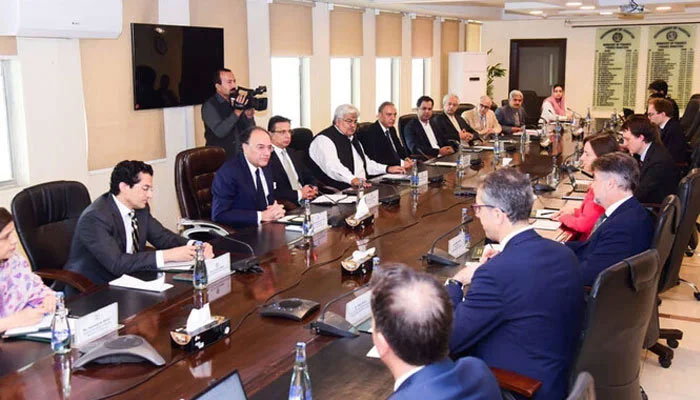
The same candid style of dialogue defined my work with Dr Waqar in the professional arena. During Pakistan’s last Extended Fund Facility with the IMF in 2016, one of the country’s few fully completed programmes, he– the then secretary at the Ministry of Finance – and I sat together through every review, working with teams of officials who grappled with one of the most complex agendas in recent fiscal history. Out of 51 structural benchmarks, 22 required legislative action: 14 new laws and eight amendments. We spent days debating measures, weighing consequences and shaping strategies. Often, these discussions extended into late-night flights to Dubai, where parleys between Pakistan and the IMF took place.
We constantly reminded ourselves that the real challenge lay beyond the IMF engagement – true repair meant addressing the deeper structural weaknesses in expenditure reforms, energy and privatisation. At times, we felt the constraints of politics and circumstance limiting how far we could move, and yet the very act of striving together left its own quiet imprint of courage and resolve.
Budget-making itself became an arena of collaborative engagement, demanding both technical precision and creative imagination. Numbers were not just inputs on spreadsheets; they reflected choices about fairness, growth and national direction. Dialogue in those moments was not simply accounting – it was philosophy, about what kind of society we hoped to build.
Preparation provided clarity, yet it was the candor of our conversation that forged trust. Out of that crucible emerged not only policy successes but also a partnership, both professional and personal, that remains among the most treasured of a lifetime. Still, one cannot help but feel the limits of time; the wish that more could have been accomplished, that the arc of dialogue had stretched further. In the brevity of human lives, unfinished work is perhaps the most enduring reminder of what remains possible.
Across roles in academia, industry, research, policy, and global finance – spanning different places and pursuits – the discipline of candid dialogue has remained my compass. Ideas, whether in seminar rooms, negotiating chambers or boardrooms, only came alive when tested, stretched, and reshaped through trust. Research shows that constructive dissent within teams leads to more innovative outcomes and stronger decisions. Dialogue is not a luxury; it is the soil in which ideas grow, and both the next generation and the seasoned must tend to it deliberately.
Together, these two discussants created an education no institution could replicate: a fusion of mind and heart, strategy and soul. One illuminated how knowledge could be humane, disciplined and transcendent; the other sharpened fiscal insight with uncompromising rigour. In their quiet way, they proved that Pakistan, despite adversity, allows devoted and innovative leaders to rise to influence – men who stayed the course and did tremendous good for people.
Their passing has left an indelible mark on my intellectual evolution. Yet their example endures as a quiet beacon. The quality of public-sector meetings and policymaking itself would be far higher if we embraced a culture of dialogue – open, research-based, with experts at the table. The outcomes, too, would be immeasurably better.
The writer is former adviser, Ministry of Finance. He tweets @KhaqanNajeeband can be reached at: khaqanhnajeeb@gmail.com