ECC approves SRO to amend B2B barter trade mechanism with Afghanistan, Iran, Russia
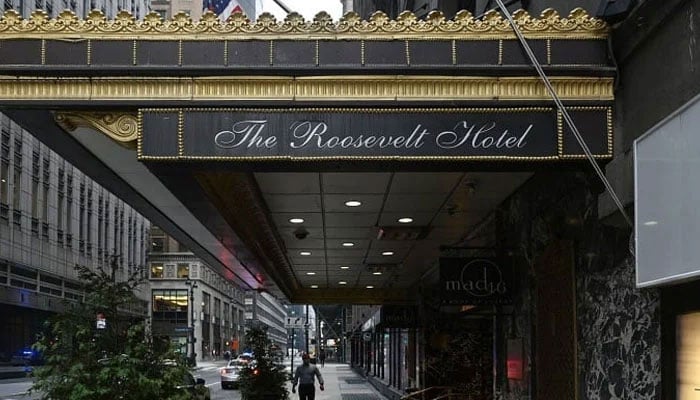
ISLAMABAD: The Economic Coordination Committee (ECC) of the Cabinet has approved $17.16 million for the Roosevelt Hotel, Rs20 billion for maintaining law and order situation and granted assent for the Barter Trade Agreement with Iran, Afghanistan and Russia.
The ECC considered and approved a draft Statutory Regulatory Order (SRO) as proposed by the Ministry of Commerce, aimed at amending the Business-to-Business (B2B) Barter Trade Mechanism governing bilateral trade with Afghanistan, Iran, and Russia. Islamabad granted approval to this summary to avoid the imposition of sanctions because the banking transaction could not be done owing to the imposition of US sanctions. With Iran and Afghanistan, there is a concept of establishing a common marketplace in the bordering areas to avoid banking transactions for conducting trade. However, it is not possible in the case of Russia, so the goods will be exchanged under the barter trade agreement.
A meeting of the Economic Coordination Committee (ECC) of the Cabinet was held under the chairmanship of the Federal Minister for Finance and Revenue, Senator Muhammad Aurangzeb, here on Thursday.
The ECC considered a summary submitted by the Ministry of Defence regarding financial support in the form of a Technical Supplementary Grant (TSG) to Roosevelt Hotel, New York, following the termination of its lease agreement with New York City. The committee expressed support for addressing the most urgent financial requirements of the hotel and directed the ministry to revisit and reconfirm its estimates and resubmit the matter to the ECC.
The committee also discussed a summary from the Ministry of Defence regarding the provision of funds for the payment of cash compensation to residents of land acquired for the construction of the Defence Complex in Islamabad. The ECC approved a TSG of Rs4 billion to be arranged by the Finance Division, while the balance requirement is to be met by the Capital Development Authority (CDA).
The ECC further considered a proposal by the Ministry of Interior and Narcotics Control for allocation of Rs20 billion as TSG for maintenance of law and order. The committee accorded approval to the proposal, with funds to be released on demand and in a phased manner by the Finance Division in consultation with the Interior Division. Additionally, the ECC approved another TSG of Rs174.8 million for the Interior Division for law and enforcement efforts by the HQ Frontier Corps KP (N) Peshawar. Finally, the committee considered and approved a draft Statutory Regulatory Order (SRO) as proposed by the Ministry of Commerce, aimed at amending the Business-to-Business (B2B) Barter Trade Mechanism governing bilateral trade with Afghanistan, Iran, and Russia.
Since the introduction of the B2B Barter Trade Mechanism in June 2023 for trade with Afghanistan, Iran, and Russia, a number of problems have emerged in its implementation. Business groups and stakeholders pointed out difficulties such as restrictions on sanctioned or non-sanctioned products, a very limited list of items allowed for import and export, the requirement of having contracts certified by Pakistan’s missions abroad, the condition of completing imports before exports could take place, and the obligation to settle accounts within ninety days of approval by customs. These issues slowed down trade and created obstacles for businesses. To address these concerns, the Ministry of Commerce held wide consultations with both public and private stakeholders, including the State Bank, Foreign Affairs, FBR, and Pakistan Single Window. After detailed discussions, it was agreed that the list of specific products should be omitted and instead aligned with the general Export and Import Policy Orders. It was also decided that private entities should be allowed to form consortia for trade, verification by Pakistani missions abroad should be replaced by an undertaking from local private companies or groups, and the rigid condition of “import followed by export” should be replaced with a more flexible approach allowing import and export simultaneously.


-
 Aurangzeb confirms Saudi Arabia $10bn interest, says B2B shift ongoing
 -
 Pakistan to build artificial island to boost oil exploration
 -
 Special pink bus service launched for women on Green Line route
 -
 Same number plates from other provinces lead to wrong e-challans for Karachiites
 -
 State institutions ‘fail’ to perform constitutional duties: KP CM
 -
 CTD orders psychological testing of police on VVIP security duty
 -
 Navy busts drug consignment valued at $130m
 -
 Three ex-secretaries in race for ETPB chief post