Pakistan seeks to lure US investment after Trump’s pivot
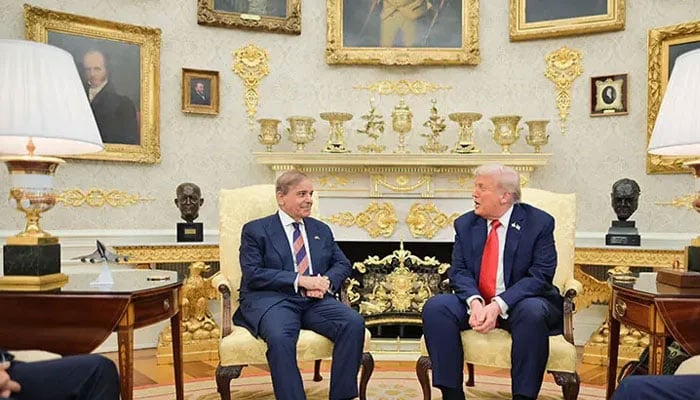
Pakistan and the US are deepening cooperation in energy, mining and technology sectors, with Islamabad planning an investor conference in Washington later this month to draw American investment, Finance Minister Muhammad Aurangzeb said, according to Bloomberg.
“The sectors are very clear where we seek their investment and where we see a clear investment appetite,” Aurangzeb said in an interview Monday with Bloomberg News in Islamabad. “With respect to the US, as of right now, you’ve just kick-started that process.”
Pakistan and the US have moved to rebuild military and economic ties after years of strain. Last week, Prime Minister Shehbaz Sharif and military chief Asim Munir met President Donald Trump at the White House, where Trump praised each of them as a “very great guy.”.
Trump praised Pakistan after officials credited him with ending a four-day conflict with India in May — a claim India denies — and Sharif’s government said it nominated him for a Nobel Peace Prize.
Economic links have also grown. The US announced a $500 million investment by U.S. Strategic Metals, while Pakistan promoted US interest in its oil and gas sector after Trump highlighted “massive oil reserves”, despite falling production.
Pakistan’s security relations with the US have wavered from periods of close cooperation to chilly ties. The US over multiple administrations, meanwhile, has cultivated India as a regional partner and a bulwark against a more assertive China. US ties with India have been tested lately with Trump criticising India for buying Russian oil and ultimately imposing a punitive 50 per cent tariff in August.
Aurangzeb said progress followed a new trade deal with the US setting a 19 per cent tariff, lower than regional peers and well below the tariff imposed on India. He said the rate boosted Pakistan’s export competitiveness and helped it emerge from crisis.
“The first thing was to get the trade equation out of the way, which it is now,” Aurangzeb said. “From my perspective, every single industry in Pakistan has to have an export component, because it’s the only way we’re going to get out of this boom-and-bust cycle.”
Pakistan pulled back from default in 2023 with IMF loans, stabilising its economy. An IMF mission is now reviewing progress under the $7 billion programme.Aurangzeb said the review was “largely on track” with benchmarks and that Pakistan paid off a $500 million bond due Tuesday.
During a meeting last month with IMF Managing Director Kristalina Georgieva, Sharif said Pakistan is making steady progress on program targets.S&P Global, Fitch and Moody’s upgraded Pakistan’s credit ratings this year, citing stronger finances and revenue gains as some of the reasons for the moves.
Investor appetite for its dollar bonds and equities has strengthened. Its bonds have given nearly 22 per cent returns this year while the benchmark stock index has gained 44 per cent this year, both among the best performers in Asia.
Bloomberg Economics estimates growth quickened to 3.4 per cent year-on-year in the second quarter, with official data due next week. But, recent heavy rains and floods that damaged crops pose a risk to the recovery.


-
 Aurangzeb confirms Saudi Arabia $10bn interest, says B2B shift ongoing
 -
 Pakistan to build artificial island to boost oil exploration
 -
 Special pink bus service launched for women on Green Line route
 -
 Same number plates from other provinces lead to wrong e-challans for Karachiites
 -
 State institutions ‘fail’ to perform constitutional duties: KP CM
 -
 CTD orders psychological testing of police on VVIP security duty
 -
 Navy busts drug consignment valued at $130m
 -
 Three ex-secretaries in race for ETPB chief post