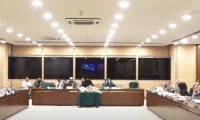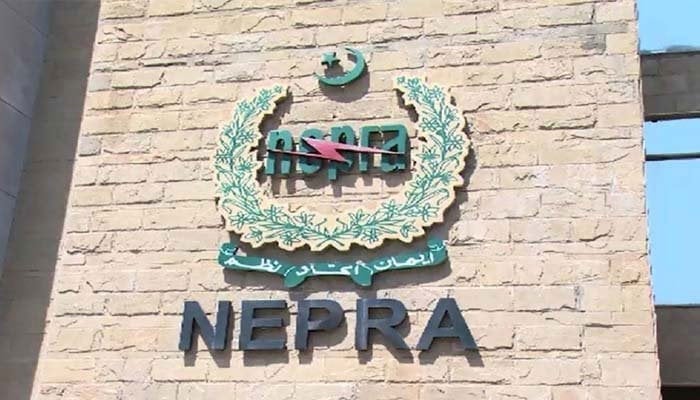
ISLAMABAD: The National Electric Power Regulatory Authority (Nepra) on Wednesday held closed-door hearings for the second day on review petitions filed by the Power Division against key determinations on K-Electric, but the proceedings left little indication that the regulator would shift from its earlier stance.
A senior official and industrial sources who attended the hearing said that the Authority began by questioning whether the Power Division even had the legal standing to file the reviews on behalf of the federal government. Officials conceded they had not deposited the mandatory fee required under Nepra’s rules, saying only that it would be “processed administratively.”
Nepra chairman sought clarity from the Power Division on Rs50 billion write-off allowed to K-Electric by the regulator, asking what was the solution with the ministry and the alternative, but ministry officials challenging the figure failed to present an alternative. NEPRA’s chairman reminded the ministry that the regulator’s duty was to protect both consumers and investors under prudency rules, while Power Division representatives called for a reassessment of all claims under the Competitive Structure Market model and the NEPRA Act
A Power Division spokesperson when contacted by The News, he said that the ministry could not comment on the hearings once they concluded, noting that its representatives presented the case before the regulator and that Nepra follows its own independent process.
During the hearing the petitions touched on disputed areas including recovery of consumer bills under Rs10 million without court action, write-offs granted through settlement schemes, and whether sales tax obligations should be counted as part of KE’s claimed losses.
K-Electric countered by pointing to Nepra’s own earlier findings, noting that the utility had already undertaken extensive recovery efforts such as repeated disconnections, use of external recovery agents, settlement schemes with partial payments, and coordination with law enforcement. On sales tax, the company argued that under the law it was obligated to pay the levy on a billed basis, even if consumers never paid.
The Power Division also faced questions over its standing in the matter of KE’s generation plants, with the hearing adjourned on the point of maintainability.


-
 Aurangzeb confirms Saudi Arabia $10bn interest, says B2B shift ongoing
 -
 Pakistan to build artificial island to boost oil exploration
 -
 Special pink bus service launched for women on Green Line route
 -
 Same number plates from other provinces lead to wrong e-challans for Karachiites
 -
 State institutions ‘fail’ to perform constitutional duties: KP CM
 -
 CTD orders psychological testing of police on VVIP security duty
 -
 Navy busts drug consignment valued at $130m
 -
 Three ex-secretaries in race for ETPB chief post