
Refineries upgrade project at risk as IMF rejects tax proposals
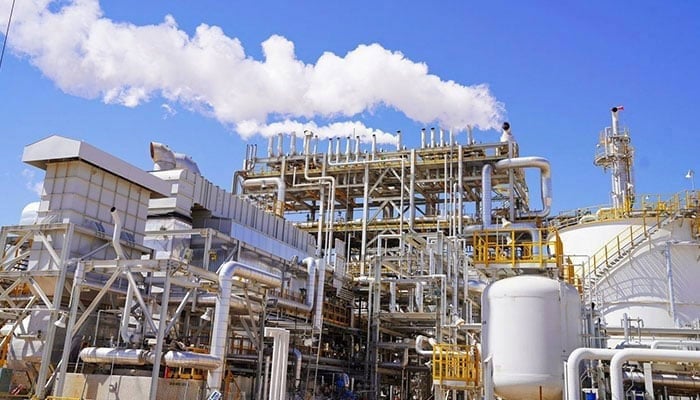
ISLAMABAD: In a development casting a long shadow over Pakistan’s most ambitious energy-sector overhaul to date, the International Monetary Fund (IMF) has once again rejected the government’s proposals aimed at resolving the contentious issue of sales tax exemptions on petroleum products—threatening to derail the country’s $6–7 billion upgrade project of local refineries.
The rejection came during high-level talks held on Monday between the visiting IMF review mission and senior officials of the Petroleum Division. A senior official who attended the meeting confirmed that the IMF remains firmly opposed to any partial or zero-rating of sales tax on petroleum products and associated upgradation machinery.
At the heart of the stalemate lies the government’s push to reinstate reduced sales tax rates—ranging from 0 per cent to 3 per cent—in a bid to provide financial breathing room for domestic refineries. However, the IMF remains adamant that the standard 18 per cent General Sales Tax (GST) must apply across the board. The official said accepting this condition would lead to a Rs45 per litre surge in petrol and diesel prices—an outcome the government deems both politically and economically unsustainable.
The crisis originated with the controversial tax exemption introduced in the Finance Bill for FY25, which removed GST on key petroleum products including petrol, diesel, kerosene, and light diesel oil (LDO). Intended to provide relief to consumers, the move backfired by disqualifying refineries from claiming input tax adjustments—rendering their financial models for upgradation infeasible.
“The government failed to rectify the exemption even in the Finance Bill for FY26,” the official said, noting that the policy continues to block sales tax refunds on imports and operational inputs, ultimately stalling the launch of refinery upgrades.
To offer temporary relief, the government increased the Inland Freight Equalisation Margin (IFEM) by Rs1.87 per litre, helping refineries recoup part of the Rs35 billion in losses incurred due to the exemption. However, industry leaders argue this is merely a stopgap—not a sustainable fiscal remedy.
Both domestic refineries and international lenders have been urging the government to make a clear policy decision on the removal of tax exemption to restore investor confidence and initiate the upgrade process on firm footing.





-
 State institutions ‘fail’ to perform constitutional duties: KP CM
 -
 CTD orders psychological testing of police on VVIP security duty
 -
 Navy busts drug consignment valued at $130m
 -
 Three ex-secretaries in race for ETPB chief post
 -
 Punjab govt forms 71 JITs to probe cases against banned TLP
 -
 Some UNSC members ignoring broader reforms, seeking privilege: Pakistan
 -
 PAC body discusses non-recovery of Rs15bn gas cess
 -
 Pakistan received $2.29bn foreign loans in first 4 months of 2025