What is the trad wives tradition?
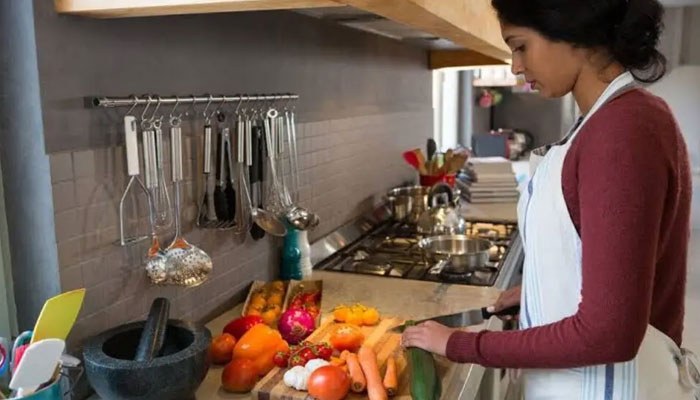
A perfect platter of steaming biryani or a plate of dessert being served up by young women in impeccable clothing and a stylish haircut – this is an image becoming increasingly common on social media. This is known as the ‘trad wives phenomenon’, something that is changing feminism and suggesting what can happen when conservative, and in many cases far-right governments, take over control in countries, including the US, around the world. The trad wives tradition indeed stems from the US where it has gained prominence primarily on Instagram but also on other spaces in the mainstream media and in regular life.
The meaning here precisely is that of something borrowed from the 1950s, featuring young women who stayed home to build ‘perfect’ households and are in many ways subservient to husbands. The submissive wife and the stay-at-home mom are, of course, features that we know well from authoritarian governments abroad, as well as regimes closer to home, such as those that promote the religious right. The 'trad' (traditional) wife then fits in with ideas about women and femininity that exist in our own society.
Those who favour the trad wives trend suggest that it puts pressure on women to perform multiple roles at the same time, including bringing up children, running households and working outside their homes. In their place, influencers, mainly young women, in perfect clothes, appear on social media pages to suggest that a good life means doing one job and that job is running a pristine household, bringing up children, producing exquisite food and engaging in activities which involve making say lollipops, or other items at home which one would usually buy from a corner store.
There are inherent dangers in this look at life. This is already having an impact on younger women in their early twenties, as they move on in life and come up against this tradition, which contradicts traditional feminism. In place of the ideas built up over decades by regular feminists who have managed to put women in better positions in the workplace, especially in developed countries, and suggest that a woman can be a lawyer just as good as a man – or a doctor, or an actuary or another professional – young women should act to build households and in doing so allow men to be the ‘providers’ as is suggested in thinking from an age we have long moved past in many societies.
The entire idea is linked to it due to overly conservative views. The Trump administration, for instance, has suggested that such values, which break away from feminism, are of use in today’s societies and take pressure off of young women to also act as earners in households. There is a fundamental class dimension to these thoughts. The idea of wearing luxury clothing, marrying early in life and having the time to create wonderful dishes or make pasta from scratch or grind one's own spices is something available only to those who earn enough to engage in such pursuits.
For women from low-income backgrounds, such choices are simply not available. In today's world, most households need two earners in order to make ends meet. Without the two earners, there is simply no option of putting children through school or placing food on the table. In developing countries, this is especially true, but it is also true of societies such as the US, from where the new ideas are essentially emerging.
The revolt against the kind of feminism that has altered the lives of so many women and given them more space in the public arena is, in many ways, dangerous. In some sense, the glamour of the trad wife in her perfect designer outfit lures in young women and suggests to them that this is the kind of life they would like to follow.
In truth, of course, the social media images of the stay-at-home woman and wife are backed by an array of individuals who help her out by looking after children, arranging flowers in the home, or generally assisting with all the other work that goes into building homes and caring for families. The choices are, in some ways, misogynistic and put an end to the thinking that builds modern feminism and all the ideas that have been worked into it. It is especially dangerous in a society such as ours, where the home is already encouraged as a place where women should be and within which they should stay.
As many people know, typical matchmakers look out for young women who can run a house to perfection or near perfection, cook and clean and display an acceptance of what husbands want or seek. The idea that women can manage their lives sensibly and perform the various tasks of households and work simultaneously is not a part of this idea.
Social media now has a huge impact around the world. For this reason alone, the traditional wife notion has its own dangers, notably in societies such as ours. It needs to be combated strongly and young women informed that the choice of what kind of life they wish to lead is primarily theirs. And that options exist beyond those purported by the trad wife and all that she offers. There are also other options for women and it should be noted that more and more around the world are either opting to stay childless or work to bring in enough money to manage households and to use their own talents.
In a society where the notion of a ‘doctor as a daughter-in-law’ is strongly favoured, encouraging young women to abandon potential careers in medicine or other professions is a dangerous trend that must be reversed. It reflects a broader pattern that aligns with conservative values – values that, unfortunately, have reasserted themselves in modern life and governance.
The writer is a freelance columnist and former newspaper editor. She can be reached at:
kamilahyat@hotmail.com