Analysis: Pakistan’s trillion-rupee power fix debt relief or delay?
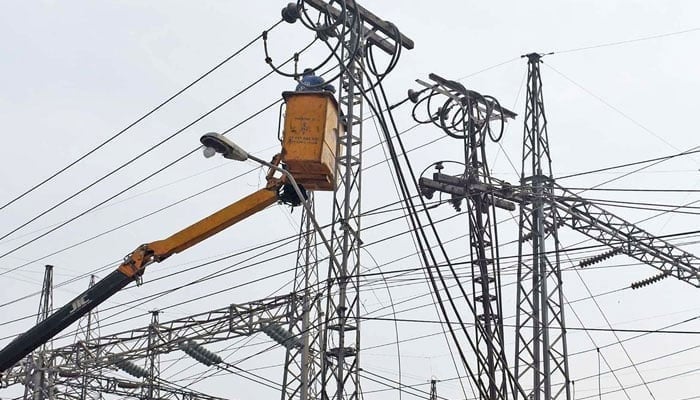
ISLAMABAD: Pakistan’s power sector has long suffered from inefficiency and poor planning, with “circular debt” — a cycle of unpaid bills between producers, distributors and the government — at its core.
The debt has been driven by high generation costs, weak performance of distribution companies, delays in tariff setting, heavy line losses, poor revenue collection, delayed government subsidies to Discos and K-Electric, and mounting financial charges.
The cycle has drained billions from the economy, discouraged investment and fueled mistrust. By May 2025, circular debt had climbed to Rs2.47 trillion, about 2.1 percent of GDP, acting like a hidden tax that caused blackouts, larger subsidies and eroded business confidence. The government said it cut the debt to Rs1.61 trillion by June through lower line losses, better bill recovery and savings from renegotiated power contracts, but the total rose again in July by Rs47 billion to Rs1.66 trillion.
In this difficult situation, the government has taken a bold step. It recently signed a huge financing deal worth Rs1.225 trillion with 18 commercial banks to settle a big portion of the debt. This is the largest financial agreement in Pakistan’s history. The repayment will come through a special Debt Service Surcharge (DSS) of Rs3.23 per unit of electricity. This way, money from electricity bills will directly fund the repayments, making the system more transparent.
The deal is not just another bailout. It is designed to shorten the repayment period from more than eight years to under six years. At the same time, it will save the country around Rs377 billion in late payment interest, money that otherwise would have been added to the burden of consumers.
From an economic point of view, the agreement is well-structured. It is priced at a rate of KIBOR minus 0.90 percent, which shows banks’ confidence in the repayment mechanism. It reduces borrowing costs by about 1.5 percent annually. More importantly, it creates predictable cash flows, so banks and investors know their money is safe.
This frees up government funds for other important needs such as health, education, and infrastructure. For power producers and companies who have been struggling due to unpaid dues, this injection of liquidity will help them pay for fuel, keep plants running, and avoid defaults. For consumers, there is also a promise: once the debt is fully paid by 2029-2031, the DSS will end, resulting in cut in electricity bills.
Civil-Military Alliance, IMF Pressure Drive the Deal
The political side of the story is equally important. For decades, the debt has been a political football, with successive governments blaming each other but failing to solve it. This time, however, there seems to be stronger alignment between the civilian leadership and the military establishment. Prime Minister Shehbaz Sharif called the deal an “existential economic and security risk,” showing how seriously it is being treated. Finance and Power Ministers managed the technical aspects, while the military’s involvement ensured implementation discipline.
The International Monetary Fund (IMF), however, also played a crucial role in shaping this deal. Under the ongoing Extended Fund Facility, the IMF has been pressing Pakistan to stop temporary bailouts and instead adopt structured and verifiable solutions. The Fund demanded reforms in subsidy management and better governance in power distribution companies. This deal is a direct outcome of that pressure.
The bigger challenge, however, is to prevent the problem from coming back. Circular debt is not only about unpaid bills; it is deeply linked with inefficiency and mismanagement. Pakistan’s power companies lose more than 20 percent of electricity through theft and technical losses. Expensive contracts with Independent Power Producers also add to the problem. Unless Pakistan introduces smart meters, controls theft, invests in renewables, and takes politics out of tariff-setting, circular debt will rise again. For the general public, it offers hope of fewer blackouts, more reliable supply, and lower tariffs in the long run. But hope will only become reality if the government uses this breathing space wisely to fix the structural problems.


-
 Aurangzeb confirms Saudi Arabia $10bn interest, says B2B shift ongoing
 -
 Pakistan to build artificial island to boost oil exploration
 -
 Special pink bus service launched for women on Green Line route
 -
 Same number plates from other provinces lead to wrong e-challans for Karachiites
 -
 State institutions ‘fail’ to perform constitutional duties: KP CM
 -
 CTD orders psychological testing of police on VVIP security duty
 -
 Navy busts drug consignment valued at $130m
 -
 Three ex-secretaries in race for ETPB chief post