Pakistan, China set to launch CPEC Phase 2.0 with high-stakes dialogue today
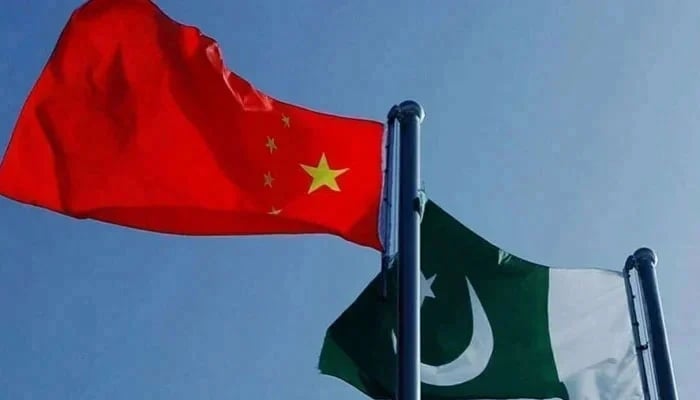
ISLAMABAD: Pakistan and China will formally launch the next phase of China-Pakistan Economic Corridor (CPEC) today, Friday, as the 14th Joint Cooperation Committee (JCC) meeting convenes in Beijing. The high stakes talks mark the official commencement of CPEC Phase 2.0. Both sides will explore possibilities for resolving the lingering controversy over capacity payments for Chinese independent power producers (IPPs), partial financing of the Mainline-1 (ML-1) railway project and the Karakoram Highway (KKH) and enabling the use of Chinese Yuan in certain regions of Pakistan.
The JCC will also focus on enhancing security mechanisms for Chinese personnel working in Pakistan. China aims to promote the use of renminbi (RMB) in Gwadar and other parts of the country. Pakistan has requested China to extend the repayment period for outstanding liabilities owed to Chinese IPPs to create fiscal space for reducing electricity costs. Although Islamabad made this request several months ago, no significant progress has been made. Beijing now appears hesitant to commit additional resources, making partial financing for ML-1 and KKH more likely. Pakistan has also formally requested the Asian Development Bank (ADB) for partial funding of ML-1, though it remains unclear which entity will lead the financing of this long-awaited project.
Over the past decade, China has invested approximately $27 billion under CPEC, including $16 billion in Chinese IPPs and the remainder in infrastructure projects.
With Chinese support, Pakistan has added 8,904 MW of power to the national grid, constructed 888 km of motorways and highways, developed Gwadar Port—including an airport and Special Economic Zone—and created an estimated 200,000 jobs.
Both countries intend to launch new Pakistan–China Scholarship and Training Programmes to equip youth with cutting-edge skills in software, artificial intelligence, digital governance, and advanced technologies. Innovation Hubs and Technology Parks will be established under an Innovation Corridor to strengthen Pakistan’s knowledge economy. The Pakistan Export Promotion Digital Platform (PEP-DP) has been approved to diversify exports beyond traditional Western markets by connecting directly with China, Central Asia, the Middle East, and Africa. Export-oriented Special Economic Zones (SEZs) are also being developed to boost industrial relocation and job creation.
Gwadar Port operations may be expanded through the Gwadar Overseas Port Company, with new coastal development projects under consideration. Agreements are expected to ensure provincial participation, with each region benefiting according to its strengths: Punjab (agro-based SEZs), Sindh (coastal trade and industry), Khyber Pakhtunkhwa (energy and minerals), Balochistan (Gwadar and rural revitalisation), and Azad Jammu & Kashmir and Gilgit-Baltistan (hydropower and tourism).
Both sides may establish Climate Response Teams and Pilot Districts for Climate Resilience, positioning Pakistan as a regional leader in climate adaptation. Joint initiatives in renewable energy, smart irrigation, and climate-smart agriculture are planned under a Green Corridor. Projects under a Livelihood Corridor will focus on modernising agriculture, strengthening rural economies, and introducing vocational training, with an emphasis on poverty alleviation, women’s entrepreneurship, and digital inclusion.
They are also set to launch new collaborations in space and satellite technologies, enhancing Pakistan’s capabilities in communication, climate monitoring and disaster management.


-
 Aurangzeb confirms Saudi Arabia $10bn interest, says B2B shift ongoing
 -
 Pakistan to build artificial island to boost oil exploration
 -
 Special pink bus service launched for women on Green Line route
 -
 Same number plates from other provinces lead to wrong e-challans for Karachiites
 -
 State institutions ‘fail’ to perform constitutional duties: KP CM
 -
 CTD orders psychological testing of police on VVIP security duty
 -
 Navy busts drug consignment valued at $130m
 -
 Three ex-secretaries in race for ETPB chief post