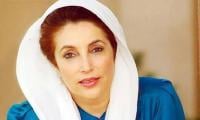
“We will eat grass, even go hungry, but we will get one of our own”. With those words, Shaheed Zulfiqar Ali Bhutto gave Pakistan not only its nuclear programme but also a vision for the dignity and security of the entire Muslim Ummah.
That vision was shared by King Faisal of Saudi Arabia, who stood by Pakistan in its darkest hours. During the 1965 war with India, Saudi Arabia extended vital oil and financial support to Pakistan. That bond reached its peak when King Faisal attended the 1974 Islamic Summit in Lahore, hosted by Bhutto. The landmark event projected Pakistan as a confident and united Muslim nation. Faisal’s presence elevated Pakistan’s standing in the Ummah and cemented a partnership that has now matured into a formal defence pact.
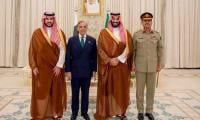
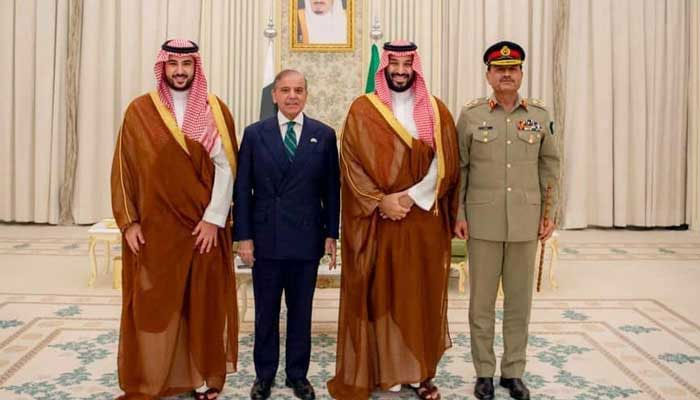
Today, Saudi Arabia has pledged that an attack on Pakistan will be considered an attack on itself. Riyadh is not merely offering diplomatic assurances; it is binding its security to ours. That pledge transforms Pakistan’s position on the global stage. Despite our economic fragility, Pakistan now sits at the centre of multiple theatres of influence. China views this pact as a means to strengthen its Belt and Road ambitions and expand its Middle East outreach. Turkey and Azerbaijan welcome it as part of a wider arc of Muslim solidarity. Russia sees a stronger Pakistan as essential for balance in Asia.
The symbolism is unmistakable. Pakistan is no longer only a consumer of security, but a guarantor of it. The only Muslim nuclear state, long defined by its rivalry with India, has now extended its relevance across the Gulf.
Saudi Arabia’s choice demonstrates where trust lies. When it comes to existential defence, Riyadh turns to Islamabad. This new security architecture arrives at a moment of crisis. Israel’s recent attack on Doha was a shock to the Muslim world, underlining the vulnerability of even wealthy Gulf capitals. For ordinary Muslims, it was a painful reminder that without solidarity, no city and no nation is truly safe. The Saudi–Pakistan pact answers that insecurity with a clear message: aggression against one Muslim state will not go unanswered.
For Israel, the pact is a reminder that its nuclear dominance in the Middle East is no longer uncontested in perception, even if not in practice. By tying its security to Pakistan, Saudi Arabia has complicated Israel’s quiet courtship of Riyadh and ensured that Palestine will never be absent from the table.
As thousands of innocent Palestinians continue to live under bombardment, displacement and blockade, Pakistan’s position remains unwavering: peace in the Middle East cannot be achieved without justice for Palestine. The Saudi–Pakistan defence pact carries moral and strategic weight, signalling that the Muslim world cannot remain indifferent while Gaza bleeds.
For India, the message is equally stark. Despite years of cultivating ties with Riyadh through trade, energy and diaspora channels, when the question is war or peace, Saudi Arabia still stands with Pakistan. This elevates Islamabad’s strategic relevance in the Gulf, forcing New Delhi to recalibrate its position.
This pact is also about opportunity. A shared defence architecture can anchor cooperation in energy, technology, climate resilience and human capital. Both Pakistan and Saudi Arabia face existential climate threats, from devastating floods in Sindh to punishing heatwaves in Riyadh. True security in this century comes not just from armies, but from resilient societies and sustainable development. Defence cooperation, therefore, is the starting point for a partnership that can transform the lives of our people.
The pact strengthens Pakistan’s deterrence posture, expands Riyadh’s security horizon and signals that new centres of power are emerging in the Muslim world. For South Asia, it alters India’s calculations. For the Middle East, it introduces a credible new layer of defence in an increasingly volatile environment. To the international community, it shows that Pakistan is no longer confined to its neighbourhood but is shaping outcomes across regions.
This agreement will be remembered also as a marker of Pakistan’s emergence as a pivotal security actor. In an era of uncertainty, alliances are shifting, and Pakistan has positioned itself not at the centre of a new strategic landscape.
The writer is a member of the National Assembly. She holds a PhD in Law, and serves on the National Assembly’s Special Committee on Kashmir.