
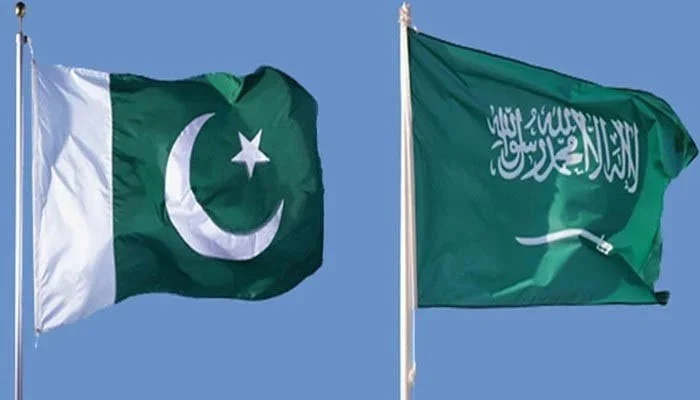
ISLAMABAD: Russia has called for the resolution of Kashmir dispute under the framework of the 1972 Simla Agreement and the 1999 Lahore Declaration, while also signaling support for Pakistan’s new defence pact with Saudi Arabia, which Moscow views as a stabilising move in light of Israel’s recent attack on Qatar.
“We believe that the conflict in Kashmir should be resolved in light of Simla agreement and the 1999 Lahore declaration,” Russian Ambassador Albert P Khorev said while answering question of this scribe during a press conference held at the Russian Embassy here on Tuesday.
To another question, the ambassador said that Russian government respects the latest defence agreement between Pakistan and Saudi Arabia. He further commented that the one of the key reasons, according to him, for this agreement is Israel’s attack on Qatar.
When asked about Washington’s desire to take control of Bagram base in Kabul, he abruptly said that this reflects colonialism, and “we would oppose it, as such plans are destabilising.” He said if the US is interested to do something for Afghanistan, then it “should release Afghanistan’s $10 billion in frozen assets.”
Khorev, in the first place expounded Russia’s position on the war in Ukraine. He said that while Moscow had initiated new rounds of negotiations with Kyiv earlier this year, Ukraine had repeatedly rejected ceasefire initiatives and violated short truces. He portrayed this as part of what he called a Western-backed effort to rearm Ukrainian forces.
“Since May, we have exchanged over 1,000 prisoners of war and repatriated more than 6,000 Ukrainian soldiers’ remains,” Khorev said, stressing that Moscow remained committed to diplomacy. He dismissed Western concerns about Russian aggression against Nato, insisting that Moscow sought “constructive cooperation with anyone genuinely interested in de-escalation and peace in Europe.”
The ambassador accused Kyiv of authoritarian practices under martial law, censorship and attacks on the Orthodox Church, while condemning recent Ukrainian legislation on historical memory as Russophobic. He reiterated Moscow’s longstanding opposition to Nato expansion eastward and said a summit between presidents Vladimir Putin and Volodymyr Zelensky would only make sense “after experts address the root causes of the conflict.”
Khorev further criticised what he described as double standards at the United Nations, arguing that the Secretariat had adopted “biased anti-Russian positions” while failing to take decisive action against Israel’s policies in Gaza and the Golan Heights.
Despite his sharply worded remarks on Ukraine and the West, Khorev expressed gratitude to Pakistan for maintaining neutrality over the conflict. “Pakistan strongly supports a diplomatic resolution,” he said, adding that Moscow viewed Islamabad as an important partner in both regional security and multilateral diplomacy.



-
 State institutions ‘fail’ to perform constitutional duties: KP CM
 -
 CTD orders psychological testing of police on VVIP security duty
 -
 Navy busts drug consignment valued at $130m
 -
 Three ex-secretaries in race for ETPB chief post
 -
 Punjab govt forms 71 JITs to probe cases against banned TLP
 -
 Some UNSC members ignoring broader reforms, seeking privilege: Pakistan
 -
 PAC body discusses non-recovery of Rs15bn gas cess
 -
 Pakistan received $2.29bn foreign loans in first 4 months of 2025