Shifting security architecture
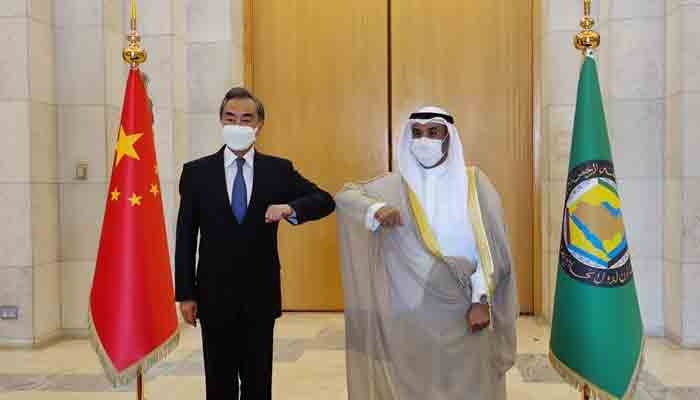
In an increasingly complex bipolar world floating in a sea of multipolarity, anarchy and disorder make middle powers and small nations suspicious, of global powers and their regional surrogates.
American political scientist John Mearsheimer writes in ‘The Tragedy of Great Power Politics’ that geopolitical mistakes lead to wars and that those mistakes proliferate in an environment of conflict that is spawned due to the inability of the reigning global powers to reconcile with the rise of competing powers.
Robert Kaplan says that the world at present resembles the Weimar Republic which ultimately yielded to Nazi fascism and World War. The global rivalry between China and the US is being buffeted by the forces of strife as it sails atop a pea soup of multipolarity, with several middle powers jockeying for influence and continually balancing the global power imbalance.
In his article, ‘The Anarchy that Came’, Kaplan prognosticated a world in continual strife with “no nightwatchman to preserve the global order”. Middle Powers like Saudi Arabia caught in the vortex of wolf warrior diplomacy at one end of the spectrum and the unvarnished quest for global domination at another end have felt justifiably insecure in the wake of the recent developments in the Middle East.
The Gulf Cooperation Council (GCC) countries that had remained tied to US security guarantees, and were continually coaxed to join pro-Israel coalitions like I2U2 and Abraham Accord, got a rude shock when a regional ally of the US broke all rules of international law to attack Qatar, a close ally of the US that had allowed its territory to be used as a US military base. It houses an American air base along with air defence, logistics, communications and Special Operations Command (SOCOM) forces. The base has been used by the US, Australian and the UK forces for operations in Iraq and Afghanistan in the past.
The furtive Israeli air attack on Hamas negotiators in Qatar was a shocking development for Qatar as well as other GCC countries which suffered a loss of trust in the putative security guarantees of the US. The reputational loss suffered by the GCC countries was immense and they realised the fickleness of security guarantees offered by the US. The UAE and Bahrain are members of the Abraham Accords which included non-GCC countries like Morocco and Sudan along with Israel.
The right-wing Likud government of Prime Minister Netanyahu, through its aggressive policies towards Palestinians as well as neighbouring Arab states, has virtually extinguished the possibility of peaceful co-existence between Israel, the Palestinians and the wider Arab region. US President Donald Trump had sought to end the conflict in Gaza, but Netanyahu’s drive to perpetuate conflict as a means of strengthening his electoral prospects ultimately undermined that effort. Following the attack on Qatar, Arab countries convened a summit with other Islamic states, including Pakistan, to deliberate on the implications of the altered security environment.
The summit’s routine condemnatory statements, issued without any actionable plan, further eroded the credibility of the GCC nations, particularly in the eyes of their populations. This widened the gulf between the ruling elite and the street. Faced with limited options, the GCC countries considered shifting towards the Chinese and Russian spheres of influence or recalibrating their security relationship with the US. Given Washington’s perceived inability to restrain Israel, Saudi Arabia’s choices increasingly leaned towards Pakistan. The mutual defence pact that followed – which enshrines the principle that an attack on one ally would be treated as an attack on the other – is a seminal development with far-reaching geopolitical implications.
From this point forward, Pakistan’s military expertise and Saudi Arabia’s financial muscle will combine to create a partnership that reinforced both countries’ security in military as well as economic domains. Pakistan has long maintained military cooperation with Saudi Arabia. The Pakistan Navy and Air Force have been engaged in training Saudi officers and servicemen, in addition to conducting joint training exercises. The Pakistan Army has also provided regular training and advisory support to Saudi forces, including the preparation of their special forces. In the aftermath of the Iran-Iraq war, a Pakistani armoured brigade-sized task force was deployed in Tabuk, alongside an ancillary support unit in Sharoorah, to address Saudi Arabia’s security concerns regarding an expansionist Iraq.
Pakistan and Saudi Arabia’s defence pact would impose significant obligations on both countries. These obligations include joint defence in case of military aggression against either nation, encompassing joint peacetime drills and plans, duly supported by war doctrines and interoperable hardware. Some troop deployment on permanent bases, on a rotational basis, would be required, including the siting and operationalization of several command and operational centres as well as early warning systems. The defence cooperation would extend across multiple domains and capabilities, though strictly in a defensive mode.
A key spinoff of the defence pact would be deeper diplomatic and economic cooperation, as both countries would have a treaty-based stake in each other’s military and human security. Greater diplomatic and economic alignment would also serve as a restraining influence on the aggressive tendencies of regional hegemons such as India and Israel, whose proxy war strategies would require serious re-evaluation.
The Pak-Saudi Defence Pact has the potential to become a genuine harbinger of peace and stability for both countries, as well as for the Gulf and South Asia. It could act as the precursor to an expanded defence alliance, potentially including other willing Islamic countries in the future.
The writer is a security and defence analyst. He can be reached at: rwjanj@hotmail.com