Pakistan-Saudi Defence Pact: Ushering in a new era of ties
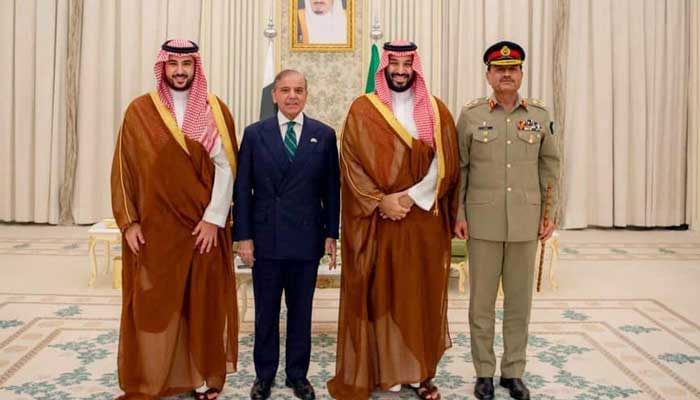
When Prime Minister Shehbaz Sharif arrived in Riyadh last week to sign a landmark “Strategic Mutual Defence Agreement” (SMDA) with Saudi Crown Prince Mohammed bin Salman, it marked far more than a ceremonial display of military jets and red carpets. It was a watershed in Pakistan-Saudi relations—one that reaffirmed seven decades of cooperation while signaling a recalibration of regional geopolitics at a moment of heightened uncertainty.
A new security equation
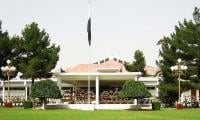
The pact, signed at Al-Yamamah Palace, commits both countries to treat aggression against either as an attack on both. It formalises decades of close but informal defence cooperation, making Pakistan the first Muslim-majority country with which Saudi Arabia has a formal mutual defence treaty.
Analysts have called the agreement historic. “This is a watershed for both countries,” noted Asfandyar Mir of the Stimson Center, highlighting that Pakistan previously had defence pacts with the US during the Cold War but never with Saudi Arabia or even China, despite extensive cooperation. Security researcher Muhammad Faisal added that the deal consolidates existing collaboration and opens new avenues—joint training, expanded deployments of Pakistani troops, and a possible role in defence production.
The pact comes amid volatility. The Middle East reels from Israeli attacks on Gaza and even Doha, while South Asia faces heightened tensions after India and Pakistan exchanged strikes earlier this year. For Riyadh, the agreement provides reassurance as US security guarantees appear less reliable. For Islamabad, it strengthens deterrence against India and underscores Pakistan’s strategic weight.
Historic bonds
Saudi Arabia was among the first to recognise Pakistan in 1947, and the relationship was formalised with a Treaty of Friendship in 1951. Since then, Pakistan has been a consistent military partner. Tens of thousands of Pakistani troops have served in the Kingdom, including 15,000 deployed during the 1980s and 13,000 in the first Gulf War. More than 8,000 Saudi personnel have been trained in Pakistan, while around 1,800 Pakistani officers currently serve in training missions in Saudi Arabia. The new pact cements this history of cooperation while adapting it to new regional realities.
Economic pillars of the partnership
Alongside military ties, Saudi Arabia has been a vital economic lifeline. It remains Pakistan’s main oil supplier, accounting for more than half of its needs. After Pakistan’s nuclear tests in 1998, Riyadh ensured a four-year oil supply lifeline, shielding Islamabad from sanctions. Saudi financial aid has also been crucial: $1.5 billion in 2014, $3 billion in 2018, and a possible $11 billion package currently under consideration.
Humanitarian support has further deepened ties. Riyadh pledged $1 billion for Pakistan’s 2022 flood relief and has regularly provided emergency supplies, medical missions, and direct support to displaced populations. These gestures reinforce perceptions of a brotherly bond rather than a transactional relationship.
Trade and investment are emerging as new pillars. In 2019, Saudi Arabia announced a $20 billion investment package, including a $10 billion oil refinery at Gwadar. More recently, a Saudi delegation in Islamabad agreed to expedite $5 billion in investments, signaling continuity despite shifting geopolitics.
People-to-people ties
Nearly two million Pakistanis live in Saudi Arabia, sending home $6.5 billion annually—vital for millions of families and Pakistan’s balance of payments. Pakistani doctors, engineers, and professionals have contributed to the Kingdom’s development, while labour migration has cemented enduring societal links.
A changing geopolitical landscape
The pact must also be understood in a broader strategic context. With US credibility in question, Gulf states are seeking new security partners. Israel’s aggression has unsettled Riyadh and Doha alike, while Saudi-Iran reconciliation adds another layer of complexity. For Pakistan, the agreement enhances its regional profile as a potential stabiliser—not only in South Asia but also in the Gulf.
The pact also complicates India’s calculations. With more than eight million Indians working in Saudi Arabia and billions in trade at stake, New Delhi cannot afford strained ties with Riyadh.
Beyond security: An economic opportunity
While the pact enhances Pakistan’s deterrent posture, it also provides breathing space to refocus on the economy. Defence credibility, established through operations such as Bunyan Marsoos, allows Islamabad to address pressing challenges—sluggish growth, debt stress, and the need for investment.
For Saudi Arabia, deepening ties with Pakistan aligns with Crown Prince Mohammed bin Salman’s Vision 2030, which seeks diversification beyond oil. Pakistan’s strategic location, large workforce, and agricultural potential make it an attractive partner for Riyadh’s food and energy security needs.
Enduring brotherhood in a new era
The Pakistan-Saudi relationship has weathered shifting alliances, economic shocks, and regional upheavals. At its core, it rests on faith, mutual respect, and converging interests. Whether through military deployments in the 1980s, financial bailouts in the 2000s, or flood relief in 2022, both nations have consistently stood by each other.
The new Strategic Mutual Defence Agreement is not merely symbolic. It institutionalises a partnership that is set to shape regional dynamics at a time when global geopolitics are unsettled and South Asia’s tensions remain volatile. For Pakistan, it affirms its role as a security guarantor for the Muslim world. For Saudi Arabia, it signals that its future will not depend solely on the United States.
As both nations adapt to a changing geopolitical landscape, their longstanding alliance is poised to evolve, offering new opportunities for collaboration and prosperity. Rooted in history but oriented toward the future, the Pakistan-Saudi relationship—renewed by this pact—remains central to the balance of power in South Asia and the Gulf.


-
 Aurangzeb confirms Saudi Arabia $10bn interest, says B2B shift ongoing
 -
 Pakistan to build artificial island to boost oil exploration
 -
 Special pink bus service launched for women on Green Line route
 -
 Same number plates from other provinces lead to wrong e-challans for Karachiites
 -
 State institutions ‘fail’ to perform constitutional duties: KP CM
 -
 CTD orders psychological testing of police on VVIP security duty
 -
 Navy busts drug consignment valued at $130m
 -
 Three ex-secretaries in race for ETPB chief post
-
 Punjab govt forms 71 JITs to probe cases against banned TLP
 -
Some UNSC members ignoring broader reforms, seeking privilege: Pakistan
-
PAC body discusses non-recovery of Rs15bn gas cess
-
Pakistan received $2.29bn foreign loans in first 4 months of 2025
-
Additional directors appointed at NCCIA zones
-
‘Controversial’ changes to Constitution will destabilise federation, warns Rabbani
-
BA approves safe and environmentally sound recycling of ships bill
-
PTI condemns ‘state brutality’ against Imran’s sisters outside Adiala jail
-
Majority judgment in reserved seats case exceeded SC power: Justice Mandokhail
-
FBR chairman’s challenge: ‘Show one Sifarish-based posting since my arrival’