
Pakistani doctors achieve 100% survival in children with severe liver failure
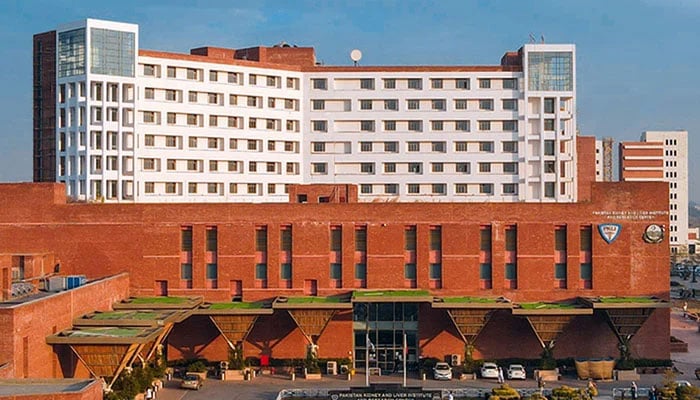
ISLAMABAD: In a remarkable achievement for the country’s healthcare system, the Pakistan Kidney and Liver Institute and Research Centre (PKLI) has reported 100 per cent survival in children suffering from acute-on-chronic liver failure (ACLF) who underwent timely living donor liver transplantation (LDLT).
The breakthrough results were presented at the International Paediatric Transplant Association (IPTA) congress in Berlin by Prof Saeed Akhtar, Chairman PKLI’s Board, who described the data as stronger than many leading Western institutions.
Every year, hundreds of children in Pakistan develop end-stage liver disease and require transplantation to survive, yet the lack of awareness, late diagnosis, and absence of an organised cadaveric donation system limit access to life-saving treatment. Against this backdrop, the PKLI study offers new hope by demonstrating that with rapid recognition and timely intervention, survival outcomes for children can be drastically improved.
All the surgeries in this series were performed by transplant surgeons led by PKLI’s Dean, Prof Dr Faisal Saud Dar, the pioneer of liver transplantation in Pakistan. Dr Dar has performed over 2,000 successful liver transplants to date, introducing unique surgical techniques and procedures that have placed Pakistan on the global liver transplant map. His leadership in paediatric and adult liver transplantation has been recognised internationally, making him one of the most accomplished surgeons in the region.
The PKLI team studied five paediatric ACLF cases between January 2024 and March 2025. The children, aged between one and 15 years, comprised four boys and one girl. Most were suffering from Wilson’s disease, while others had cryptogenic liver disease. Their liver disease severity scores were critically high, but transplants performed within 48 to 72 hours in four cases — and after 23 days in one case — resulted in full recovery. None of the children died within 30 days of surgery, and no major complications were reported.
Prof Akhtar said the results underline the critical importance of early diagnosis, rapid donor mobilisation, and surgical precision in paediatric liver transplants. “Our data proves that timely transplant is the difference between life and death, and Pakistan now has evidence that matches and, in some respects, surpasses many Western centres,” he said, adding research and data presentation were vital for restoring the dignity of Pakistan’s healthcare system globally.
He told participants in Berlin that PKLI is emerging as a strong international player in the field of liver transplantation and called for more collaboration with Pakistani institutions. “Just performing high volumes of quality surgeries is not enough. Unless we capture our data and present it at international forums, our achievements remain invisible,” he said.
The study also highlighted a major gap: there is still no universally accepted definition of ACLF in children. This leads to delays in recognition and inconsistent management worldwide. Prof Akhtar urged international bodies to work with centres like PKLI to harmonise definitions, establish diagnostic thresholds, and build paediatric transplant registries.
“This was one of the biggest purposes of creating PKLI — to show that Pakistan can lead with quality data, innovation, and world-class outcomes,” he said, stressing that liver transplantation is not only about clinical excellence but also about positioning Pakistan on the world medical map.


-
 State institutions ‘fail’ to perform constitutional duties: KP CM
 -
 CTD orders psychological testing of police on VVIP security duty
 -
 Navy busts drug consignment valued at $130m
 -
 Three ex-secretaries in race for ETPB chief post
 -
 Punjab govt forms 71 JITs to probe cases against banned TLP
 -
 Some UNSC members ignoring broader reforms, seeking privilege: Pakistan
 -
 PAC body discusses non-recovery of Rs15bn gas cess
 -
 Pakistan received $2.29bn foreign loans in first 4 months of 2025