
Amid H-1B chaos, China bets on new K Visa to woo global talent from Oct 1
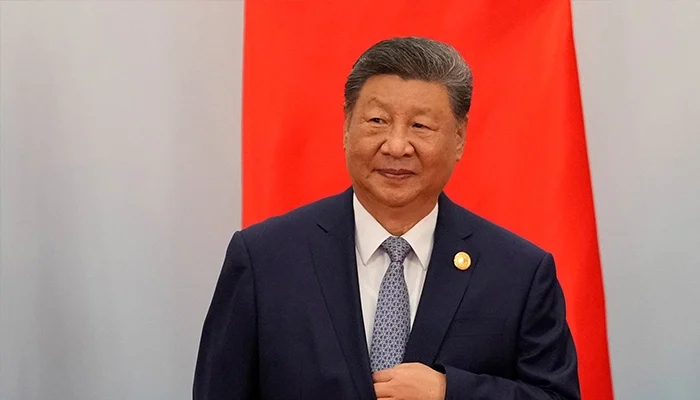
BEIJING/BENGALURU: China has announced the introduction of a new “K visa” category aimed at attracting young and talented professionals, particularly in the fields of Science, Technology, Engineering and Mathematics (STEM) from all over the world, an official statement issued on Sunday said.
The decision, approved in August, amends the regulations on the administration of foreigners’ entries and exits and will take effect on October 1, 2025.
The K visa, which observers are calling China’s version of the US H-1B, is designed to draw highly skilled talent at a time when countries around the world are tightening or recalibrating work visa rules.
Earlier this week, the US unveiled a steep $100,000 annual fee on H-1B applications, sparking concern among Indian tech workers and IT service companies. Against this backdrop, China’s streamlined visa route is being seen as a countermeasure to attract foreign professionals, especially from South Asia, who may be seeking alternative destinations.
According to the Chinese Ministry of Justice, the K visa will be open to foreign “young scientific and technological talents” who have graduated from reputed universities or research institutions in China or abroad with a bachelor’s degree or higher in STEM fields. It will also be available to young professionals engaged in teaching or research at such institutions.
Applicants must meet the qualifications and requirements set by Chinese authorities and provide supporting documents. While detailed document requirements will be published by Chinese embassies and consulates overseas, officials said they would include proof of educational qualifications and evidence of professional or research engagement.
Compared to China’s existing 12 ordinary visa categories, the K visa will offer significant advantages. It is expected to provide greater flexibility in terms of multiple entries, longer validity, and extended duration of stay. Unlike most work visas, applicants will not require a domestic employer or entity to issue an invitation, making the process less restrictive.
After entering China, K visa holders will be allowed to participate in academic exchanges in education, culture, and science and technology, in addition to entrepreneurial and business activities. “Bar specific age, educational background and work experience requirements, applications for K visas do not require a domestic employer or entity to issue an invitation, and the application process will also be more streamlined,” the statement said.
AFP adds: Indian aerospace engineering student Sudhanva Kashyap thought he had mapped out everything it would take to get to the United States, only to have his plans upended by Washington´s sudden and expensive change to its skilled worker visas.
The fee change rattled students like Kashyap, who hoped to get into an American university and from there the US jobs market.
Kashyap, a 21-year-old from the southern Indian tech hub of Bengaluru, had pictured himself going to a top-tier American university, with Stanford his goal.
“Back when the fee was lower, it was still something that you could pin hopes on, it would be easier to convert the student visa to an H-1B,” Kashyap told AFP.
“I am very disappointed... my main dream is derailed as things stand now,” he said.
The United States awards 85,000 H-1B visas per year on a lottery system, with India accounting for around three-quarters of the recipients.
Data released by the US Department of Homeland Security showed there were 422,335 Indian students in the United States in 2024, an increase of 11.8 percent on the year before.
India´s IT industry association Nasscom said soon after Friday´s initial announcement that it was concerned by the new visa measures.
It said “business continuity” at technology companies would be disrupted, and was quick to point out how Indian IT firms contributed to the US economy and were “by no means” a security threat.
Shashwath VS, a 20-year-old chemical engineering student in Bengaluru, said the new fee was too high for companies to think about sponsoring a foreign candidate.
“I will now explore other countries... going to the US was a priority for me, but not anymore,” Shashwath said.
He said many like him might try to find places elsewhere, such as Germany, the Netherlands and the United Kingdom. Indians, he said, “contribute significantly to the American economy -- be it students who go there or people who work there”. “So they (the US) will also be hit, in one way or the other.”
Silicon Valley companies rely on Indian workers who either relocate to the United States or come and go between the two countries. India´s own vast outsourcing industry has also depended on the work permits for decades, even though that has softened in recent years.
Industry leader Tata Consultancy Services alone received approval for more than 5,000 H-1B visas in the first half of the 2025 fiscal year.
Sahil, a 37-year-old senior manager at an India-based consultancy firm, returned from the United States last year after living there on an H-1B visa for almost seven years. “I can tell every second or third person in the IT sector dreams of settling in the US or visiting to work,” he said. “We will see fewer Indians migrating to the US in the future. That possibly means those people will now start looking at other countries.”
Meanwhile, Elon Musk’s changing opinions on the H-1B visa programme have come under renewed scrutiny after Trump announced a substantial increase in visa fees, media reported.
After Donald Trump hiked the annual fees for H-1B visas to $100,000, sending shockwaves among foreign workers in the US, Tesla CEO Elon Musk’s old tweets on his flip-flop stance on the visa programme have gone viral.
Musk, whose relationship with Trump deteriorated earlier this year, initially defended the H-1B system, crediting it with allowing him and many “critical people” to work in the US, but reversed his stance just a day later, calling for major reforms to what he described as a “broken” programme.




-
 State institutions ‘fail’ to perform constitutional duties: KP CM
 -
 CTD orders psychological testing of police on VVIP security duty
 -
 Navy busts drug consignment valued at $130m
 -
 Three ex-secretaries in race for ETPB chief post
 -
 Punjab govt forms 71 JITs to probe cases against banned TLP
 -
 Some UNSC members ignoring broader reforms, seeking privilege: Pakistan
 -
 PAC body discusses non-recovery of Rs15bn gas cess
 -
 Pakistan received $2.29bn foreign loans in first 4 months of 2025