
Health experts stress life-saving role of donor milk for weak newborns
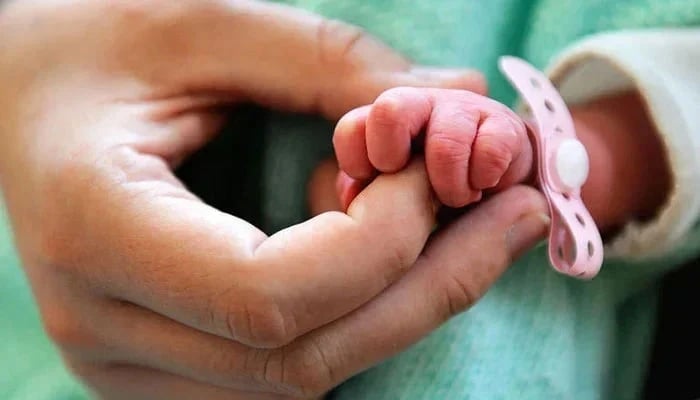
ISLAMABAD: Following the example of Indian badminton star Jwala Gutta, who recently donated 30 litres of breast milk, health experts are emphasising the life-saving role of donor milk for premature, underweight, or orphaned newborns.
Donor milk is pasteurised, rigorously tested for infections, and stored at -20°C, giving it a shelf life of three months. However, in India, where the first milk bank opened in 1989, supply falls drastically short of demand, with only about 100 banks currently operating.
The situation is even more complex in Pakistan. The country’s first human milk bank, set to open in Karachi, was shut down in 2024 after Islamic scholars revoked initial conditional approval.
The primary religious objection centres on Islamic laws governing “milk kinship,” where a donor child and recipient would be considered siblings, raising future marriage concerns. Despite proposals to track donors and gender-match donations, a fatwa deemed the initiative ‘haram’.
This closure highlights a difficult conflict between a proven medical intervention—which the WHO recommends as the best alternative when a mother’s milk is unavailable—and religious rulings. With Pakistan’s high newborn mortality rate (54 per 1,000 births), health officials face the challenge of finding a solution that is both scientifically sound and religiously compliant.






-
 State institutions ‘fail’ to perform constitutional duties: KP CM
 -
 CTD orders psychological testing of police on VVIP security duty
 -
 Navy busts drug consignment valued at $130m
 -
 Three ex-secretaries in race for ETPB chief post
 -
 Punjab govt forms 71 JITs to probe cases against banned TLP
 -
 Some UNSC members ignoring broader reforms, seeking privilege: Pakistan
 -
 PAC body discusses non-recovery of Rs15bn gas cess
 -
 Pakistan received $2.29bn foreign loans in first 4 months of 2025