Misinformation mania

The efforts to spread misinformation of all kinds over social media in Pakistan are not new. All of us are familiar with the attempts made in the past to create confusion and spread misguided information of various types against the polio vaccine. There's almost no doubt that such misinformation campaigns against polio and other diseases, or notably the vaccines against them, have led to suffering and death in all too many cases.
We now have a surge of social media videos and statements by those who seem to claim that they are health experts of some kind against the drive to offer the cervical cancer or anti-HPV virus vaccine to all girls aged between 9 and 14; the campaign began on September 15 and has been approved by the health ministry. This is something that deserves credit for a government which has otherwise done very little. This is the first time that the HPV vaccine will be administered in Pakistan and 13 million doses have already been delivered to the country by Unicef, working with its various partners.
The social media soothsayers claim that the vaccine is intended to make the recipients infertile and is an effort to eliminate Muslims from the world. This is obviously absurd. In their ignorance, some ask why the vaccine is being offered only to young girls and not to others and why all adults cannot be vaccinated if this is truly a vaccine against cancer.
It is not a vaccine against cancer. This is a vaccine designed against the HPV virus, which causes cervical cancer in women. Of course, in a country where there is large-scale ignorance against all matters concerning women and reproductive health, many will not know what the cervix is, where it is located or what its function is. But we need to learn and we need to educate ourselves to save our children – in this case, our girls. The reason why the vaccine in the first phase of the campaign is being offered only to 9-14-year-olds is that at this age, a single dose of the vaccine is effective in preventing or eliminating cervical cancer, which claims the life of one woman every two minutes somewhere in the world, and most often in low-income countries. Only 46 per cent of low-income countries use the HPV vaccine, now being promoted by international health organisations and Unicef after a meeting in June. The vaccine is hugely effective in a situation where 17.4 deaths out of every 1,000 girls or women are caused by cervical cancer, which stems from the HPV virus.
Education, of course, will be key to the success of a programme which targets eight million girls in Punjab, Sindh, Azad Kashmir and Islamabad. Subsequent drives are planned and will extend the programme to older women up to the age of 35 who may need more than one dose of the vaccine to make it effective. A single dose is the most cost-effective way to protect women from a devastating form of cancer, which claims the lives of thousands of women and is one of the most common cancers in women, following breast cancer.
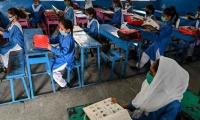
These matters are not spoken about often enough in our country. This is the reason for the ignorance we see across social media, with parents being urged not to allow girls to be vaccinated at any time in their lives. It seems that what we want for our daughters is death. The spread of misinformation and ignorance must be countered. The government plans to achieve this through voice messages, media campaigns and by asking schools to educate parents. Outside schools which are being targeted, the vaccine will also be available at health centres and be offered by mobile vaccination teams.
We cannot say for now how effective these efforts will be, but it is obvious that they will work better if they are preceded by a mass information campaign. This campaign must tell people precisely what the vaccine is intended to do and that it will have no impact on the fertility of a girl as she enters the later stages of life. The misconceptions are immense and medical experts need to break the barriers of communication and explain the somewhat complex mechanisms of the vaccine to the public. People must be told that the single shot in the arm can save tens of thousands of girls and women from immense suffering and death.
Vaccine campaigns of all kinds need to be destigmatised. Too many people believe the ill-informed social media broadcasts that appear on their screens, filled with falsehoods and fearmongering. We should use the dozens of television channels across the country to tell people the facts – all of them. People also need to be told that in 75 countries of the world, the single HPV dose is being delivered to girls at the right age so that they can live better lives and be saved from the potential harms of cancer and all that it can inflict on relatively young women. In addition to this, parents and women themselves also need explanations about the need for screening for cervical cancer through BAP tests, so that they can escape this disease.
Cervical cancer is the first kind of cancer against which a vaccine has been developed and is being successfully used across the world. It needs to be brought into Pakistan, where healthcare facilities make the early detection of diseases and cancers less likely, with women often finding it difficult to receive any healthcare. Along with this well-intended campaign, which the government must push through, there also needs to be an effort to explain reproductive health better and more fully so that all the facts related to it can enter public discourse and matters such as birth control can be discussed more easily and more openly, benefiting women, families and society as a whole. The HPV vaccine programme may be a good place from which this can start. It certainly needs to happen.
The writer is a freelance columnist and former newspaper editor. She can be reached at: kamilahyat@hotmail.com