When cinema had a conscience
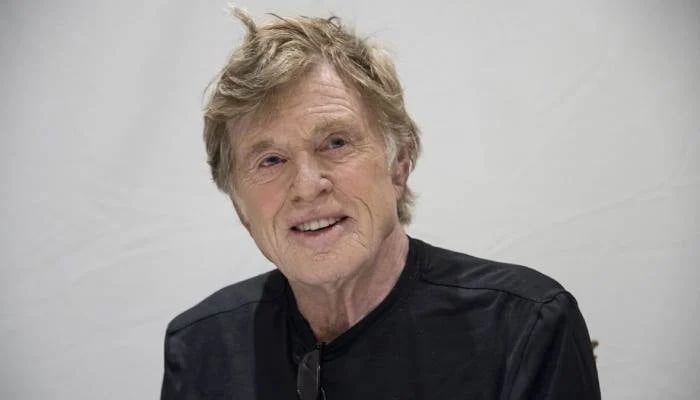
When Robert Redford passed away, the world lost more than an actor, director and Hollywood legend. It lost a conscience that, for over six decades, insisted that cinema could do more than entertain. He believed films could hold a mirror to society, exposing corruption, defending democracy and preserving the sanctity of the natural world.
I remember watching his film ‘Butch Cassidy and the Sundance Kid’ at Capri cinema in Karachi as a teenager in the 1970s. At that time in Pakistan, Hollywood films had local Urdu names given to attract movie goers, and this film’s Urdu title was ‘Hum Sub Chore Hein’ (All of us are thieves). With its signature opening line of the famous song ‘Raindrops Keep Fallin’ on My Head’ with Paul Newman riding a bicycle carrying his love interest, the film is still etched in my mind.
I admired him for his golden looks and star power, but his true gift that I came to know much later was something deeper: the ability to turn cinema into a moral dialogue with his nation. For Pakistan, his life and work offer not just nostalgia for cinephiles but lessons that speak directly to our own struggles with politics, media, and the environment. Born in 1936 in California, Redford grew up in modest circumstances. The world was still scarred by fascism and alive with debates on socialism and American power. These encounters sharpened his scepticism of triumphalism and gave him a sensitivity to democracy’s fragility.
By the time he entered the film industry, the Vietnam War, the civil rights movement and the Watergate scandal were reshaping the national mood in America. Where many of his Hollywood contemporaries avoided politics, Redford embraced it, weaving his convictions into his career and his art.
In 1972, his role as Bill McKay in ‘The Candidate’ revealed the emptiness at the heart of modern politics. McKay, an idealist coaxed into running for the Senate, begins with passion for civil rights and social justice. But as handlers sculpt him into a polished product, his authenticity is consumed. When he wins, his whispered line – “What do we do now?” – captures the futility of victory without principle. It was satire that became prophecy, for American politics was already descending into a world of image and spectacle.
In Pakistan, the echoes are unmistakable. Our elections, too, are often driven less by vision than by personality cults, rhetoric and rallies designed for cameras. Candidates, like McKay, are frequently reshaped into brands rather than leaders. Pakistani cinema has rarely dared to interrogate this hollowness. Redford’s example suggests how powerful such a critique could be if our filmmakers exposed the machinery of manipulation that shapes our politics.
Four years later, Redford produced and starred in ‘All the President’s Men’, a tribute to the journalists who exposed Watergate. The film was stripped of glamour. There were no car chases or dramatic courtroom speeches, only the drudgery of telephones, typewriters and dimly lit parking garages. Yet Redford insisted that such tedium was heroic, for democracy survives only through fearless reporting. Pakistan, with its embattled press, should recognise the urgency of this message. Our reporters who dig into corruption and power often pay with harassment, censorship or worse. Entire stories are erased, anchors silenced and channels cowed.
Redford’s hymn to journalism reminds us that without truth-tellers, democracy suffocates. A Pakistani film on a sugar scandal, a land grab or an assassination cover-up, told with the same patience and commitment to detail, could play the same role for our society that ‘All the President’s Men’ did for America. Between those two landmarks came ‘Three Days of the Condor’, a 1975 thriller about a CIA analyst who discovers a rogue operation and becomes the hunted. It was less about villains than about systemic rot, capturing the paranoia of the post-Vietnam years when Americans learned of secret coups and assassinations orchestrated by their own government.
For Pakistan, the theme resonates all too strongly. Our politics, too, is shadowed by talk of hidden hands, intelligence operations and the blurred line between elected authority and covert power. Conspiracies are traded in drawing rooms and whispered on television, but our cinema has rarely confronted these anxieties with seriousness.
Redford turned paranoia into art. Pakistani directors could do the same, not by inflaming but by interrogating, creating thrillers that question the opacity of power and dramatise the fragility of democracy when citizens cannot see who truly governs them. By the 1990s, Redford had moved more often behind the camera.
In ‘Quiz Show’, he revisited the 1950s scandal where television producers fed answers to contestants for ratings. The film was not about nostalgia but about the birth of a culture where spectacle overwhelmed truth. The manipulation of audiences for entertainment, the seduction of fame and the corruption of integrity became his themes. Pakistan, with its nightly talk shows filled with staged quarrels, manufactured outrage and anchors turned into celebrities, faces the same dilemma.
Redford’s warning is urgent for us: a society that allows truth to be sacrificed for spectacle does not merely weaken its media; it endangers its democracy. Not all of Redford’s films were political thrillers. In 1992, he directed ‘A River Runs Through It’, a lyrical tale of two brothers in Montana, bound by family, faith and fly-fishing. Its luminous images of rivers and forests were more than scenery. For Redford, the river was a metaphor: life-giving, fragile and spiritual.
A lifelong environmentalist, he fought against oil drilling in wilderness areas and supported climate awareness campaigns. The film, though quiet, was deeply political: it reminded audiences that environmental destruction is also social corruption. For Pakistan, the lesson is urgent. Our country faces climate disaster – floods that drown villages, glaciers that melt, forests that vanish and air that suffocates. Yet our cinema has rarely treated the environment as a protagonist.
Such stories could awaken our society more powerfully than any policy report. Across these works, Redford’s philosophy emerges clearly. Democracy is fragile, whether corrupted by campaigns, weakened by secrecy or distorted by media. The environment is sacred, not a niche concern but a moral trust for future generations. And integrity matters, above all. For Pakistan, these convictions speak loudly. We, too, are full of teachers, activists, journalists and lawyers who persist against odds. But our cinema, too often trapped in escapist romance or imported formulas, neglects them.
Redford’s legacy insists they deserve the spotlight, for they are the conscience of our nation. Beyond his films, Redford’s greatest institutional contribution was Sundance. Founded in 1981, it became a haven for independent filmmakers, especially women, people of colour, and political documentarians. It gave voice to those Hollywood had ignored. Pakistan desperately needs a similar platform.
Redford showed that building institutions is as important as making films. When Bill McKay whispered in ‘The Candidate’, “What do we do now?” it was Redford speaking not just to America but to all democracies. Pakistan, too, faces the same question. After elections turned into spectacle, after floods that devastate provinces, after censorship that silences voices – what do we do now? Redford’s answer was to cling to conscience, to trust in the courage of individuals and to use art as resistance. His films warned, but they also hoped. Democracy could decay, media could corrupt, nature could wither, but human beings could still resist if they clung to truth, conscience and beauty.
Robert Redford leaves behind more than cinema. He leaves a political imagination that resonates far beyond Hollywood. For Pakistan, his life is a reminder that film can be conscience, that actors and directors can be voices for integrity and that art can awaken societies lulled by spectacle. His whisper carries across borders, asking us too: what do we do now?
The writer holds a PhD from the University of Birmingham, UK. He tweets/posts @NaazirMahmood and can be reached at: mnazir1964@yahoo.co.uk