Senate panel seeks briefing on railways outsourcing policies
ISLAMABAD: Senate Standing Committee on Railways Tuesday directed the Ministry of Railways to provide a thorough briefing on outsourcing policies and practices in the next meeting.
The committee sought the briefing on the matter of outsourcing and public-private partnerships. Senator Rubina Khalid questioned the procedure and rationale behind adopting models not widely practiced internationally.
The committee met with its Chairman Jam Saifullah Khan in the chair here at the Parliament House.
At the outset, the committee expressed disappointment over the absence of the Minister for Railways, senior officials, and concerned departments despite assurances made in previous meetings to ensure compliance.
Members noted that working papers were neither complete nor provided 72 hours in advance, as required.
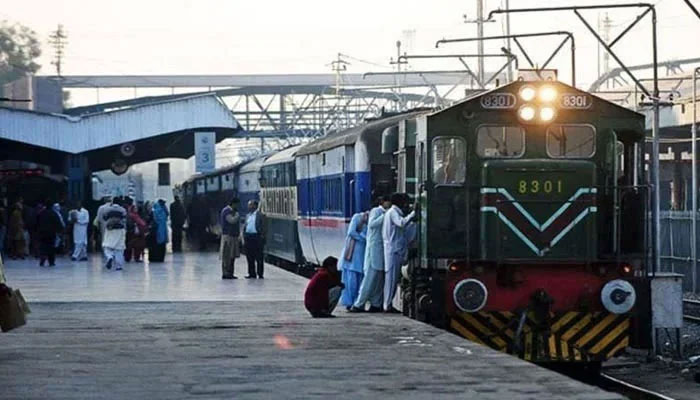
During the meeting, the committee was informed that Pakistan Railways, which operated over 200 trains across the country two decades ago, is now running only over 100 due to financial constraints and a deteriorating infrastructure. “The system is unable to generate the kind of revenue that private operators can,” the committee was informed.
It was also informed to the committee that Pakistan Railways currently operates 8 to 9 export freight trains from Karachi, while freight services are also being run from Lahore, Rawalpindi and Peshawar. However, that the overall condition of the network remains poor and has hampered efficiency and profitability.
Briefing the committee, the Railways Secretary said the department had received no meaningful government investment for years, leaving the organisation unable to expand or modernise operations.
“Until new coaches are inducted, the railways cannot turn profitable,” he added, noting that the network generates revenue only from Karachi and Lahore sectors, while all other routes operate at a loss.
Senator Asad Qasim questioned why the number of trains operating from Quetta had been drastically reduced. “A decade ago, 10 trains were running from Quetta to different parts of the country, but now only two remain. Why is Balochistan being treated with such injustice?” he asked.
The secretary responded that the Public Sector Development Programme (PSDP) allocation for the current year was limited, which had constrained the department’s ability to expand services.
Senator Shahadat Awan highlighted that details regarding FIR No. 1/2018, involving alleged corruption of billion rupees, were missing from the working papers despite repeated directions from the committee.
He termed it highly inappropriate that after 11 meetings, complete information was still not shared with the committee.
Senator Rubina Khalid and Senator Kamil Ali Agha endorsed these concerns, stressing that it was unjustified for members to travel from other cities when the ministry failed to provide relevant data.
Chairman Senate Committee on Railways Jam Saifullah Khan reminded that the minister had earlier assured transparent provision of information and directed that in the next meeting, the Minister, Secretary, IG, and DIG Railways must be present to brief the committee in detail.
He further instructed that all future working papers be prepared in proper agenda-wise folders, flagged, and page-numbered to maintain order. The committee chairman directed the Federal Investigation Agency (FIA) and the National Accountability Bureau (NAB) to present records of pending corruption cases involving Pakistan Railways at the next meeting.
Additionally, Senator Rubina Khalid underscored the strategic importance of the Afghan transit trade and stressed that railway access must be extended to Torkham Pass to strengthen regional connectivity.
The committee called for a comprehensive briefing on railway gauges to evaluate which system would best connect Pakistan with neighbouring countries. The committee also discussed the flood situation and was informed that while old bridges had largely withstood the impact, some sectors, including Narowal–Sialkot, were temporarily affected but had since been restored.
Senator Shahadat Awan raised the issue of restoring Budhal Express (Rohri–Jacobabad) and the Mandra–Chakwal railway line, stressing that people were forced to spend heavily on road travel due to suspension of these services.
The committee expressed dissatisfaction over the ministry’s failure to make serious efforts for their restoration.
It was noted that Mandra–Chakwal section spans 75 km and hosts cement factories, making it a commercially viable route. The committee directed that a detailed report on restoration be presented in the next meeting. The chairman announced that the next committee meeting will be held in Peshawar to specifically review railway projects and facilities in KP.
The committee unanimously directed the Ministry of Railways to ensure complete, timely, and transparent compliance with its directions and to provide thorough reports on all agenda items in the next meeting.


-
 Aurangzeb confirms Saudi Arabia $10bn interest, says B2B shift ongoing
 -
 Pakistan to build artificial island to boost oil exploration
 -
 Special pink bus service launched for women on Green Line route
 -
 Same number plates from other provinces lead to wrong e-challans for Karachiites
 -
 State institutions ‘fail’ to perform constitutional duties: KP CM
 -
 CTD orders psychological testing of police on VVIP security duty
 -
 Navy busts drug consignment valued at $130m
 -
 Three ex-secretaries in race for ETPB chief post