
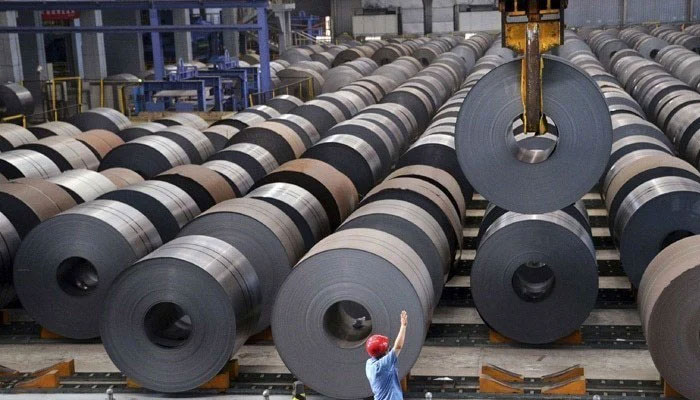
ISLAMABAD: Pakistan’s steel producers of Karachi have been left in a lurch as they are unable to secure government’s incremental power subsidy package.
For over two years, Pakistan’s largest steel producers have been pleading for relief under government’s Incremental Power Subsidy Package. Still, Karachi’s industries remain trapped in bureaucratic limbo, bleeding billions in losses while ministries and regulators in Islamabad point fingers at each other instead of releasing the relief.
Pakistan Association of Large Steel Producers (PALSP), in a letter to Ministry of Finance, NEPRA, Special Investment Facilitation Council (SIFC) and Prime Minister’s Secretariat, has accused government of discrimination against Karachi-based industries. At the heart of the dispute is delayed release of subsidies meant to offset incremental electricity consumption costs, a scheme first announced to keep industries afloat during post-Covid recovery.
While industries in Punjab and other provinces received relief, Karachi’s producers, falling under monopoly of K-Electric, were left exposed. Out of around Rs42 billion package, PALSP pointed out 83pc of undisputed subsidy is owed directly by government, while only 17pc relates to K-Electric’s litigation. Yet, the entire sum has been withheld on different excuses.
According to reports from trade associations and FB Area Industries, government released power subsidies to industries to rest of country under Covid-relief plan (FY20-23), but disbursed only Rs9 billion to Karachi against an allocation of Rs42 billion. The remainder was held up because of disagreements between K-Electric and regulatory authorities.
Finance Ministry admitted before the Senate Standing Committee in February 2025 there was “absolutely no delay” in releasing funds from its side, revealing K-Electric had already getting much more subsidies than other utilities. The Committee chairman directed Power Division to resolve the issue, but little has moved since.
The PALSP called the impasse a “glaring discrimination” that crippled Karachi’s competitiveness. The steel industry, where electricity is second-largest input cost, has borne the worst impact, with estimated losses of Rs150 billion, it said. Litigation tactics by K-Electric and institutional inertia at NEPRA have only prolonged the ordeal, it said. Even when NEPRA’s appellate tribunal dismissed KE’s appeals with cost, enforcement never followed, it added.
“This is government’s failure to release the funds despite confirmed allocations in FY 2021–22 (Rs22 billion), FY 2022–23 (Rs13 billion) and FY 2023–24 (Rs7 billion). The total subsidy for period between July 1, 2021 and October 21, 2023, is Rs33 billion, out of which Rs23 billion is undisputed”.
However, legal and administrative delays, especially involving K-Electric, have stalled its release.
The PALSP has “knocked the door of every government department” and even resorted to newspaper appeals, but “every effort is falling on deaf ears.” The steel producers warned that continued delay is inflicting “immense pain and suffering” on Karachi’s industrial base.
For Karachi’s industries, issue is more than unpaid subsidies; it is about erosion of fair competition, investor confidence and survival in a sector already squeezed by inflation and currency shocks. For Islamabad, it is a test of political will: whether to uphold equity for all regions or allow systemic discrimination to fester under bureaucratic excuses, PALSP pointed out.


-
 State institutions ‘fail’ to perform constitutional duties: KP CM
 -
 CTD orders psychological testing of police on VVIP security duty
 -
 Navy busts drug consignment valued at $130m
 -
 Three ex-secretaries in race for ETPB chief post
 -
 Punjab govt forms 71 JITs to probe cases against banned TLP
 -
 Some UNSC members ignoring broader reforms, seeking privilege: Pakistan
 -
 PAC body discusses non-recovery of Rs15bn gas cess
 -
 Pakistan received $2.29bn foreign loans in first 4 months of 2025