Business leaders voice concern over unchanged policy rate
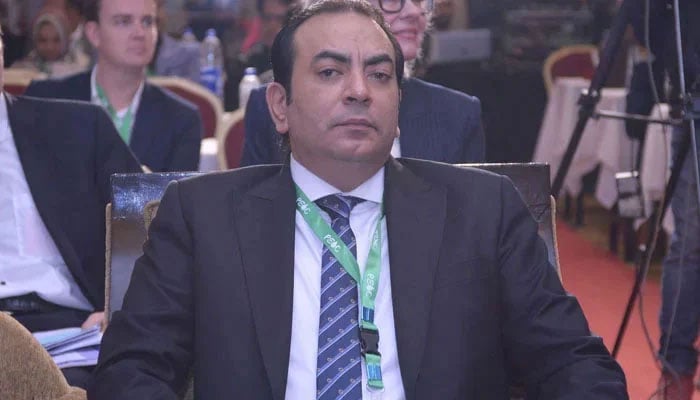
KARACHI/LAHORE: Business leaders and industrialists have criticised the State Bank of Pakistan’s decision to leave its policy rate unchanged at 11 per cent, despite a sharp decline in inflation and signs of macroeconomic stability.
Atif Ikram Sheikh, president of the Federation of Pakistan Chambers of Commerce and Industry (FPCCI), called the decision “incomprehensible” given current economic conditions. He warned that maintaining such a high rate would hurt investment and growth, while adding to financial stress across the economy.
Sheikh argued that the rate should be cut to between 6.0 per cent and 7.0 per cent to reflect falling inflation and ease the government’s debt burden by as much as Rs3.5 trillion. “Inflation has dropped to 3.0 per cent in August, according to official data. Pakistan’s interest rate is far higher than those in neighbouring countries and continues to stifle economic activity,” he said.
Muhammad Jawed Bilwani, president of the Karachi Chamber of Commerce and Industry (KCCI), said the decision was “at odds with economic indicators” and “detrimental to growth.” He noted that businesses had expected a cut given that inflation had slid to 3-4 per cent, leaving an unusually high premium between borrowing costs and prices.
SM Tanveer, patron-in-chief of the United Business Group (UBG), also expressed disappointment over the State Bank of Pakistan’s decision to keep the policy rate unchanged, saying the central bank has failed to respond to the pressing needs of the economy.
Commenting on the latest monetary policy statement, Tanveer said that with inflation under control and the Consumer Price Index (CPI) at a notable low, maintaining high interest rates is stifling growth and compounding the challenges faced by businesses and consumers alike. “The elevated policy rate is deterring investment, hindering job creation and placing an undue burden on the industrial sector, which is vital for economic development,” he said.
“In my view,” he said, “no economic uplift is possible without a significant reduction in the policy rate to 6.0 per cent. This move would not only stimulate economic activity but also make borrowing more accessible for businesses, thereby fostering growth and development.” He also added that it is imperative to bring electricity tariffs to a regionally competitive level of 9 cents per kWh. This adjustment is essential for reducing the cost of doing business, enhancing our export competitiveness and ultimately driving economic prosperity.
The policy rate remains at 11 per cent, unchanged since May 2025. Junaid Naqi, president of the Korangi Association of Trade and Industry (KATI), also voiced frustration, saying the rate was choking exporters and industrialists who were already grappling with capital shortages. “The business community has long demanded a reduction to single digits. Pakistan’s interest rate remains the highest in the region, deterring investment and industrial growth,” he said.
Masood Pervaiz, president of the SITE Superhighway Association of Industries, warned that high borrowing costs were discouraging expansion. “The business community contributes to foreign exchange earnings, taxes and jobs, yet is offered no incentives. If agriculture faces shocks from floods or rains, large-scale industry could offset these — but only if given room to grow through lower interest rates,” he said.
Shaikh Muhammad Tehseen, president of the Federal B Area Association of Trade and Industry (FBATI), expressed similar dismay. “The business community had expected lower rates to support exports, jobs and revenues. Instead, rising input and utility costs, combined with climate-related losses, continue to squeeze industry with no respite,” he said. He warned that export-oriented sectors would struggle to compete regionally without support from policymakers and regulators.
Tanveer urged the government to revisit the policy without delay. “The current environment demands a more accommodative stance to revive the economy and support the business community. Any further delay will only prolong stagnation and hinder Pakistan’s progress. It is imperative for the government to act immediately to create a conducive environment for growth and development,” he added.


-
 Aurangzeb confirms Saudi Arabia $10bn interest, says B2B shift ongoing
 -
 Pakistan to build artificial island to boost oil exploration
 -
 Special pink bus service launched for women on Green Line route
 -
 Same number plates from other provinces lead to wrong e-challans for Karachiites
 -
 State institutions ‘fail’ to perform constitutional duties: KP CM
 -
 CTD orders psychological testing of police on VVIP security duty
 -
 Navy busts drug consignment valued at $130m
 -
 Three ex-secretaries in race for ETPB chief post