HPV vaccination drive launched to protect girls from cervical cancer
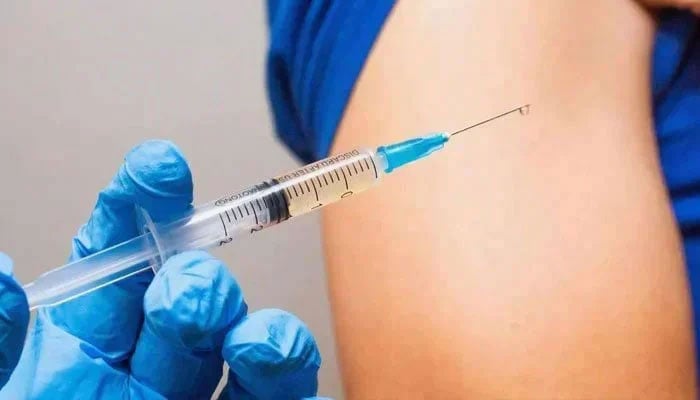
Ayesha Khalid, a 13-year-old student and daughter of Dr Khalid Shafi, became the first child to receive the Human Papillomavirus (HPV) vaccine in Karachi on Monday, marking the historic launch of Pakistan’s cervical cancer prevention drive.
The vaccine was administered on Monday at ceremonies attended by Federal Health Minister Syed Mustafa Kamal and Sindh Health Minister Dr Azra Fazal Pechuho, provincial ministers, and representatives from Gavi, World Health Organization (WHO), Unicef and DOPASI Foundation, along with other partners who joined hands to celebrate this milestone for Sindh and the country.
Speaking at the launch, the federal health minister said the government was fully committed to protecting young girls from cervical cancer through preventive measures. Appealing directly to the parents, he said, “I urge all parents to ensure their daughters and sisters are vaccinated. Sadly, there is false propaganda being spread about this vaccine which has no basis in reality. Do not fall prey to negative campaigns. This vaccine is safe, effective, and essential for protecting our girls.”
Cervical cancer is among the most preventable yet deadly diseases for women, claiming one life every two minutes worldwide — and nearly 94 per cent of those deaths occur in low- and middle-income countries, according to the WHO. Globally, it is the fourth most common cancer among women, but in Pakistan the situation is even more alarming as it is the second most common cancer among women in the country. Each year, more than 5,000 Pakistani women are diagnosed with it, and almost 3,000 of them lose their lives.
At the core of this disease is HPV, the most widespread viral infection of the reproductive tract. While most infections clear naturally, persistent high-risk HPV strains can cause cervical cancer. The tragedy is that this cancer is largely preventable.
A safe vaccine exists that prevents over 90 per cent of high-risk HPV infections and can avert nearly 17 deaths per 1,000 girls vaccinated.
In a landmark step, Pakistan on September 15 rolled out the HPV vaccination campaign’s first phase with a 12-day effort targeting Sindh, Punjab, Azad Jammu & Kashmir and Islamabad. The vaccine, aimed at girls between 9 and 14 years of age, is being delivered primarily through schools and will later be integrated into the national immunisation programme, ultimately reaching nearly 18 million girls nationwide.
The launch also places Pakistan firmly on track toward achieving the WHO’s cervical cancer elimination targets by 2030 through vaccinating 90 per cent of the girls by age 15, screening 70 per cent of the women, and ensuring 90 per cent of those with the disease received timely treatment.
Earlier this year, at the Global Forum on Cervical Cancer Elimination, Pakistan reaffirmed its commitment to these goals, making Monday’s campaign launch a pivotal moment for women’s health.
A critical partner in ensuring the success of the campaign is the DOPASI Foundation, a civil society organisation with more than three decades of experience in public health and community mobilisation.
Kinz ul Eman, the CEO of the DOPASI Foundation, emphasised, “Civil society has a vital role in mobilising families, engaging stakeholders and building trust around HPV vaccination. Without grassroots awareness and collaboration, this campaign cannot achieve its full impact.”
The launch of Pakistan’s HPV vaccination campaign is more than a medical initiative; it is a national promise to protect the future of millions of girls. With awareness, action, and community support, thousands of lives can be saved each year.



-
 Aurangzeb confirms Saudi Arabia $10bn interest, says B2B shift ongoing
 -
 Pakistan to build artificial island to boost oil exploration
 -
 Special pink bus service launched for women on Green Line route
 -
 Same number plates from other provinces lead to wrong e-challans for Karachiites
 -
 State institutions ‘fail’ to perform constitutional duties: KP CM
 -
 CTD orders psychological testing of police on VVIP security duty
 -
 Navy busts drug consignment valued at $130m
 -
 Three ex-secretaries in race for ETPB chief post