No handshakes as Pakistan’s missteps, India's spin seal Asia Cup T20 loss
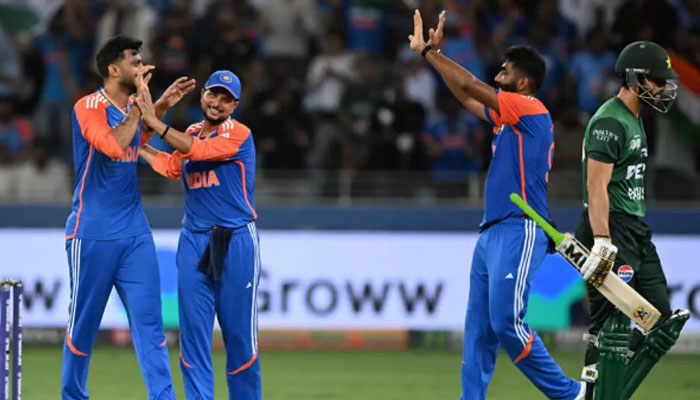
DUBAI: Pakistan entered the much-anticipated Asia Cup clash against India at the Dubai Sports City Stadium on Sunday without the burden of being favourites and as the contest unfolded, it became increasingly clear why critics had tilted the odds heavily in India’s favour.
From a questionable decision at the toss to glaring flaws in team selection and execution, Pakistan’s shortcomings were ruthlessly exposed in a one-sided contest that underscored the gulf in planning and professionalism between the two arch-rivals.
The turning point, many believe, came even before the first ball was bowled. Opting to bat first on a surface renowned for favouring chasing sides raised immediate eyebrows. Former fast bowling legend Shoaib Akhtar minced no words while criticising the call. “I don’t agree with the decision to bat first on a track that traditionally suits the chasing team. It was like handing the initiative back to India before the game even started,” Akhtar remarked in his live analysis, setting the tone for what followed.
If the toss decision was a blunder, team selection did little to salvage Pakistan’s case. Instead of strengthening the pace attack with a second specialist seamer, the management persisted with Sufiyan Muqeem, a move that backfired spectacularly. India’s top order showed no mercy to the left-arm wrist-spinner, punishing him to all parts of the ground and exposing Pakistan’s tactical miscalculation.
The batting performance, however, was the most alarming aspect. On a surface offering true bounce and value for shots, Pakistan’s top-order imploded in dramatic fashion. Saim Ayub’s dismissal for a golden duck his third duck in the last five T20 internationals immediately put Pakistan on the back foot. His reckless approach at the start of innings has now become a serious concern for the team management. He was not alone in faltering. Mohammad Haris (3), Salman Ali Agha (3), Hasan Nawaz (5), and Mohammad Nawaz (0) all fell cheaply, leaving Pakistan reeling. Five of the top seven batters failed to reach double figures, an unforgivable collapse in modern-day T20 cricket.
India’s Kuldeep Yadav, later named Player of the Match, was the chief destroyer. Kuldeep returned figures of 3-18 and along with fellow spinner Axar Patel. The left-arm spinner, who has historically enjoyed success against Pakistan, stuck to the basics and reaped rewards. “I knew where Pakistan batters were vulnerable. My plan was simple: bowl tight lines and lengths, avoid unnecessary variations, and build pressure. It worked perfectly,” Kuldeep said after his match-winning spell. His tally against Pakistan now stands at 18 wickets in just eight T20 internationals, with an astonishing economy rate hovering around four runs an over, numbers that should set alarm bells ringing in the Pakistan camp.
A late flourish from Shaheen Shah Afridi (33 not out off 16 balls) helped Pakistan limp to 127 for 9, but the total was never likely to trouble India’s power-packed batting unit. Abhishek Sharma’s blistering 13-ball 31 gave India the perfect start, before skipper Suryakumar Yadav (47 not out) calmly guided his side home in the 16th over, finishing the match with a towering six. “It was a delight to close the game in style. We played to our strengths and executed the plan exactly as needed,” Yadav said in his post-match comments, which stirred controversy for straying into political undertones. The stadium had a lot of empty seats, and the players from both teams went off without handshakes.
For Pakistan, the bowling effort lacked bite and penetration. Ironically, it was part-time option Saim Ayub (3 for 35) who emerged as the only wicket-taker, further highlighting the poor selection strategy.
Former cricketers were unanimous in their criticism of Pakistan’s approach. Shoaib Akhtar was blunt: “Our batsmen are simply not built for the demands of modern T20 cricket. We lack the professional mindset and quality required at this level.” Misbah-ul-Haq echoed similar concerns, blaming both technique and mentality. “Once Pakistan lost two quick wickets, the batting went into its shell. The shot selection was poor, and there was no visible game plan against the spinners. On this pitch, 180 should have been the minimum target.”
Umar Gul, meanwhile, expressed disbelief over the sheer number of dot balls, nearly 10 maiden overs worth. “This is T20 cricket. If boundaries are hard to come by, rotation of strike is the key. Singles and doubles were available, yet Pakistan played as if they were stuck. It was poor planning, plain and simple.”
Even Axar Patel proved unplayable at times, compounding Pakistan’s misery. With another India clash looming on September 21, the Pakistan think-tank faces urgent questions: why were historical stats against Kuldeep ignored? Why does the top order consistently wilt under pressure? And how does it fall upon a lower-order hitter like Shaheen Afridi to showcase the only spark of intent?
Whether it is a lack of commitment, flawed planning, or a worrying dearth of quality, Pakistan’s management must confront harsh realities before the rivalry reignites. Anything less could see history repeat itself in an even more embarrassing fashion.


-
 Aurangzeb confirms Saudi Arabia $10bn interest, says B2B shift ongoing
 -
 Pakistan to build artificial island to boost oil exploration
 -
 Special pink bus service launched for women on Green Line route
 -
 Same number plates from other provinces lead to wrong e-challans for Karachiites
 -
 State institutions ‘fail’ to perform constitutional duties: KP CM
 -
 CTD orders psychological testing of police on VVIP security duty
 -
 Navy busts drug consignment valued at $130m
 -
 Three ex-secretaries in race for ETPB chief post