
Cases of DSS, DHF being reported at allied hospitals of RMU
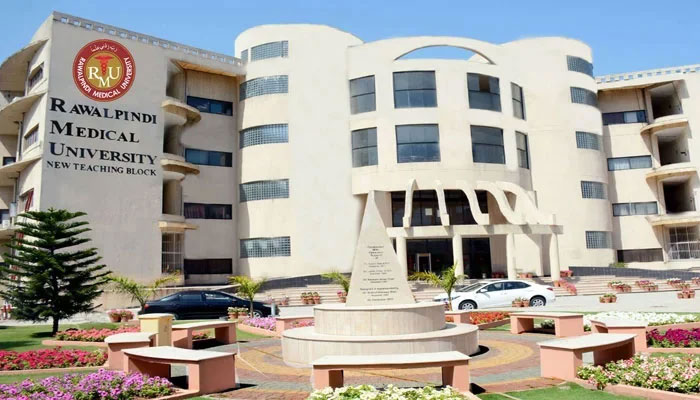
Rawalpindi : Rawalpindi Medical University’s (RMU) allied hospitals in the town have tested a total of 681 patients positive for dengue fever this year so far and the more alarming factor is that nearly 37 per cent of all patients have been detected with dengue haemorrhagic fever (DHF) and three per cent with Dengue Shock Syndrome (DSS), the rare complications of dengue fever, which are considered as more fatal forms of the infection.
Experts believe that after confirmation of such a big number of dengue fever patients at the allied hospitals in the last few weeks, a rising threat of an outbreak of dengue fever and dengue haemorrhagic fever (DHF) seems to be haunting population as the infection has a tendency to occur in shapes of epidemics and outbreaks.
Data collected by ‘The News’ on Sunday revealed that from January 1 to September 14 this year, a total of 681 confirmed cases of dengue fever of which over 660 have been reported from July 12 this year to date. Data reveals that 242 cases were diagnosed as DHF and 21 were with DSS, which is considered as the most fatal form of the disease.
On Sunday, as many as 96 dengue fever patients were undergoing treatment at the three teaching hospitals including 51 at HFH, 21 at BBH and 24 at RTH. A total of 47 dengue patients were admitted to the allied hospitals in the last 24 hours while 34 have been confirmed positive for the infection.
Experts say that it is time for individuals and government authorities to work religiously for prevention and control of dengue fever. They say that people should be made well aware of the aspects of dengue fever and there is a need to create awareness among public on how to avoid its outbreak in their areas of residence.
Dengue shows itself in the shape of high fever, severe headaches, extreme joint and muscle pain -- also called break-bone fever, nausea and vomiting and rash. A few victims develop DHF --bleeding from nose, gums and under the skin causing purplish bruises. The DHF may be fatal in five per cent cases. Then there is DSS that can lead to circulatory failure.
The most worrisome fact is that Aedes Aegypti, the mosquito that causes dengue fever, is a daytime biter when it is difficult to sense the bite. Aedes Aegypti tends to breed inside closets, in the artificial water containers that are covered such as water storage tanks of houses and in the discarded tyres, flowerpots and old drums etc.






-
 State institutions ‘fail’ to perform constitutional duties: KP CM
 -
 CTD orders psychological testing of police on VVIP security duty
 -
 Navy busts drug consignment valued at $130m
 -
 Three ex-secretaries in race for ETPB chief post
 -
 Punjab govt forms 71 JITs to probe cases against banned TLP
 -
 Some UNSC members ignoring broader reforms, seeking privilege: Pakistan
 -
 PAC body discusses non-recovery of Rs15bn gas cess
 -
 Pakistan received $2.29bn foreign loans in first 4 months of 2025