Global governance initiative: what it holds for world
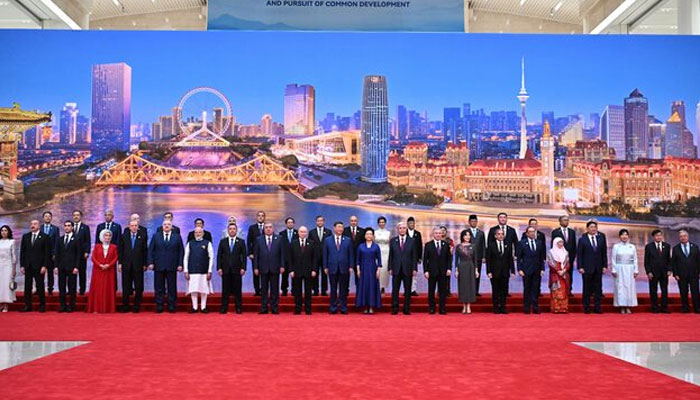
The global governance system is in disarray, and institutions are losing their grip on the international order. The system, which was created with promises to protect the weak from the powerful and build a fair and prosperous world, is failing to fulfill its promises. Bullying and coercion have become the new normal. The hegemonic ambitions of a few have pushed global governance into crisis after crisis, weakening its authority. This has led to conflicts, widespread economic inequality, and development problems, including poverty, debt, food insecurity, and has exposed the world to the existential threat of climate change.
In this context, President Xi has launched the Global Governance Initiative (GGI), while delivering a speech at the SCO summit. He emphasized the need to create a fair world and order in which all countries have a voice and the right to benefit from it. Currently, a few nations dominate the system and exploit others. Unfortunately, Cold War mentalities, hegemonism, and protectionism persist.
He further emphasized that we need to let go of this mentality and believe that all countries, regardless of size, strength, and wealth, are equal participants, decision-makers, and beneficiaries in global governance. The five key principles of GCI, proposed by President Xi, include respecting sovereign equality, adhering to the international rule of law, practicing multilateralism, advocating a people-centered approach, and prioritizing concrete actions. These principles can help address these issues. Therefore, the GGI has attracted attention and sparked a worldwide debate. The global community of experts and policymakers is debating whether the GGI will help address the issues of the current governance system or if it marks the beginning of a new global governance order. These are important and interesting questions, but to answer them, we must first understand the Chinese governance model.
Let’s decode and try to understand it. Countries with liberal governance and democracy often view China as an authoritarian state that uses an autocratic model to rule the country. However, the analysis of the Chinese governance system indicates that Western views on China do not fully reflect the reality. Some elements are often absent from Western discussions, yet they are crucial for understanding the Chinese system.
First, the Chinese governance system is based on fundamentally different ideology and principles. It clearly separates ruling (which can be seen as autocratic rule) from governance. Chinese leaders see governance as a different area from rule and management. Ruling is centralized, coercive, and monopolistic, while “governance” is pluralistic, democratic, and cooperative. Ruling creates an impression of dictatorship or strict control by an individual or a group. In contrast, governance promotes inclusive management of daily functions through the rule of law. Essentially, governance focuses on winning people’s hearts by serving their needs, whereas ruling is about directing the process based on individual interests or will. For governance, the rule of law is crucial, but for ruling, individual interests come first.
Second, China believes that the ultimate goal of governance is to serve the interests of the people, fulfill their aspirations, and create a better environment where they can survive and thrive. Therefore, the governance system must be problem-focused, goal-driven, results-oriented, dynamic, inclusive, coherent, technologically advanced, and based on scientific decision-making. The most notable example of this philosophy is the Third Principal Contradiction, introduced by President Xi. This philosophy has helped China overcome challenges, eliminate poverty, become a major economy, and establish itself as a hub of innovation and technological development.
Third, the rule of law serves as a guiding philosophy and principle for governing the country and society. China aims to integrate the rule of law into the nation, govern according to law, and manage society based on the principles of the rule of law. State power is exercised in compliance with the law. China has a robust judicial system and is working to strengthen it to protect human rights, ensure fairness, justice, and equality. China views the judicial system as a vital tool for building a modern socialist country with Chinese characteristics. Therefore, China is dedicated to modernizing its judicial system.
Fourth, everyone has to submit to the law and abide by it. No one is above the law, and no one is allowed to exploit others or make progress at the expense of others. Everyone is equal, will be treated equally, and have equal opportunities to grow. There would be no privileged class or people.
Fifth, the Chinese governance model emphasizes ongoing interaction among governance actors and the people, inclusive decision-making, dialogue instead of dictation to solve problems, and a balance of merit and moral values. This approach fosters both cohesiveness and fairness in running the country and managing society. As a result, it has developed a unique governance system called Whole Process People-Democracy. This system helps build a pluralistic, democratic, and cooperative framework. It also promotes inclusiveness, continuous interaction among the Party, the State, the government, and the people, as well as rule-based governance.
Sixth, China believes that to build governance with the characteristics discussed above, governance actors must possess certain qualities. Therefore, China has established a core set of socialist values, including prosperity, democracy, civility, harmony, freedom, equality, justice, the rule of law, patriotism, dedication, integrity, and friendship. These values are also crucial for developing a moral doctrine, which ensures self-accountability. Therefore, governance actors at all levels adhere to and practice these values to make progress within the Chinese system.
From the above discussion, it can be inferred that China’s governance system is based on the principles of a people-centered philosophy, inclusivity, respect for social diversity, and consideration of the needs and preferences of the people. It is characterized by pluralism, democracy, and cooperation. It is run by the rule of law, guided by values with the ultimate goal of promoting the welfare of people and the prosperity of society, fostering a peaceful and cooperative society and country.
Unfortunately, these characteristic features are largely absent in a global governance system. Hegemonic ambitions and the greed of a few have hijacked the system for their benefit. The major global players have chosen confrontation over dialogue, dominance over equality, coercion over cooperation, and narrow interests over common prosperity. The system is in search of the rule of law and core values.
In this context, the Global Governance Initiative has been widely praised, especially by less developed, weaker, and smaller countries. They hope that through the Global Governance Initiative, China will help solve global problems by sharing its governance system’s features and experiences, as it has done in the fight against poverty.
In conclusion, however, to determine whether GGI will reform the current system or mark the start of a new form of global governance, we will have to wait. Currently, GGI is an idea or vision that lacks an institutional framework or a formal implementation plan. Therefore, we cannot answer the question raised above and must wait for the development of the institutional framework and the implementation plan of the GGI.


-
 Aurangzeb confirms Saudi Arabia $10bn interest, says B2B shift ongoing
 -
 Pakistan to build artificial island to boost oil exploration
 -
 Special pink bus service launched for women on Green Line route
 -
 Same number plates from other provinces lead to wrong e-challans for Karachiites
 -
 State institutions ‘fail’ to perform constitutional duties: KP CM
 -
 CTD orders psychological testing of police on VVIP security duty
 -
 Navy busts drug consignment valued at $130m
 -
 Three ex-secretaries in race for ETPB chief post