SC sets aside BHC verdict granting relief to flour mills
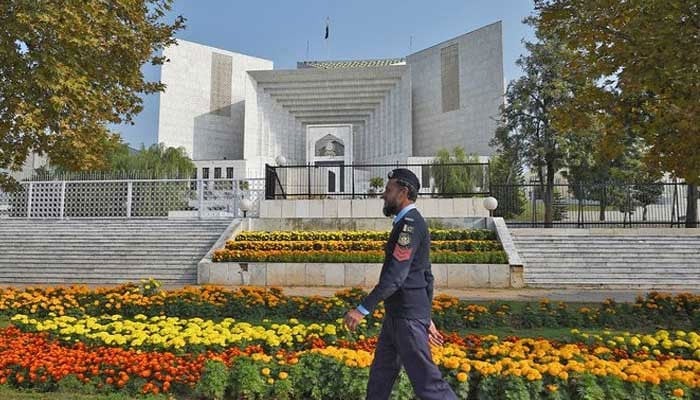
ISLAMABAD: The Supreme Court has set aside the Balochistan High Court’s (BHC) judgement of granting relief to flour mills.
Based on the verdict the earlier exemption from taxes has been revoked and the flour mills have to obtain sales tax registration. They must also remain on the active taxpayers list. Non-compliance will attract extra tax and further tax.
A three-member bench, led by Chief Justice Yahya Afridi, included Justice Muhammad Shafi Siddiqui and Justice Miangul Hassan Aurangzeb. heard the Federal Board of Revenue’s (FBR) appeal against the BHC’s judgements dated August 22, 2022 and October 17, 2023, along with related orders. These had granted relief to flour mills.
The Supreme Court allowed the FBR’s appeals and overturned the BHC’s judgement. The appeals were heard on September 4, 2025. The dispute began when the Quetta Electric Supply Company (QESCO), acting as a withholding agent, started charging Extra Tax and Further Tax on flour mills through electricity bills. This was under SRO 509(I)/2013 dated June 12, 2013 and SRO 1222(I)/2021 dated September 17, 2021. Several flour mills, including M/s Etimad Flour Mills, M/s Ahmed Flour Mills, M/s Ghaznavi Flour Mills, M/s Al-Falah Flour Mills, M/s Sultan Flour Mills (Quetta), and M/s National Flour Mills, challenged this levy before the BHC.
On October 17, 2023, the BHC ruled that flour mills were exempt from the order. It relied on Section 13 and Item No. 19 of the Sixth Schedule to the Sales Tax Act, 1990. The Supreme Court noted that FBR’s counsel, Hafiz Ehsan Khokar, highlighted that the BHC’s decision relied on Sindh High Court judgements. These were challenged and overturned by the Supreme Court in a consolidated judgement on September 15, 2022 in Civil Appeal No. 2019/2016. The Supreme Court had ruled that challenges to the SRO should not have been allowed under constitutional jurisdiction. There was no jurisdictional or constitutional defect. Thus, it set aside the Sindh High Court judgements.
The respondents’ counsel argued that the merits of the case, particularly the issue of registration, needed attention. The Supreme Court rejected this argument. It stated that the maintainability of the petitions was already addressed in its earlier judgement. It converted the petitions into appeals, allowed them, and set aside the BHC’s judgements.
Hafiz Ehsan Khokar, FBR’s counsel, described this a landmark ruling. It reaffirmed the supremacy of statutory obligations under the Sales Tax Act, 1990 and ends years of conflicting legal positions. He said that all flour mills in Pakistan must obtain sales tax registration. They must also remain on the active taxpayers list. Non-compliance will attract Extra Tax and Further Tax. The Supreme Court has now declared these taxes lawful, enforceable, and binding nationwide, he told The News.


-
 Aurangzeb confirms Saudi Arabia $10bn interest, says B2B shift ongoing
 -
 Pakistan to build artificial island to boost oil exploration
 -
 Special pink bus service launched for women on Green Line route
 -
 Same number plates from other provinces lead to wrong e-challans for Karachiites
 -
 State institutions ‘fail’ to perform constitutional duties: KP CM
 -
 CTD orders psychological testing of police on VVIP security duty
 -
 Navy busts drug consignment valued at $130m
 -
 Three ex-secretaries in race for ETPB chief post
-
 Punjab govt forms 71 JITs to probe cases against banned TLP
 -
Some UNSC members ignoring broader reforms, seeking privilege: Pakistan
-
PAC body discusses non-recovery of Rs15bn gas cess
-
Pakistan received $2.29bn foreign loans in first 4 months of 2025
-
Additional directors appointed at NCCIA zones
-
‘Controversial’ changes to Constitution will destabilise federation, warns Rabbani
-
BA approves safe and environmentally sound recycling of ships bill
-
PTI condemns ‘state brutality’ against Imran’s sisters outside Adiala jail
-
Majority judgment in reserved seats case exceeded SC power: Justice Mandokhail
-
FBR chairman’s challenge: ‘Show one Sifarish-based posting since my arrival’