Borrowed glory
Economics was once believed to be a nuanced inquiry into the choices human societies make, the interactions that shape livelihoods, and the collective outcomes that sustain larger societal well-being. That vision has long since evaporated; what remains is a merciless numeric-verse – growth rates, inflation indices, fiscal deficits, poverty lines – sterile digits crafted by distant technocrats and brandished by elitist controllers. These figures have become the new commandments, dictating how nations and societies are judged, how governments are praised or condemned, and how citizens are instructed to live.
The irony is glaring. Workers sweat, toil and produce wealth, yet remain estranged from it. Their labour is absorbed into statistical indicators and rosy growth graphs but never reflected in their benefit. Instead, they are told to chase new targets, and prosperity will follow. But prosperity remains forever deferred, like a mirage that recedes the closer one runs toward it.
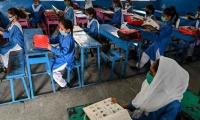
This critique is not new. More than a century ago, Karl Marx also warned that under capitalism, labour becomes alienated, value earned is siphoned away, while economic categories conceal the theft. Karl Polanyi, in ‘The Great Transformation’ (1944), exposed how the economy became “disembedded” from society, no longer serving human needs but subordinating them to abstract number-based market logic. Today, in countries like Pakistan, we inhabit precisely this world: where inflation figures and unmet targets are debated more passionately than the hunger of families and fiscal deficits are treated as weightier than the collapse of public education and healthcare.
Science, philosophy and the arts historically expanded the horizons of human imagination. They thrived on curiosity, not profit. Economics, by contrast, has thrived parasitically on their outcomes – appropriating discoveries and inventions, stripping them of meaning and converting them into transactional formulas and control mechanisms. E F Schumacher, in ‘Small Is Beautiful’ (1973), lamented that economics had descended into a “mechanical pseudo-science”, obsessed with efficiency while blind to culture, integrity, dignity or purpose. From mercantilism to neoliberalism, models have reduced people to machines, mere production units and consumption digits. The richness of life has been flattened into metrics: GDP, CPI, BOP. Concepts like joy, leisure, beauty, or freedom vanish from the calculus. Even Amartya Sen’s humane capability approach, premised on the belief that development must be measured by what people can be and do, remains a polite footnote in policymaking.
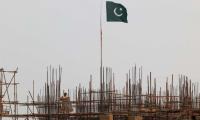
Nowhere is this numeric tyranny more suffocating than in Pakistan. Economics dominates life from cradle to grave. Youth now abandon science, engineering, social science and the arts to stampede into economics programmes, often at elite universities charging obscene fees. Prestigious jobs are earmarked for economists, while endless debates on economic jargon flood social and mainstream media, celebrated as though they were intellectual revolutions.
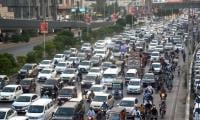
Dissent is brushed aside. Speak of social welfare, and you are mocked as a naive socialist, accused of defying the sacred principles of economics. Yet, despite decades of reforms, models, and promises, Pakistan continues to stagger from one crisis to another. Each new government parades rosy numbers, only for them to collapse, leaving ordinary people with inflation, abject poverty, unemployment and mounting debt. So, the most uncomfortable question remains: has economics, with all its indices and stellar models, tangibly improved the life of the ordinary citizen? Or has it merely recycled failures, elevated economists to demi-god status, and entrenched a culture where numbers matter more than humans?
The reach of economics today is totalising. From astrophysics to home gardening, add a subtitle and the subject is instantly annexed to economics. Michel Foucault, in ‘The Birth of Biopolitics’, showed how economic rationality seeps into governance, dictating how individuals should think, act, and even perceive themselves. This colonisation is alive in Pakistan, where nothing escapes the economic gaze. Every activity is translated into cost-benefit analysis, every policy into fiscal arithmetic. Yet the deception is profound: economics is portrayed as neutral and objective; in reality, it is deeply political. Decisions about subsidies, taxes or public spending are not scientific truths but choices often serving entrenched elites.
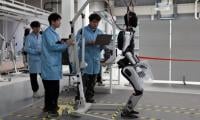
Perhaps the greatest deceit economics commits is its claim to be the engine of progress. Look closely, and the picture flips. Economics has rarely produced advancement from its own imagination; it has piggybacked on the intellectual output of science, technology, engineering and the arts – appropriating their triumphs as its own.
The Industrial Revolution was not dreamed up by economists. Inventors, scientists and craftsmen engineered it. Economists landed afterwards, drafting theories to ‘explain’ ideation, innovation and growth once it had already unfolded. Advances in medicine, agriculture and the digital domain transformed human life, yet economics merely repackaged them into fancy productivity charts and growth models, as though prosperity flowed from statistics rather than discovery. Even the so-called green revolutions or ‘digital economies’ are trumpeted as economic miracles. In truth, they are the offspring of imagination and scientific research – merely monetised and measured by economics after the fact. As Jacob Bronowski observed, human progress is born of imagination and experiment, not of ledgers and balance-sheets.
This parasitism explains why economics feels hollow. It does not think or invent, it does not discover, it does not create. It appropriates. It thrives on the genius of others, reduces their breakthroughs to numeric abstractions, abstract monetary values and then anoints itself the custodian of development. The lifetime struggles of scientists, the vision of philosophers, the creativity of artists – all are quietly converted into GDP points, leaving only economists to bask in the borrowed glory.
If Pakistan truly seeks progress, economics must be dethroned from its pulpit and restored to its rightful place as a servant, not a sovereign. We need an intellectual framework that integrates the wisdom of science, engineering, philosophy, the arts and social sciences – measuring development not by sterile digits but by lived human well-being. Imagine a policy model where success is judged by the reduction of suffering, the enrichment of civic life, enriched creativity, a high level of integrity and the protection of dignity. A model where health and education are valued not because they raise GDP, but because they make life meaningful, joyous and free. Where human beings are not reduced to factors of input to balance an equation but recognised as ends in themselves.
Until such a transformation takes root, economics will remain what it has tragically become: a tyranny of numbers, a numeric-verse masquerading as wisdom, enslaving rather than liberating, dictating rather than serving – glorified not for what it creates, but for what it shamelessly borrows or encroaches.
The writer is a development sector professional who has over 30 years of
professional experience. He tweets/posts @nadeemkhurshid