The genocide and famine we allowed
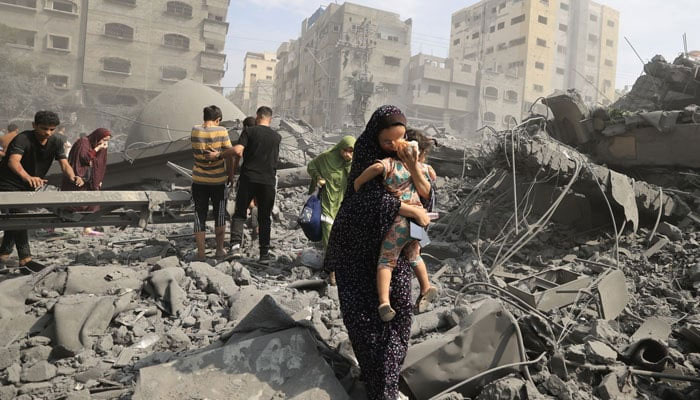
On September 7, 2025, nearly two years into Israel’s war on Gaza, the human ledger is staggering. According to the UN’s humanitarian office (OCHA), 63,746 Palestinians have been killed and 161,245 wounded in Gaza since 7 October 2023 – figures that continue to climb by the week.
Of the dead formally identified, at least 20,000 were children, 10,000 women and 5,000 older people. These are not abstractions; they are families erased, generations severed and a society deliberately incapacitated. This is the systematic unmaking of a place and a people. UN satellite analysis confirms nearly 200,000 structures affected across Gaza – more than half the territory’s buildings – with 102,067 completely destroyed. Agricultural life has been pulverised: 90 per cent of permanent crop fields have been degraded and only one per cent of cropland remains cultivable, a mechanical starvation of a besieged population.
Meanwhile, the arteries of civic life have been cut. Only 15 of Gaza’s 36 hospitals are partially functional, most operating far beyond capacity. The World Health Organization has documented over 800 attacks on health care in the occupied Palestinian territory, killing and injuring patients and medics and smashing ambulances and hospital wards. This is how you make death permanent: not only by the airstrike, but by collapsing the systems that let people live. The consequences are exactly what experts warned they would be. In a joint declaration on August 22, UN food agencies formally confirmed a famine in Gaza.
Nearly a million people are already in famine conditions, and another million are projected to face catastrophic hunger by the end of September unless the siege lifts and aid scales dramatically. People report going days without eating, and malnutrition among children is accelerating at a catastrophic pace. When famine is confirmed, it means the three worst thresholds – extreme food deprivation, acute malnutrition and starvation deaths – have already been crossed. To grasp what destruction means in Gaza, look beyond the death toll. Some 500,000 housing units are destroyed or damaged (200,000 destroyed outright).
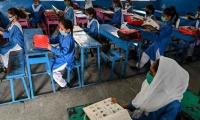
Eighty per cent of all structures are damaged, 85 per cent of the road network is damaged and 90 per cent of commerce and industry entities are damaged or destroyed – which is another way of saying offices, workshops, markets and livelihoods have been shattered. Education has been annihilated. Nearly 90 per cent of school buildings (530 of 564) will require full reconstruction or major rehabilitation to function again. Universities have fared no better: at least 65 university buildings are reported destroyed. A generation that should be in classrooms is now stuck in tents, trauma and hunger.
Even the spaces that soften city life – green belts, orchards, fishing boats, municipal parks – have been erased or rendered useless by siege and shelling. Seventy-five per cent of the fishing fleet is destroyed; 85 per cent of agricultural water wells and 75 per cent of greenhouses are damaged. When a society’s farms, gardens and markets are smashed, starvation is not a by-product but the foreseeable outcome. Malnutrition and disease are surging as sanitation collapses. If Gaza is the most dangerous place in the world for a child, it has also become the most dangerous for a journalist.
According to the Palestinian Journalists Syndicate, over 250 Palestinian journalists have been killed by Israeli fire since October 2023. The Committee to Protect Journalists documents at least 200 media workers killed, while the International Federation of Journalists tallies 240 journalists and media workers killed. A single incident illustrates the trend: on August 25, 2025, Israeli warplanes carried out a double-tap strike on Nasser Hospital, killing 22 people – including five journalists – and wounding more than 50, many of them medics. Doctors, nurses, and paramedics are supposed to enjoy special protection under international law.
Yet Gaza’s medical community has been decimated. Over 250 humanitarian aid workers have been killed, of whom 180 were UNRWA staff, including doctors, nurses, teachers and relief workers. The Nasser Hospital strike itself killed multiple medical and civil defence staff, alongside journalists and patients. The WHO confirms more than 800 attacks on healthcare since October 2023, including the destruction of ambulances and the killing or maiming of medics. What does it mean when medical personnel – people sworn to heal the wounded – are gunned down, bombed in their ambulances or buried in rubble while operating on patients?
It means the act of saving life has itself been criminalised. The catastrophe is not confined to Gaza. In the West Bank, tactics once reserved for Gaza – large-scale raids, drone strikes, home demolitions and settler pogroms under military protection – have intensified. From January 1, 2025, at least 3000 Palestinians were injured by Israeli forces or settlers, including 600 children; 1,200 Palestinian structures have been demolished this year for lacking permits that Palestinians can rarely obtain. On August 27, 2025, an Israeli raid in Nablus injured 120 Palestinians, including 50 children, in a single day.
Since October 2023, at least 1000 Palestinians, including over 250 children, have been killed in the West Bank, according to UNRWA, citing OCHA. The violence is granular – settlers sabotaging water lines serving 100,000 Palestinians, families forcibly displaced by midnight threats, classrooms raided and books confiscated. The point is to make daily life impossible. International law has not been silent; power has. The UNSC, for its part, failed yet again on June 4, 2025 when the US vetoed a resolution backed by all 14 other UNSC members demanding an immediate, permanent ceasefire and unrestricted humanitarian access.
The UN system’s agencies – OCHA, WHO, Unicef, WFP – are left to count the dead, log the blocked convoys, and confirm famine, while the UNSC’s authority is hollowed out by serial vetoes. Law without enforcement is just a lament. There are 57 member states in the Organisation of Islamic Cooperation – more than 50 Muslim-majority countries claiming the cause of Palestine as a central plank of their foreign policy. They have issued communiques, met in emergency sessions, and condemned and deplored and reaffirmed. Yet no coordinated sanctions, no oil-for-justice leverage, no unified suspension of military or technology cooperation with states enabling the Gaza war have materialised.
Yes, some capitals recalled ambassadors; others funded relief or facilitated mediation. Qatar and Egypt have carried the diplomatic load; Jordan and Turkey have made dramatic gestures. The collective power of over 50 Muslim-majority states has not been marshalled to challenge or change Israeli (or US) calculations. A boycott is not a hashtag; it is a policy – and policy needs coordination, enforcement and a price for non-compliance. The numbers tell a coherent story. The famine confirmation is not a debate on Twitter; it is an evidence-based determination by UN agencies applying an internationally recognised methodology.
For the UNSC, it means an enforceable ceasefire resolution that is not hostage to a single member’s veto – and the political will among member states to create costs for repeated vetoes in the face of mass atrocity. For the OIC, it means more than communiques. It means coordinated diplomatic downgrades, targeted economic measures, and a serious arms-export moratorium to all parties fueling the war, including those whose equipment is used to pulverise Gaza’s infrastructure. It means funding for UNRWA, WHO, WFP and Unicef, while building a joint humanitarian air- and sea-bridge that cannot be throttled by arbitrary closures.
For states outside the region, it means ending the transfer of weapons and dual-use components reasonably likely to be used in serious violations of international law; sanctioning those who orchestrate starvation and settlement expansion; and supporting war-crimes investigations wherever the evidence leads.
And for the rest of us – academics, journalists, citizens – it means refusing to normalise the statistical routine of mass death. A child dies of hunger not because the world lacks wheat or trucks, but because power chose blockade over humanity. The world does not need more proof; it needs politics equal to the proof we already have.
The ceasefire must be immediate. The siege must end. Aid must flood in. And accountability must begin – not eventually, not when the rubble cools, but now, while a generation still has a chance to survive the winter the world made for it.
The writer holds a PhD from the University of Birmingham, UK. He tweets/posts @NaazirMahmood and can be reached at:
mnazir1964@yahoo.co.uk