Worse than death
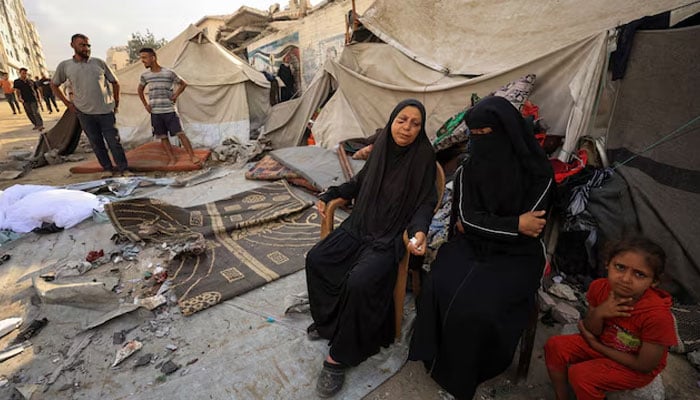
In Gaza, death seems easier than the endless suffering of displacement. Death ends pain; displacement only makes it worse, opening a wound that never heals.
In Gaza City, people face two bitter choices: stay and risk being killed or imprisoned, or flee southward to an impossible life in a camp. Displacement is not simply a relocation – it is a slow death. It is embarking on a journey not knowing whether there will be shelter, food, or water at the end. It means exhaustion, homelessness, and fear. Even reaching a shelter offers no real safety because death can still follow you there.
Since the start of the war, my family and I have been displaced 15 times. Each time has been harder than the one before. Every time, we have lost our possessions, our health, our sense of security.
It all started in October 2023. We fled our home in the Tal al-Hawa neighbourhood, which was subsequently bombed in November, and sought shelter at the nearby Al-Bahrain School. We stayed there until mid-November. From there, we went to my uncle’s house in Tal al-Hawa and then to my aunt’s house in the Zeitoun area. We then went to another uncle’s house in Tal al-Hawa; when that area got too dangerous, we moved two streets away to another relative’s home.
From there we moved to our neighbours’ home and then to a basement. When a missile landed near us without exploding, we fled again to Al-Bahrain School. From there, we moved to my cousin’s home in the Daraj area, but then it got dangerous, so we moved to the port area. We went back to my cousin’s house and then finally to my grandfather’s in the Daraj area. The situation became dangerous again, so we went to the port for a while and then again back to my grandfather’s.
We stayed there for a while as the famine deepened. Starvation affected me deeply. Every time I saw food, it seemed to shrink in front of my eyes. I was afraid to eat a lot and would cry while eating because I was scared that one of us might die of hunger. I lost 10kg (22lbs) and became very weak. I was diagnosed with anaemia and vitamin deficiencies. In July, we decided to sell the tent we had used during displacement for $140. We bought flour with the money. When Israel declared it was going to attack Gaza City again, we fell into total despair. For my family – like many others – moving was impossible. We had no money for transport, no relatives in the south, and no tent.
Tents have now become scarce and outrageously expensive – one can cost as much as $1,000. Even if one has a tent, finding a place to pitch it is a challenge. Even what used to be bare land now goes for $30 per square metre (11 square feet) per month.
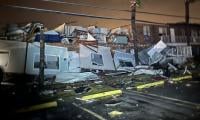
So we decided to stay as others fled south. Then on September 7, our home was bombed. Our neighbours received a phone call from the Israelis that the mosque next to our building would be bombed; we were given seven minutes to evacuate the area.
I grabbed some clothes and a desk lamp – a gift from a dear friend – put them in a bag, and ran outside with my siblings. Seven minutes passed, and nothing happened. My father ran back into the building to pick up a few more things and came out. He then went back again with my siblings to take a few more things.
Excerpted: ‘In Gaza City, death seems easier than
displacement’. Courtesy: Aljazeera.com