Reko Diq set for financial closure by month-end
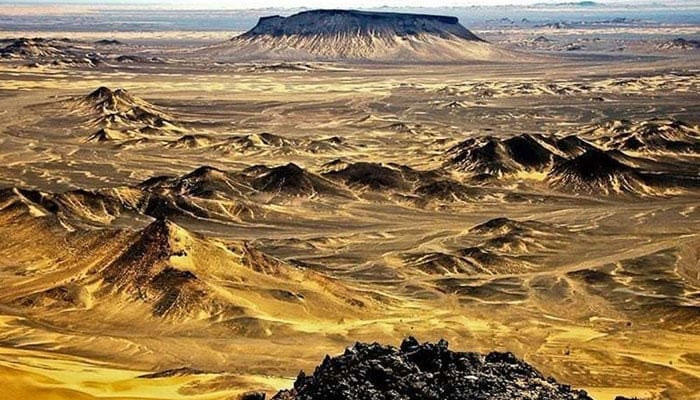
ISLAMABAD: In a landmark development for Pakistan’s mining and investment landscape, the long-delayed Reko Diq copper and gold project is now poised to achieve financial closure by the end of September or early October, top officials confirmed.
The project, located in Balochistan’s Chagai district, is expected to bring in $74 billion in free cash flows over its 37-year life and is widely regarded as a cornerstone of Pakistan’s future economic strategy.
The Annual General Meetings and Boards of Directors of the three state-owned stakeholders—OGDCL, PPL and GHPL—formally approved $715 million in project costs, bringing the total to $7.48 billion. The increase reflects conservative assessments by lenders who have factored in inflationary pressures, global commodity volatility and additional contingency requirements. However, officials have stated that the project will still aim to be executed within the original cost estimate of $6.765 billion, thanks to tight cost controls and operational efficiencies.
Construction of the Reko Diq project is scheduled to begin in December 2025, with commercial operations targeted for 2028. The project’s financial model is structured around a 50:50 equity-to-debt ratio, allowing both local and international stakeholders to invest without over-leveraging. The Reko Diq Mining Company (RDMC), a special-purpose vehicle established to execute the project, includes a balanced partnership between Barrick Gold Corporation and the governments of Pakistan and Balochistan.
Barrick Gold, the lead operator and foreign investor, holds a 50 percent stake in the RDMC. The remaining 50 percent is split equally between the Government of Pakistan (through OGDCL, PPL and GHPL) and the Government of Balochistan, which holds a 25 percent stake, including a 10 percent free-carried interest and 15 percent fully funded share backed by the federal government. This arrangement allows Balochistan to benefit from the project without incurring financial liability, ensuring local participation and revenue sharing.
The project has attracted substantial international financial backing. The International Finance Corporation (IFC), part of the World Bank Group, has committed $700 million in funding, which includes a $400 million subordinated loan secured entirely on the balance sheets of the Pakistani SOEs—without any sovereign guarantees. This is considered a breakthrough in structuring large-scale financing while avoiding additional government debt.
Adding to this momentum, the Asian Development Bank (ADB) has approved a $300 million loan, marking its first mining-sector financing in over 40 years. The ADB has also extended a $110 million credit guarantee to the Government of Balochistan to strengthen its stake and protect against potential risks.
Meanwhile, discussions with US EXIM Bank, Export Development Canada, and Japan Bank for International Cooperation (JBIC) are in advanced stages, with more financial commitments expected soon.
In a complementary infrastructure boost, the RDMC has committed to providing $350-400 million in bridge financing for the upgrade of Pakistan Railways’ Main Line-2 (ML-2) and Main Line-3 (ML-3). These rail lines will connect the Reko Diq mine to Port Qasim, ensuring seamless transportation of minerals for export. Pakistan Railways is expected to complete the upgrade before the mine becomes operational in 2028.
“This isn’t just a mining project—it’s a transformational economic engine for Pakistan,” a senior official involved in the deal told this scribe. “Reko Diq will redefine the way we approach large-scale resource development, both financially and socially.” Once financial closure is officially reached, work will begin on contractor mobilisation, equipment procurement, and site development—setting the stage for what could be Pakistan’s most successful public-private partnership in decades.


-
 Aurangzeb confirms Saudi Arabia $10bn interest, says B2B shift ongoing
 -
 Pakistan to build artificial island to boost oil exploration
 -
 Special pink bus service launched for women on Green Line route
 -
 Same number plates from other provinces lead to wrong e-challans for Karachiites
 -
 State institutions ‘fail’ to perform constitutional duties: KP CM
 -
 CTD orders psychological testing of police on VVIP security duty
 -
 Navy busts drug consignment valued at $130m
 -
 Three ex-secretaries in race for ETPB chief post