It was my childhood dream to study medicine. I wanted to be a doctor to help people. I never imagined that I would study medicine not in a university, but in a hospital; not from textbooks, but from raw experience.
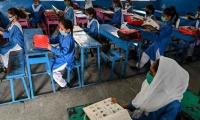
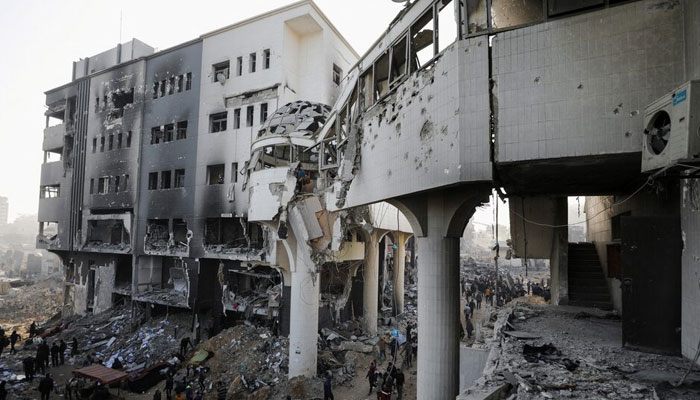
After I finished my BA in English last year, I decided to enrol in the medical faculty of al-Azhar University. I started my studies at the end of June. With all universities in Gaza destroyed, we, medical students, are forced to watch lectures on our mobile phones and read medical books under the light of our mobile phones’ flashlights.
Part of our training is to receive lectures from older medical students, who the genocidal war has forced into practice prematurely. My first such lecture was by a fifth-year medical student called Dr Khaled at Al-Aqsa Martyrs Hospital in Deir el-Balah.
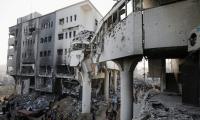
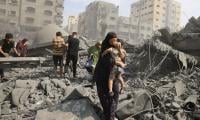
Al-Aqsa looks nothing like a normal hospital. There are no spacious white rooms or privacy for the patients. The corridor is the room, patients lie on beds or the floor, and their groans echo throughout the building.
Due to the overcrowding, we have to take our lectures in a caravan in the hospital yard. “I’ll teach you what I learned not from lectures,” Dr Khaled began, “but from days when medicine was [something] you had to invent.”
He started with basics: check breathing, open the airway, and perform cardiopulmonary resuscitation (CPR). But soon, the lesson shifted into something no normal syllabus would have: how to save a life with nothing.
Dr Khaled told us about a recent case: a young man pulled from beneath the rubble – legs shattered, head bleeding. The standard protocol is to immobilise the neck with a stabiliser before moving the patient. But there was no stabiliser. No splint. No nothing.
So Dr Khaled did what no medical textbook would teach: he sat on the ground, cradled the man’s head between his knees, and held it perfectly still for 20 minutes until equipment arrived. “That day,” he said, “I wasn’t a student. I was the brace. I was the tool.”
While the supervising doctor was preparing the operating room, Dr Khaled did not move, even when his muscles began aching, because that was all he could do to prevent further injury. This story was not the only one we heard from Dr Khaled about improvised medical solutions.
There was one which was particularly painful to hear. A woman in her early thirties was brought into the hospital with a deep pelvic injury. Her flesh was torn. She needed urgent surgery. But first, the wound had to be sterilised.
There was no Betadine. No alcohol. No clean tools. Only chlorine. Yes, chlorine. The same chemical that burns the skin and stings the eyes. She was unconscious. There was no alternative. They poured the chlorine in.
Dr Khaled told us this story with a voice that trembled with guilt. “We used chlorine,” he said, not looking at us. “Not because we didn’t know better. But because there was nothing else.”
We were shocked by what we heard, but perhaps not surprised. Many of us had heard stories of desperate measures doctors in Gaza had had to take. Many of us had seen the gut-wrenching video of Dr Hani Bseiso operating on his niece on a dining table.
Last year, Dr Hani, an orthopaedic surgeon from al-Shifa Medical Complex, found himself in an impossible situation when his 17-year-old niece, Ahed, was injured in an Israeli air strike. They were trapped in their apartment building in Gaza City, unable to move, as the Israeli army had besieged the area.
Excerpted: ‘Medicine is being invented in Gaza’.
Courtesy: Aljazeera.com