As climate change increases the frequency and severity of urban shocks, including floods, heatwaves and water scarcity, cities globally face rising challenges.
Yet amongst these intimidations, a powerful strategy is emerging: nature-based solutions. These approaches harness ecosystems to absorb stormwater, cool heat islands, purify air and deliver a host of social, environmental and economic benefits. Instead of relying solely on concrete drains, roads, walls or cooling towers, nature-based solutions offer multifunctional, adaptable replacements that protect people while enhancing urban life.
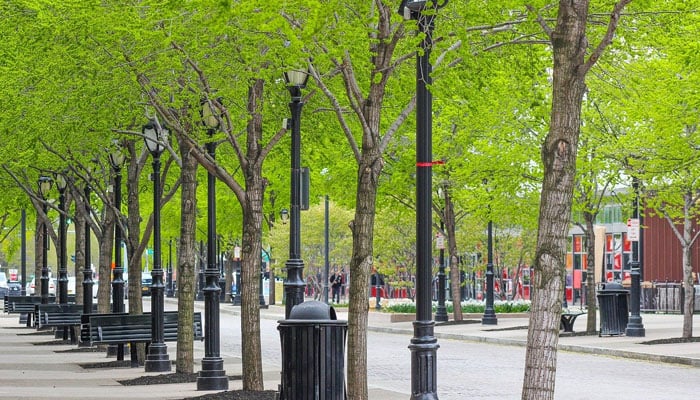
Flood mitigation is one of the strongest examples. Through sponge city principles, such as permeable pavements, restored wetlands and bioswales, rainwater can be absorbed and stored, reducing peak excess and preventing catastrophic floods. Cities such as Sanya in China, Vienna in Austria and Leeds in the UK are already proving how these designs reduce disaster risks while doubling as recreational spaces. Likewise, urban greening has been shown to dramatically reduce heat. Studies confirm that trees can cut ambient urban temperatures by as much as 15 C, making them a natural defence against deadly heatwaves. Green rooftops in Valencia and stormwater parks in Bangkok soak up heavy rainwater, offering fresh air and public gathering areas and showing that resilience and liveability can go hand in hand.
Globally, there are striking examples of cities reshaped by nature-based solutions. In Bangkok, the Benjakitti Forest Park transformed a contaminated brownfield into a sponge park capable of storing 187,500 cubic metres of stormwater. Even during heavy rain, nearby localities experienced flooding, whereas the park remained dry and functional. Singapore, long recognised for its ‘City in a Garden’ vision, has knitted tree-lined streets, lush corridors and urban forests into its development fabric. The Bishan-Ang Mo Kio Park project replaced barren concrete canal walls with a naturalised river, improving flood management, although welcoming dragonflies, otters and hornbills back into the city’s heart.
Cape Town, facing the frightening prospect of ‘Day Zero” in 2018, turned to watershed restoration. By eliminating hostile trees that consumed nearly 55 billion litres of water annually, the city improved downstream flows, increased biodiversity and created local jobs. In Turkey, the city of Izmir has integrated vertical gardens, green roofs, rainwater capture systems and smart irrigation into its planning, revealing how citizen co-design can bring both resilience and community dignity.
In Africa, Durban’s Buffelsdraai Reforestation Project has transformed more than 580 hectares around a landfill into an indigenous forest, creating a natural barrier against fire, odour and erosion, while amplifying as a centre for environmental education. In South America, Curitiba’s Caximba initiative has reimagined flood-prone informal settlements by combining affordable housing with urban agriculture, community centres and solar-powered infrastructure.
And in Nairobi’s Kibera settlement, one of Africa’s largest informal urban neighbourhoods, community groups have restored riverbanks with vegetation to reduce flooding and improve water quality, showing that even the poorest and most exposed areas can benefit from nature-driven resilience. Buenos Aires’ Villa 20 neighbourhood is another example, where permeable pavements, hydroponic gardens and green corridors now manage stormwater, improving local living conditions.
Global institutes are progressively recognising the economic and social value of these projects. According to the World Bank, between 2012 and 2024, it backed 250 nature-based initiatives focused on resilience, coastal protection and ecosystem restoration. Completed projects have already benefited 9.5 million people and restored 1.1 million hectares of land, while ongoing efforts are expected to reach nearly 20 million people and 3.5 million hectares. The numbers are more than impressive; they are proof that green infrastructure can compete with and harmonise traditional engineering. In Beira, Mozambique, mangroves and urban parks protected 50,000 inhabitants from storm surges. In Buenos Aires, a retention basin project reduced flooding risks for three million people. In Sri Lanka, an urban wetland spanning 20 square kilometres now preserves 280 species while storing carbon and cooling its surrounding neighbourhoods.
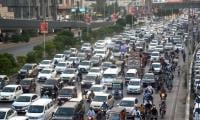
In Pakistan, where over 36 per cent of the population already lives in cities and urbanisation is accelerating at a swift pace, these lessons are both timely and urgent. Karachi has experienced devastating urban flooding due to encroachment on nullahs and inadequate drainage. Lahore is gradually becoming a heat island with record-breaking summer temperatures. Islamabad faces urban extension in flood-prone zones, while Gwadar and Thatta lie vulnerable to rising seas and cyclones. The National Adaptation Plan 2023 classifies urban resilience as a priority; however, implementation will demand more than policy. It requires investment, innovation and community engagement.
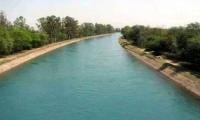
The roadmap is clear-cut. Pakistani cities can pilot sponge-city projects by reviving stormwater nullahs, designing wetlands, creating floodable parks and promoting permeable streets. Municipalities should introduce incentives for green roofs and reflective building materials to counter urban heat. Reforestation belts like Durban’s model could surround landfills, while coastal mangrove restoration could shield Karachi and Gwadar. Most importantly, communities must be placed at the centre of these efforts, ensuring that informal settlements and the urban poor – those most at risk – are partners rather than additions. Financing, too, must innovate. Green bonds, public-private partnerships and international climate finance can help bridge the gap, while local governments must mainstream NbS into zoning laws and city master plans.
The lesson from global success stories is simple but thoughtful: resilience is not built by fighting against nature but by working with it. Concrete walls can restrain water for a time, but restored wetlands, urban forests and green corridors last longer, cost less in the long run, and bring life back into our cities.
In a future of unpredictable floods, scorching heat and water insecurity, the strongest urban fortifications may not be steel and cement, but plants, trees, bushes, roots, leaves and rivers. If Pakistan holds this vision, it can turn its cities from brittle hot spots into green strongholds of resilience.
The writer is an assistant director, Climate Change Adaptation at the Pakistan Red Crescent Society (PRCS), Islamabad.