CJP convenes full court to review amended SC rules
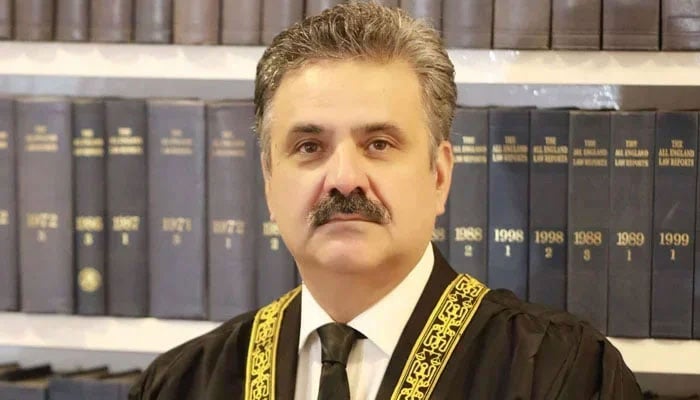
ISLAMABAD: Chief Justice of Pakistan (CJP) Yahya Afridi has convened a full court meeting of all Supreme Court judges for next week.
It was learnt that the CJP has convened the full court meeting for September 8 at 1pm, wherein the judges would focus on a single-point agenda — reviewing the amended Supreme Court Rules 1980.
Recently, the country’s top court published the Supreme Court Rules 2025, replacing the 1980 rules — a move that has sparked severe criticism from the legal fraternity, including the Supreme Court Bar Association (SCBA) and Pakistan Bar Council (PBC).
SCBA President Rauf Atta the other day sent his written reservations and suggestions to the Supreme Court, which include a demand to reverse the recent increase in court fees.
So far, no judge has submitted any proposals regarding the amendments. Sources said that the Supreme Court Rules 2025 were enforced through circulation and, although they were approved by a majority, dissenting judges opined that the amended rules should be presented in a full court meeting for consultation with all judges.
However, even after 15 days, dissenting judges have not submitted any proposals. It was learnt that the full court meeting is expected to review the SCBA suggestions.
Before the full court meeting, a ceremony marking the beginning of the new judicial year will be held, and the CJP would also inaugurate the newly established facilitation centre at the Supreme Court.
Similarly, it was learnt that during the full court meeting convened at the administrative level, senior judges, including Justice Syed Mansoor Ali Shah and Justice Munib Akhtar, may raise the issue of fixing identical pleas challenging the 26th Constitutional Amendment before the full court.
Recently, both senior judges wrote a letter to Justice Yahya, formally expressing disagreement with the minutes of a committee meeting over full court formation.
Encouraged by the two judges’ letter, former senator and leader of Tehreek-e-Tahafuz-e-Aeen Pakistan Mustafa Nawaz Khokar, the other day, filed a petition in the apex court, seeking implementation of a majority decision of the committee established under the Supreme Court (Practice and Procedure) Act 2023 regarding fixing identical petitions challenging the 26th Constitutional Amendment before a full court.
Meanwhile, Justice Mansoor Ali Shah has written a letter to the CJP warning that the independence and collegial character of the judiciary stand undermined in the country’s top court due to authoritarian show.
In the letter dated September 4, 2025, also circulated to all judges of the Supreme Court, Justice Shah lamented, what he described, “persistent and complete indifference” to his concerns.
Justice Shah emphasised that his objections were not personal grievances but “institutional concerns borne of experience and responsibility.” He pointed to his own record—deciding 3,956 cases and authoring 35 reported judgements during the current chief justice’s tenure—as proof of his commitment to judicial work.
At the heart of Shah’s criticism is the alleged non-implementation of the Supreme Court (Practice and Procedure) Act, 2023, which mandated the creation of a committee—known as the PAPA Committee—for the transparent constitution of benches. Justice Shah noted that since Justice Afridi’s assumption of office in October 2024, “not a single official meeting” of the committee had been held, with cause lists being issued unilaterally by the chief justice.
He questioned why junior judges were routinely assigned to three-member benches while senior judges were restricted to two-member panels, and why matters of national importance were not being fixed before senior benches. “Independent judges are being sidelined, not for reasons of efficiency but for reasons of control,” he added. Justice Shah also criticised the circulation method used to approve the first revision of the Supreme Court Rules in 40 years, saying such historic changes demanded a full court meeting rather than “a process suited to routine matters.” By avoiding deliberation, he said, the court was deprived of collective wisdom and judicial dialogue.
He took issue with the Registrar’s solicitation of individual judges’ opinions on dissenting judgements, arguing that this reduced weighty constitutional matters to a “tick-box exercise” and eroded judicial democracy.
A further flashpoint was the July 29, 2025 General Standing Order (GSO) on leave, which Justice Shah called unprecedented. The order, he noted, declared Supreme Court judges to be “whole-time servants of the state,” restricted foreign leave to five narrow categories, and required judges to disclose their residential addresses while on vacation. Such requirements, he warned, amounted to “surveillance” and imported a bureaucratic ethos into the judiciary. “A judiciary under surveillance is no longer a judiciary; it becomes an extension of bureaucracy,” he wrote.
Perhaps most significantly, Justice Shah questioned why petitions challenging the 26th Constitutional Amendment—which directly concerns judicial independence—had not been heard for nearly a year. He demanded they be fixed before the original full court, excluding judges elevated after the amendment. “Until then, any initiative under your leadership remains institutionally fragile, for its foundation is constitutionally suspect,” he warned.
Justice Shah concluded by urging the chief justice to publicly answer six questions at the September 8 conference: Why the PAPA Committee has never met; why the 1980 Rules were amended by circulation; why dissent policy was adopted through individual opinions; why the GSO was issued; why the 26th Amendment petitions were not heard; and most fundamentally, whether the chief justice is nurturing independence among judges or enforcing compliance to turn the court into “a regimented force rather than a court of free and equal judges”.


-
 Aurangzeb confirms Saudi Arabia $10bn interest, says B2B shift ongoing
 -
 Pakistan to build artificial island to boost oil exploration
 -
 Special pink bus service launched for women on Green Line route
 -
 Same number plates from other provinces lead to wrong e-challans for Karachiites
 -
 State institutions ‘fail’ to perform constitutional duties: KP CM
 -
 CTD orders psychological testing of police on VVIP security duty
 -
 Navy busts drug consignment valued at $130m
 -
 Three ex-secretaries in race for ETPB chief post