
SC takes notice of time-barred appeals by federal, provincial govts
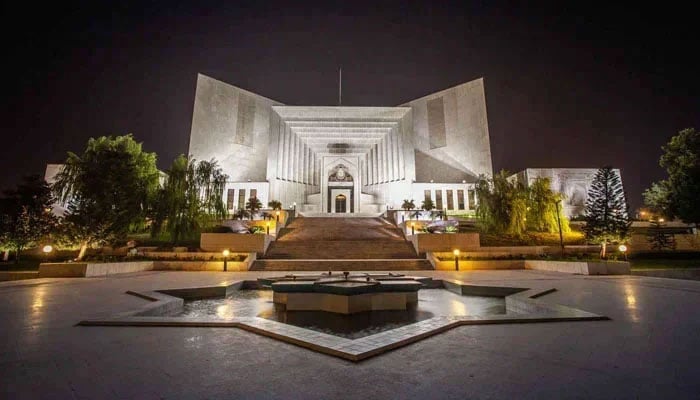
KARACHI: The Supreme Court has observed that the mechanical and unpersuasive justification of administrative delays has almost become a trend that is consistently pleaded for condonation of delay through stereotypical and generalised applications, which cannot be considered sufficient cause or reasonable grounds in every case.
Dismissing the Sindh government’s appeal with regard to the Sindh High Court’s (SHC) judgment in the land acquisition reference in 2002, a three-member SC bench headed by Justice Mohammad Ali Mazhar noted in the judgment that many times appeals are instituted by the federal and provincial governments, and autonomous bodies after the lapse of the period of limitation postulated by the law.
The top court observed that the plea taken for condoning the delay is invariably and inevitably that the time was spent in fulfilling inter-departmental procedures and seeking final instructions from the competent authority.
The bench observed that seemingly, applications for condonation of delay are being filed as a routine matter while adopting a callous approach, which fails to recognise that the delay cannot be condoned without the presence of sufficient cause or explaining the delay of each and every day.
The court observed that at times this cavalier attitude and approach smears and smacks mala fide, and leads to the belief that the appeal is intentionally being presented belatedly only as a formality in order to provide an undue advantage to the other side, rather than due to any genuine intent to challenge the judgment or order.
The bench observed that no doubt the law favours adjudication on merits, but simultaneously, one should not close their eyes or oversee another aspect of great consequence, namely that the law helps the vigilant and not the indolent.
Quoting the Latin maxim which articulates that the law aids and assists those who are vigilant but not those who are sleeping or slumbering, the court observed that the delay in invoking a lawful remedy by a person or entity who is sleeping over their rights may be denied.
The SC observed that the doctrine of equality before law demands that all litigants, including the state, are accorded the same treatment, and the law is administered in an even-handed manner.
The court observed that the astuteness of the law of limitation does not confer a right but ensues incapacitation after the lapse of the period allowed for enforcing some existing legal rights, and it foresees the culmination of claims which have decayed by the efflux of time.
The bench observed that it is the inherent duty of the court to delve into the question of limitation, regardless of whether it is raised or not. “Carelessness, intentional or obvious sluggishness, or dearth of bona fides are no reason for condonation of delay.”
The Sindh government, through its land acquisition officer, had challenged the April 12, 2002 judgment in favour of private respondents, and the quantum of compensation was enhanced.
The provincial law officer submitted that while enhancing the amount of compensation, both the courts below failed to consider the documents and evidence led in the matter, and without any lawful justification, the amount of compensation was enhanced.
The SC further noted that a civil appeal is barred by 30 days, and the condonation application attached with the appeal does not specify any grounds for indulgence of the court except few unconvincing and generic grounds.
For instance, the bench pointed out, after passing the impugned judgment, the appellant’s representative approached the office of the Sindh additional advocate general (AAG) in Sukkur for obtaining certified copies of the impugned judgment and memo of appeal. The court observed that no explanation was offered as to why the matter was delayed and who was responsible for such a delay. The court also observed that the question of limitation cannot be taken casually or without conscientiousness.
The bench said if any person or party wants to file an appeal with the higher court, they should be vigilant and diligent in pursuing their available remedy within the stipulated time frame. The court added that if the department is negligent or reckless and approaches the AAG office with delay, no premium of such delay can be accorded with the benefit of condonation in the lapse of time.
The judges observed that they do not find any lawful justification to cause any interference, and dismissed the appeal not only on merits but also being barred by time.






-
 State institutions ‘fail’ to perform constitutional duties: KP CM
 -
 CTD orders psychological testing of police on VVIP security duty
 -
 Navy busts drug consignment valued at $130m
 -
 Three ex-secretaries in race for ETPB chief post
 -
 Punjab govt forms 71 JITs to probe cases against banned TLP
 -
 Some UNSC members ignoring broader reforms, seeking privilege: Pakistan
 -
 PAC body discusses non-recovery of Rs15bn gas cess
 -
 Pakistan received $2.29bn foreign loans in first 4 months of 2025