Fixing grid woes
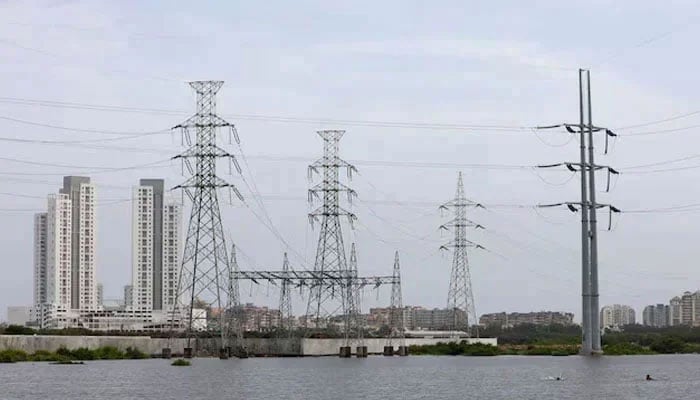
Pakistan’s power sector is facing a paradox: it has an installed capacity of over 46,605MW as of March 2025, yet it continues to experience frequent blackouts and load management issues.
Despite attempts to renegotiate contracts with Independent Power Producers (IPPs) from past policies, projected capacity payments for FY2026 remain at Rs1.9 trillion. These high payments, along with sector inefficiencies, have been a burden on consumers for several years.
Pakistan has witnessed a substantial increase in photovoltaic (PV) solar capacity, driven by rising grid electricity prices, favorable government policies, and declining solar panel costs. The installation of on-grid, off-grid and behind-the-meter solar PV systems has surged, with approximately 39GW of solar modules imported from China in the past five years. According to recent (unofficial) figures, solar energy became the largest electricity source this year, placing Pakistan among fewer than 20 countries to achieve this milestone. This level of solar penetration has empowered consumers but has also increased grid challenges.
As more consumers turn to self-generation for their electricity needs, the overall demand on the national grid has started to decline. The long-term contractual obligations have further complicated this transition. When paying consumers leave the grid, the remaining users face a higher financial burden, reflected in increased fixed costs – capacity payments. The rapid growth of private renewable energy (RE) use is putting financial pressure on the obsolete national grid.
The intermittent nature of RE has made it challenging to continuously match supply with demand. When solar is unavailable, more expensive and less fuel-efficient power plants are run to support baseload power generation and meet demand, straining the grid and often leading to outages and blackouts. This pattern reflects the classic ‘duck curve’ phenomenon, familiar in California. In July 2025, demand between 9am and 2pm dropped by approximately 2,000MW compared to last year’s levels.
The integration of intermittent RE into the electric power system is increasing the demand for flexibility. Advancements in Battery Energy Storage Systems (BESS) and an 80 per cent drop in battery costs since 2015 offer effective solutions. Ipso facto, according to IEEFA, solar-plus-BESS in Pakistan offers a payback period of 3–5 years for residential users and 4–6 years for commercial and industrial users, despite a 48 per cent increase in costs due to surcharges and duties.
BESS plays a vital role in the power grid by storing surplus energy for later use, reducing peak demand, stabilising frequency and lowering transformer stress. It helps flatten the ‘duck curve’ by storing excess daytime solar energy for evening consumption and enables on-grid and behind-the-meter users to reduce reliance on the grid. Beyond grid support, BESS serves multiple use cases:
Residential: Provides backup power for critical loads during outages and supports energy arbitrage by storing off-peak energy for use during peak hours. Commercial: Ensures business continuity during outages, reduces peak load and optimises ToU tariffs. Industrial: Lowers demand charges through peak shaving, stores surplus renewable energy, prevents operational downtime, supports frequency regulation and integrates intermittent solar and wind power.
BESS can collect energy from any source in the electricity network, store it and release it when necessary for grid balancing. It also enables wholesale market arbitrage and supports grid operators with ancillary services, playing a crucial role in creating a flexible energy system that accommodates fluctuations.
Enhancing flexibility with BESS can help Pakistan’s energy system to integrate variable renewable generation seamlessly and overcome other market challenges. With BESS, clean energy has become the most affordable and reliable source of energy. With its adoption on a larger scale, it will help Pakistan meet its Nationally Determined Contributions (NDCs) by firming up renewables. Its implications for decarbonisation, energy security and economic resilience are enormous.
The good news is that a new wave of affordable Chinese battery storage is helping to accelerate Pakistan’s RE boom. Private players, such as Lucky Cement, pioneered BESS ahead of policymakers. They are now able to store renewable energy on a scale. This enables them to reduce fossil fuel usage, lower emissions and maintain clean operations during nighttime. It is decreasing their overall energy costs and enhancing competitiveness.
The National Transmission System Expansion Plan (TSEP) 2024-2034 included the development of a pilot BESS at Jhimpir (20MW), aimed at improving frequency regulation and voltage support. Plus, the updated Integrated Generation Capacity Expansion Plan (IGCEP) (2025-2034) now identifies BESS as a reliable capacity resource, marking a notable shift from previous capacity expansion efforts. However, more needs to be done at the policy and regulatory level.
The CTBCM will be implemented in September 2025, subject to Nepra’s determination of wheeling charges; however, there is no clearly defined role for battery storage within its regulatory framework. Storage is not recognised as a market participant; clear rules for its dispatch, settlement, and metering are lacking. BESS can act as the flexible backbone that the electricity market needs, enabling bulk buyers to smooth out their load. Buyers can combine wheeled renewable energy with onsite BESS to meet consistent demand.
The Nepra codes define ancillary services, but the regulatory framework needs to clarify how BESS are classified – as generators, loads or bidirectional participants.
There is also a lack of payment mechanisms for ancillary services that batteries can provide, such as fast frequency response, spinning reserves, and black start services. A system to compensate for these services is needed. Storage must be a core part of Pakistan’s energy market strategy, supported by a strong regulatory framework.
Energy markets worldwide are increasingly recognizing storage as a vital asset. In the UK, BESS actively participates in the electricity market, bidding into ancillary service markets. Australia has established the National Electricity Market (NEM) to address high rooftop solar penetration, allowing BESS like the Hornsdale Power Reserve to earn significant revenues by providing fast frequency control.
These examples demonstrate that effective storage integration requires both technology and market design reforms, an area that the Pakistan electricity system still needs to address. Grid woes need flexibility, which BESS can provide. Progress is being made, but without a robust regulatory framework, initiatives will remain isolated. Integrating storage through reforms in the market model and tariff design can modernise Pakistan’s power sector. The importance of Advanced Metering Infrastructure (AMI) in monitoring grid safety is undeniable.
Afia Malik is a researcher and energy expert based in Islamabad.
Furqan Ali is a Peshawar-based researcher who works in the financial sector.